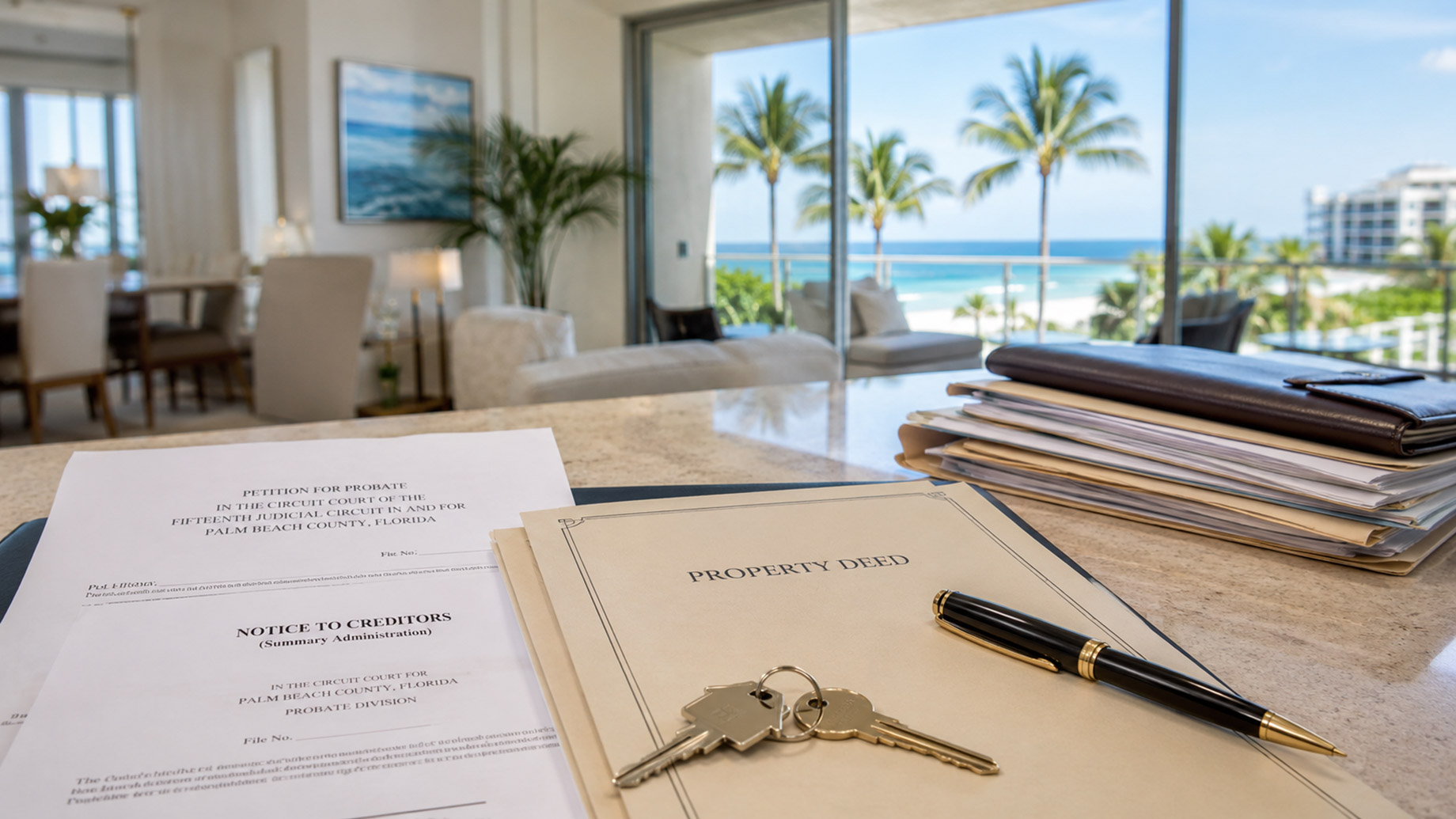
A person may spend their whole life in another state and still leave behind a legal matter in Florida that their family never expected. One condo near the beach, a vacation home held for years, or even inherited real estate sitting untouched in Palm Beach County can suddenly place an estate inside a Florida probate court. Families are often surprised by this because they assume the probate case filed in their home state should cover everything.
That confusion is common in South Florida, especially in places like Boca Raton, where out-of-state property ownership is part of the local real estate landscape. Legal professionals, including a Boca Raton ancillary probate lawyer, often deal with estates where families have already completed probate elsewhere but later discover a second process is required in Florida because of property ownership rules tied to state law. Once that happens, the paperwork becomes larger, timelines shift, and coordination between states starts taking over the process.
Why Florida treats out-of-state property differently
Real estate follows the law of the state where it is located. That rule is what creates ancillary probate cases in Florida. Even if someone lived in New York, Illinois, or New Jersey, Florida courts still maintain authority over property physically located inside Florida.
This usually becomes an issue after death when heirs attempt to transfer ownership or sell the property. Title companies and county records often reveal that the home cannot legally change hands until a Florida probate proceeding is opened. Families sometimes discover this in the middle of a sale, which creates delays that nobody planned for.
Boca Raton sees these situations regularly because many nonresidents own seasonal property there. Some purchased homes decades ago and never updated ownership structures. Others inherited property jointly with family members without realizing that probate obligations may still exist later.
Five reasons out-of-state property owners end up in Florida probate court
The property was owned only in the deceased person’s name
This is one of the most common reasons ancillary probate begins. When Florida property remains titled solely under the deceased person’s name, courts usually require a probate process before ownership can legally transfer to heirs or beneficiaries.
Even if a will exists in another state, Florida property records still need legal authority recognized under Florida procedures before ownership changes can occur.
The estate plan did not include Florida real estate planning
Many estate plans are created in the person’s home state without reviewing how Florida property fits into the larger estate structure. As a result, families later learn that the vacation condo or second home was never placed into a trust or ownership arrangement designed to avoid ancillary probate.
This often happens when properties were purchased years after the original estate plan was signed.
Joint ownership records were incomplete
Families sometimes believe probate is unnecessary because another relative helped pay for the property or shared responsibility informally. Unfortunately, Florida courts rely on legal ownership records, not assumptions between family members.
If deeds were never updated properly, probate proceedings may still become necessary before the property can legally transfer.
Property sales expose unresolved probate issues
Many ancillary probate cases surface during attempted property sales. Buyers, lenders, and title companies review ownership history carefully. Once unresolved probate issues appear in records, transactions can stop immediately until the estate matter is addressed through the court system.
This can create major delays for families trying to sell inherited property quickly.
Families assume another state’s probate case covers Florida property
This misunderstanding appears constantly in ancillary probate matters. Probate authority usually does not automatically cross state lines when real estate is involved. A court order from another state may still require separate recognition or proceedings inside Florida before property transfers become valid.
That is why estates with property in Boca Raton sometimes involve both home state probate and Florida ancillary probate administration at the same time.
How probate cases can be handled more effectively
Ancillary probate becomes harder when families wait too long to gather information. Early organization often reduces delays and confusion. Property deeds, tax records, mortgage statements, insurance information, and ownership documents should all be reviewed before probate filings begin.
Families should also confirm how the Florida property is legally titled because ownership structure often determines whether ancillary probate is required. In some cases, outdated deeds or incomplete records create avoidable complications that slow the process.
Communication between states also matters. When probate cases are active in multiple jurisdictions, inconsistent paperwork or missing filings may create additional delays. Professionals familiar with Florida probate administration, including a Boca Raton ancillary probate lawyer, often work alongside out-of-state representatives to coordinate records and procedural requirements tied to Florida property transfers.
Another issue involves timing. Families sometimes focus only on the primary probate case and ignore the Florida property until a later stage. By then, court schedules, title concerns, and missing records can make the process more difficult than expected.
Florida law also plays a major role in how ancillary probate proceedings move forward. Property ownership rules, creditor notice requirements, and court filing procedures can vary from one state to another, which is why estates involving Florida real estate often require separate legal review even when probate has already started elsewhere.
Bottom line
Florida real estate has its own legal identity once probate begins. A person may live hundreds of miles away from Boca Raton for decades, yet one property inside Florida can still create a separate probate proceeding after death.
Ancillary probate cases usually begin because ownership records, estate planning structures, or property transfer requirements were never fully addressed before the estate entered administration. When families understand how Florida property law interacts with probate rules, they are often better prepared to manage the process without unnecessary delays or confusion.
