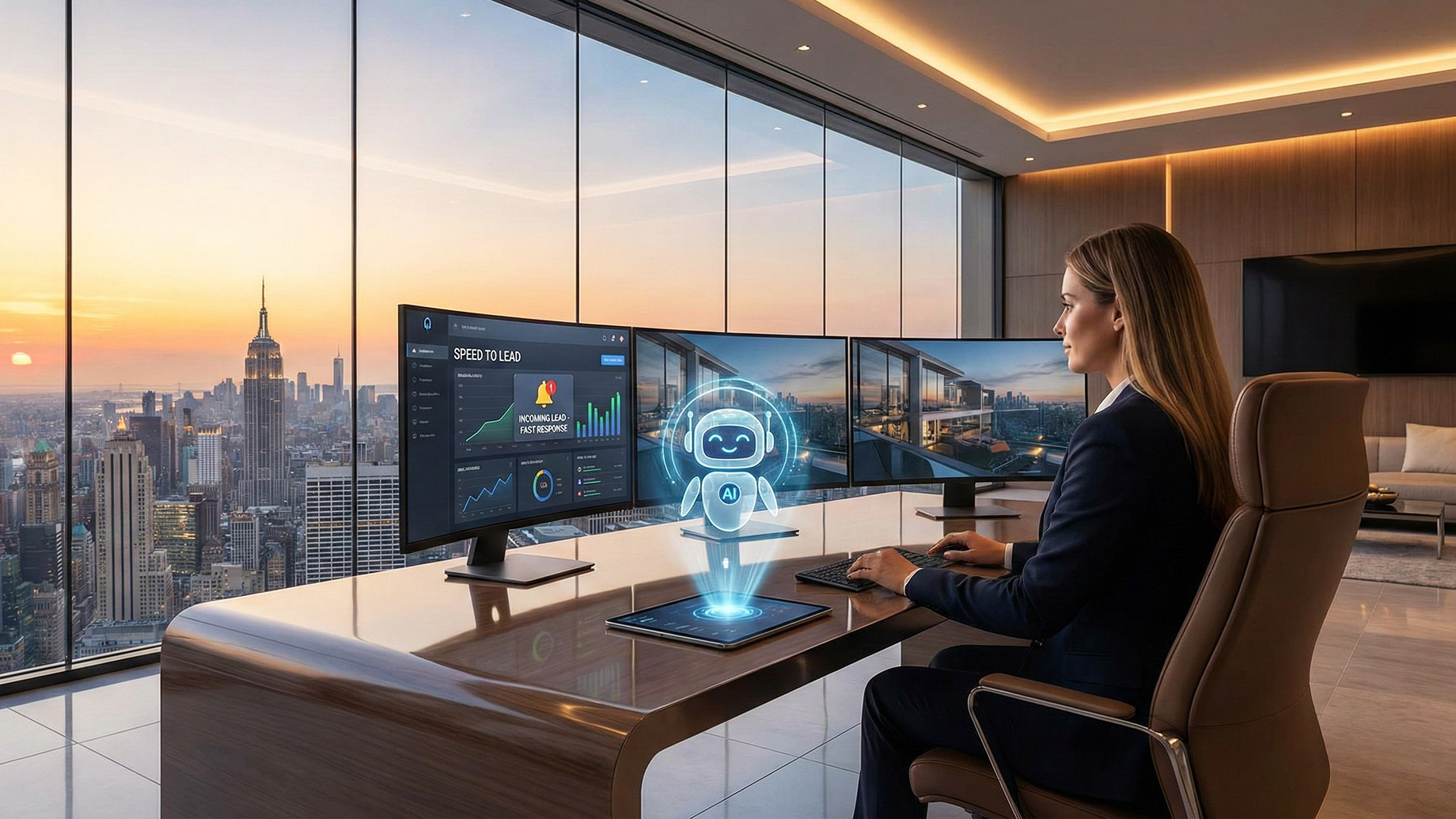
In the digital-first era of the property market, speed is not just an advantage any longer, but the determining factor in a deal. Customers shop ads at odd hours, real estate agents seek prices in the middle of a hectic workweek, and investors research houses in minutes. The first responder agent usually gets the chance in this kind of environment. It is precisely due to this that the AI receptionist in the real estate business is mandatory. Timely response is not a luxury anymore; it is the basis of the real estate success of the present-day era.
Speed to Lead is an idea that explains how responsive a real estate professional is when an inquiry is received. Response time can be said to influence trust, interaction, and finally, conversion rates, as it might sound easy.
The Changing Expectations of Real Estate Clients
Instant digital experiences have influenced modern consumers of property in the roles of buyers and sellers. On websites such as Zillow and Realtor.com, customers are able to view homes, compare prices, and place requests within a few seconds. Such easy access has led consumers to demand instant communication.
The previous system, where one returns the calls at the end of the day, is no longer relevant. When a buyer calls a property, he/she is likely to be calling as many as three agents simultaneously. When one agent takes a few minutes to respond, and another takes hours to respond, then the quicker responder will most likely be the one of choice. Rapidity is an indicator of professionalism, dependability, and care.
Another emotional business is real estate. Buyers do not just throw in queries casually, but they do it when they are excited. Such excitement disappears soon. In case nobody replies, they pass by. The chance is lost without leaving any trace of its existence.
Why Delayed Responses Cost More Than You Think
A large number of brokerages are not taking into account the amount of revenue that is lost through a lack of a quick response time. Most often, this process appears to be harmless: an agent is in a showing, a web form has been received in an inbox, or a call has been missed. However, in a competitive market, such minor delays translate to lost deals.
Consider the math. Considering that a brokerage is given 300 leads per month and 5% of the lead converts based on poor follow-up, then the conversion of 15 deals occurs. Even at an 8 conversion rate, there is a significant difference if faster engagement is higher. In the long run, such an improvement will lead to a substantial increment in revenue without an increase in ad expenditure.
The issue is not a lack of skill. It is not so readily available. Real estate agents have to deal with property tours, negotiations, documentation, and marketing. Human bandwidth is limited. The demands in the market are not.
The Role of an AI Receptionist for the Real Estate Business
This is where an AI receptionist of the real estate business can fill this gap of demand and availability. It does not permit questions to remain unanswered but makes sure that they are answered immediately and in an organized manner.
As a prospect calls, the AI is able to answer on the spot, give helpful information on the property, and lead the discussion. It is able to pose qualifying questions concerning budget, schedule, and financing position. It is even able to automatically schedule viewings depending on the calendar availability.
This instant communication maintains momentum. Prospects will get to be heard and supported immediately, as opposed to waiting hours to get their calls back. At this point, the lead is warmer and more qualified by the time a human agent enters the conversation.
Notably, agents are not replaced by AI. It supports them. It facilitates the monotonous initial contact point of communication to allow agents to concentrate on negotiations, planning, and relationship development.
Capturing Interest at Its Peak
The initial five minutes following an inquiry are critical. The prospect at this time is very active and contemplating the property. Quick response plays off of that cognitive attention.
Trust is developed more quickly when communication occurs immediately. The buyer believes that the brokerage is well structured and focused. It is that impression which will affect all the subsequent interactions.
A real estate business AI receptionist does not have to wait, get tired, or work outside of the time zone. It makes sure that all inquiries, i.e., whether during business hours or when it comes late in the night, are attended to without delay. This uniformity forms an effective competitive edge.
24/7 Availability in a 24/7 Market
Real estate has ceased to be limited to local office hours. Cross-border investors seek opportunities in different places. After work, professionals view listings. Homes are sought on weekends by families.
When a brokerage is not able to attend to clients during hours beyond the regular working hours, it runs the risk of losing customers to its competitors who can. A reception system with AI will ensure 24-hour responsiveness.
This availability does not just grab leads. It enhances brand recognition. A firm that is quick to react seems contemporary, technologically advanced, and customer-oriented. In a saturated market, perception is an equally important factor in making decisions as much as pricing or house features.
Improving Lead Qualification and Efficiency
Intelligent automation enhances quality besides speed. The real estate business can have an AI receptionist gather necessary information in the initial contact. It does not just provide an acknowledgment but also collects a context.
By the time an agent intervenes, he or she will know whether an agent is already being approved, the budget range, and how soon the buyer is planning to relocate. Discussions are focused instead of investigative.
Such an organized method is time-saving. Fewer resources are used by the agents to sieve unqualified leads, and more resources are used in nurturing serious prospects. The efficiency of a team is enhanced without the need to expand it.
Reducing Lead Leakage
The leakage of lead occurs silently. A missed message here. A forgotten follow-up there. These tiny holes bring huge losses over a period of time.
This risk is minimized with automation. Every inquiry is logged. All discussions are monitored. A prospect can be scheduled to get a follow-up in case he is unresponsive. The system makes sure that there is no opportunity that is passed without being noticed.
One of the most underestimated real estate properties is consistency. Customers can be forgiving of a late email response, but a recurrent lack of consistency builds mistrust. Since AI is on the initial engagement, consistency is already built in as opposed to relying on memory.
The Competitive Edge for Modern Brokerages
The bigger agencies usually tend to be favored as a result of staffing and resources. Smaller companies fail to compete with the speed of response at times during peak hours. AI levels the playing field.
Even a boutique agency can be made to provide enterprise-level responsiveness with an AI-driven receptionist serving the real estate business. It is able to handle large volumes of inquiries without recruiting more administrative employees. It is able to expand marketing campaigns without the terror of having overloaded agents.
This change enables agencies to develop in a sustainable manner. They can absorb demand through automation instead of adding more staff to manage the demand and retain the high standard of service.
Enhancing Client Experience Without Losing the Human Touch
Other practitioners are concerned that AI will be detached. As a matter of fact, responsiveness is the first important feature of clients. The first encounter predetermines the mood. The next is personal relationship-building.
In case the first touchpoint is taken care of by AI, there is a seamless shift to human interaction. Agents have a chance to intervene in conversations that are already structured and knowledgeable. Instead of beginning afresh, they develop on a structured basis.
The outcome is a combination system in which technology aids human experience. The clients do not get an immediate response and meaningful interaction at the expense of the other.
Why Speed Is the New Currency
Location is the king in real estate. Speed is as powerful today as well. The attention span is reduced, the list of options is wider, and the rivalry is fierce.
The first responder brokerage usually wins the appointment. The one who gets the appointment is usually the winner of the listing or sale. The initial point of this chain reaction is the response time.
A real estate business AI receptionist can change speed as a weakness into an advantage. It safeguards the marketing investments where all the leads are reached instantly. It gives agents the power to concentrate on closing, as opposed to chasing. And it fits operations to the contemporary demands of consumers.
The Future of Real Estate Belongs to the Fast
The search for property, the marketing, and the transactions have already been transformed by technology. The next frontier is response management. With the rise in competition, opportunities will be killed by slow communication. When you are willing to lose deals to clients due to the slow response time, then it is time to upgrade your front desk. The AI receptionist that will be offered by AgentZap.ai to the real estate business captures, qualifies,s and engages all leads in real time, 24/7. Make each investigation an opening and allow time to be your competitive edge. Get a demo with AgentZap.ai today and experience the power of fast response in converting.
Speed to Lead has ceased being a metric. It is a growth strategy.
At least in the case of real estate professionals, even when it comes to responding more quickly, they will act smarter with the adoption of intelligent automation. They will turn more questions, lessen lost chances, and establish better first impressions.
Responsiveness in a market that values a second is what constitutes reputation. And in the same race, those with the correct systems will be in the future of real estate.
