When you pull into your driveway and look up at your house, a pristine exterior sets the tone for your entire property. However, many homeowners eventually notice unsightly dark streaks, green patches, or general discoloration marring their rooflines. You might assume it is just accumulated dust or natural fading from the sun. But understanding exactly what that ‘dirty’ look on your roof really means for your home is crucial for protecting your investment.
Often, these visual cues point to living organisms feeding on your roofing materials rather than simple debris. Misinterpreting these signs can lead to premature roof failure, decreased property value, and costly repairs. By learning to decipher these blemishes, you can distinguish between harmless aging and active damage.
Is It Dirt, Aging, or Something Worse?
Homeowners frequently misinterpret roof discoloration. When dark stains first appear, the immediate assumption is usually soot, dirt, or ash blowing in from nearby trees or roads. Sometimes, people think the shingles are just losing their color due to intense ultraviolet light exposure.
While dirt does accumulate and UV rays do weather exterior surfaces, they rarely cause the distinct, localized streaking that plagues modern roofs. True dirt washes away easily with a heavy rainstorm. If the stains persist through the seasons, you are dealing with a more stubborn issue.
Recognizing the difference between a simple dust layer and an expanding organic problem is your first line of defense. Ignoring persistent stains allows the underlying cause to spread across your shingles, silently eating away at your roof protective layers. Getting expert help from Smart Choice Roofing Melbourne gives you the wonderful benefit of completely stopping this damage and keeping your home perfectly safe.
The Truth About Black Streaks: Meet Gloeocapsa Magma
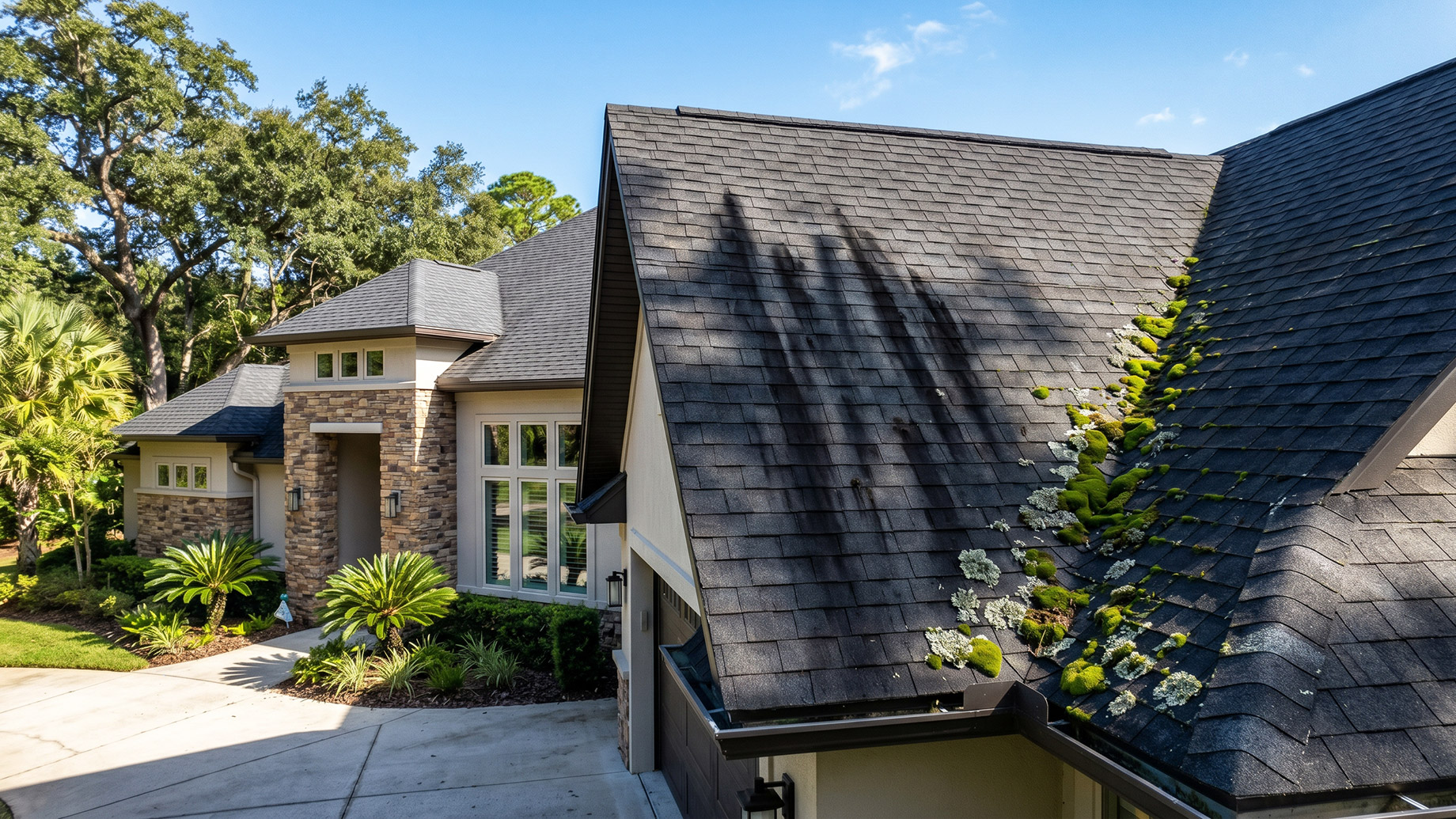
Those prominent black streaks running down your roof are almost never dirt. In the vast majority of cases, they are caused by a hardy strain of cyanobacteria known as Gloeocapsa magma. These airborne spores drift through neighborhoods, landing on rooftops and taking root in damp, shaded areas.
Modern asphalt shingles contain limestone filler, which provides durability and weight. Unfortunately, this limestone serves as an all-you-can-eat buffet for cyanobacteria. As the bacteria feed on the limestone, they excrete a dark, hard UV-protective coating to shield themselves from the sun. That dark coating is the black streaking you see from the ground.
Over time, this bacterial colony breaks down the structural integrity of your shingles. The granules that protect your roof from the elements loosen and wash away. What looks like an aesthetic annoyance is actually a slow, progressive deterioration of your primary shelter.
Moss and Lichen: Green Intruders Threatening Your Shingles
While black streaks indicate a bacterial issue, patches of green, gray, or white signal the presence of moss and lichen. These organisms pose an even greater threat to your home’s exterior. Unlike bacteria, moss and lichen develop complex root-like structures that anchor directly into your roofing materials.
Lichen thrives in the symbiotic relationship between algae and fungi. It clings aggressively to shingles, pulling up the protective mineral granules when it eventually falls off or is improperly removed. Moss, on the other hand, acts like a dense sponge. It absorbs rainwater and holds constant moisture against your roof deck.
- Lifts shingle edges: As moss grows thicker, it pushes up the edges of your shingles.
- Increases wind vulnerability: Lifted shingles are easily caught and torn off by strong wind gusts.
- Encourages rot: The constant dampness creates the perfect environment for wood rot and interior leaks.
Normal Wear and Tear vs. Harmful Buildup
Understanding the difference between normal aging and destructive buildup helps you make informed maintenance decisions. Normal aging happens uniformly. As a roof reaches the end of its 20- or 30-year lifespan, you will notice an even fading of color. You might see uniform granule loss in your gutters or slight curling at the very edges of the shingles.
Harmful buildup, conversely, is highly localized and often asymmetrical. Organic growth typically favors the north-facing side of your home or areas heavily shaded by large oak or pine trees. If one side of your roof looks significantly darker or greener than the other, you are looking at an active infestation, not natural aging.
Normal weathering does not require immediate intervention beyond standard inspections. However, biological buildup actively shortens your roof’s lifespan and demands a targeted corrective response to halt the damage.
How Discoloration Impacts Property Value and Curb Appeal
For a luxury property or a carefully maintained family residence, curb appeal is everything. The roof makes up nearly forty percent of a home’s visual facade. Even if your landscaping is flawless and your siding is freshly painted, a stained, mottled roof immediately detracts from the home’s overall elegance.
When buyers or appraisers evaluate a property, a heavily stained roof raises instant red flags. It suggests deferred maintenance and hints at potential hidden water damage. Appraisers may downgrade the home’s condition, and prospective buyers will routinely overestimate the cost of a roof replacement, demanding steep discounts during negotiations.
Maintaining a pristine roofline preserves your property’s market value. A clean, uniform roof signals to onlookers that the home is structurally sound and cared for with meticulous attention to detail.
Corrective Options: When to Seek Professional Help
When you realize your roof is harboring harmful growth, your first instinct might be to grab a ladder and a high-pressure hose. This is a critical mistake. Blasting your shingles with high pressure will strip away the vital UV-reflecting granules and instantly void your manufacturer’s warranty.
Instead, professional soft washing is the industry-approved corrective option. Soft washing uses specialized, low-pressure equipment to apply eco-friendly cleaning solutions that kill the bacteria, moss, and lichen at the root level. If you live in Florida, for instance, consulting with the best roof cleaners in Tallahassee ensures your home receives the proper chemical treatment without risking structural damage.
Professionals know exactly which cleaning agents safely dissolve the organic binders holding lichen and bacteria to your roof. They clear the buildup efficiently, restoring the original color of your shingles while preserving their vital protective qualities.
What That ‘Dirty’ Look on Your Roof Really Means for Your Home’s Future
So, what that ‘dirty’ look on your roof really means for your home is that your exterior defenses are under active biological stress. It is a visible warning sign that moisture, bacteria, and plant life are slowly compromising your weatherproofing.
Leaving these stains untreated guarantees a shortened lifespan for your roofing materials. Shingles that should last three decades might fail in fifteen years. The dark stains also absorb more heat from the sun, superheating your attic and driving up your summer air conditioning bills. Recognizing the signs early prevents minor aesthetic issues from evolving into massive structural expenses. By treating the root cause of the discoloration, you protect your home’s structural integrity and its future resale value.
Conclusion
Your roof is your home’s most vital shield against the elements, and its appearance tells a clear story about its health. We have explored how dark streaks and green patches are rarely just dirt, but rather active biological colonies feeding on your shingles. Knowing the critical differences between natural, uniform aging and localized, destructive buildup empowers you to protect your property. Ignoring these warning signs can lead to rot, reduced energy efficiency, and a drastic drop in curb appeal. Ultimately, understanding what that ‘dirty’ look on your roof really means for your home allows you to take swift, appropriate action. By choosing professional soft washing over destructive high-pressure methods, you can safely eradicate the growth, restore your home’s pristine elegance, and ensure your roof lasts for decades to come.
