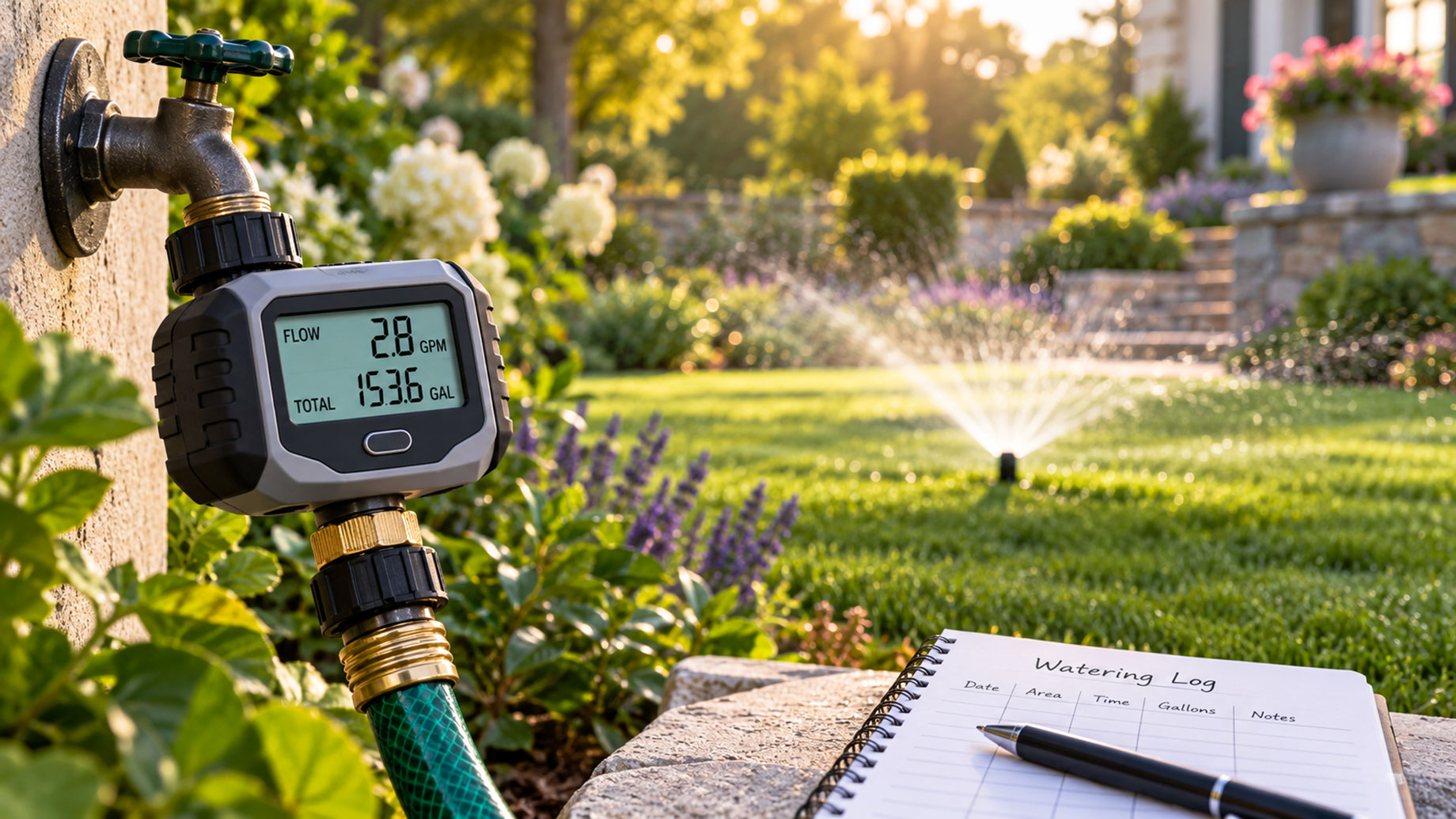
A formal lawn, layered borders, and terrace planters may share a water source while needing very different care. Yet outdoor watering often follows a familiar habit: turn on the hose, leave the sprinkler running, and assume the garden has received enough.
A more useful approach combines three checks: measure how much water passes through the hose, observe where it lands, and assess whether the soil actually needs more. Together, these checks help homeowners make watering decisions that support the landscape without treating every dry-looking patch as a reason to run the sprinkler longer.
Understand What You Are Measuring
Flow rate describes how quickly water moves through a hose, usually in gallons per minute or liters per minute. Consumption describes the total volume used during a session. These measurements answer different questions: how fast is water being delivered, and how much has been delivered altogether?
For hose-fed irrigation, a compatible water flow meter can make both readings easier to track. Installed according to the manufacturer’s instructions, it measures water passing through that connection while you water a lawn, border, or other outdoor area.
Check the model’s connection type, operating pressure, and measurement range before installation. Minimum flow matters particularly for small drip systems: a slow trickle below the specified threshold may not register accurately. Also confirm whether the display shows the current session, a daily figure, or a cumulative total before recording a reading.
Establish a Baseline for Each Watering Area
Start with a normal watering session when irrigation is needed. Keep the hose, nozzle setting, sprinkler position, and faucet opening consistent so later comparisons mean something.
Treat the lawn, planting beds, and containers as separate tasks. If you use one hose for all three, note the cumulative reading before and after each task, or reset the session counter according to the instructions. Otherwise, the final number combines uses that may require different adjustments.
A simple watering log should record:
- Location and equipment: the area watered and the nozzle or sprinkler used.
- Runtime and volume: minutes of operation and gallons or liters delivered.
- Conditions: recent rain, unusual heat, wind, and relevant soil observations.
- Results: runoff, pooling, uneven coverage, or areas that remain dry.
A notebook is sufficient. The value comes from comparing recognizable conditions and recording what changed, especially when more than one person maintains the garden.
Turn Runtime Into a Meaningful Number
When flow stays constant, total volume equals flow rate multiplied by operating time. A hose delivering three gallons per minute for twenty minutes uses sixty gallons. Running it for another ten minutes adds thirty gallons under the same conditions.
This example explains consumption, not the correct watering allowance for a particular lawn. Plant needs, soil, rainfall, and the area being irrigated still determine whether that amount is appropriate.
Where flow varies during use, the meter’s measured session total is more useful than multiplying one momentary reading by the entire runtime. Record both if available: the total shows consumption, while a typical flow reading provides a reference for checking future changes.
Check Coverage Before Increasing the Watering Time
A volume reading cannot show whether one corner receives twice as much water as another. Before extending a sprinkler session to address a dry patch, inspect its placement and spray pattern.
For a simple lawn coverage check, distribute straight-sided collection containers across the sprinkler’s coverage area. Run the sprinkler for a measured interval in calm conditions, then compare the water depths. Large differences suggest that positioning, obstructions, or equipment performance needs attention.
The average collected depth also provides an application-rate estimate. For example, an average quarter inch collected in fifteen minutes corresponds to approximately one inch per hour under those test conditions. That describes the sprinkler’s output; it is not a recommendation to apply an inch every time.
Correct obvious problems and repeat the check before changing the schedule. Direct spray away from paving and make sure foliage is not blocking the intended pattern. Increasing runtime across an unevenly watered area can add water where it is already plentiful.
Adjust Watering to Soil, Plants, and Weather
Check moisture below the surface where the relevant roots are growing. A dry surface alone does not establish that the entire root zone needs irrigation. Containers, newly planted beds, and established lawns should be assessed separately.
Account for rainfall and seasonal changes when deciding whether to water. Seek local gardening or extension guidance for the plants and soil on your property instead of applying a universal weekly allowance.
If water begins running off or pooling, stop and allow it to soak in. Shorter cycles separated by soaking periods can help on slopes and soils that absorb water slowly. For suitable beds, drip or other microirrigation can deliver water near plants, but its runtime still needs attention; slow delivery can also become excessive.
Investigate Changes and Keep the Routine Useful
Unexpected readings are a reason to inspect the setup. Higher consumption may reflect longer sessions, a changed nozzle setting, or leaking equipment. Reduced flow may warrant checking for a kink, clogged filter, or supply change.
A meter alone cannot diagnose those causes, and a zero reading cannot rule out leaks below its measurement threshold. Check connections and watering equipment directly.
Revisit the log after repairs, seasonal adjustments, or planting changes. For homes with a gardener or maintenance team, share the same measurements and observations. A useful watering routine gives everyone a clear reference: what was watered, how much was delivered, and how the garden responded. That makes conservation a practical part of caring for a well-kept landscape.
