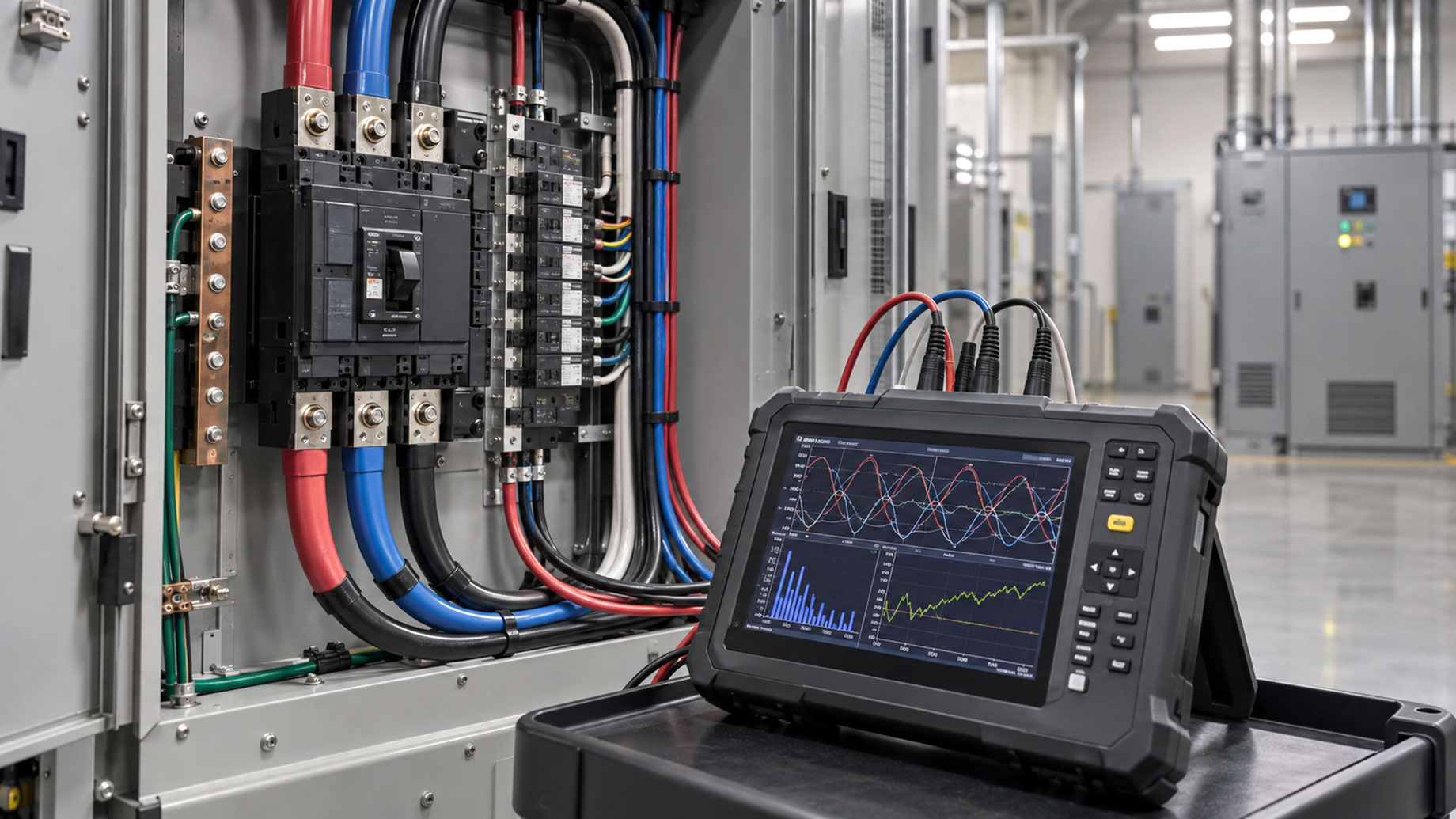
Power quality describes how consistently a building’s electrical supply matches the clean, stable voltage and frequency that equipment expects. Poor conditions, including sags, surges, and harmonic distortion, shorten hardware lifespan and trigger unplanned downtime. Effective power quality analysis identifies these disturbances at the source, allowing facility managers to correct problems before they damage sensitive systems or inflate operating costs across a commercial property.
Every facility manager knows the frustration of equipment that fails without an obvious cause. Servers reboot unexpectedly, LED fixtures flicker, and motor controllers throw faults that no one can trace. The underlying culprit often sits inside the electrical distribution itself, where unstable power silently erodes the reliability of critical systems.
Modern commercial spaces depend on a supply that stays clean under constantly shifting loads. Correcting these disturbances requires proper diagnostics and disciplined workmanship, the same standards that certified professionals such as the Colz Electric team apply when bringing installations up to code. Understanding where power problems originate is the first step toward protecting both your equipment and your operating budget.
What Power Quality Really Means for Modern Facilities
Clean electricity rarely announces itself, yet its absence shows up quickly in equipment behaviour and repair invoices. A commercial supply is meant to deliver stable voltage at a steady frequency, but real distribution systems drift under the weight of switching loads, utility events, and ageing infrastructure.
The Anatomy of a Clean Supply
A healthy electrical system holds its waveform close to the ideal sine curve that sensitive electronics expect. When that waveform distorts, components misread signals, overheat, or reset without warning. Persistent voltage fluctuations rank among the most common disturbances, and they stem from sources both inside and outside the building envelope.
Typical contributors include the following:
- Utility switching events that introduce brief sags or swells across the incoming feed
- Large motor startups in elevators and HVAC plants that pull heavy inrush current
- Nonlinear loads such as variable frequency drives that inject harmonic currents back into the system
- Loose or corroded connections that create resistance and localized heating at the panel
Why Older Buildings Face Steeper Risk
Many commercial properties still run distribution gear designed for a simpler load profile, long before dense server rooms and lighting retrofits became standard. As a result, legacy panels frequently operate closer to their thermal limits than their original specifications intended. Routine electrical power monitoring reveals whether a system carries hidden stress that periodic inspections tend to miss.
Recognizing these patterns early separates a stable facility from one facing recurring, expensive interruptions.
The Hidden Costs Facilities Overlook: Harmonic Distortion
Most discussions of electrical reliability focus on dramatic events like outages, yet the steady drain on a facility often arrives from something far quieter. Harmonic distortion builds gradually as modern electronic loads reshape the current waveform, and its effects accumulate long before anyone notices a fault. Many published guides underweight this issue, though it deserves close attention from anyone managing a demanding building.
Where Harmonics Originate
Every device that converts alternating current into direct current draws electricity in sharp pulses rather than smooth curves. Computers, LED drivers, and variable speed controllers all belong to this category, and together they distort the shared supply. Rising harmonic content overheats neutral conductors, saturates transformers, and shortens the working life of switchgear.
Common consequences include:
- Overheated neutrals carrying triplen harmonics that standard sizing never anticipated
- Transformer derating, which forces equipment to run below its nameplate capacity
- Nuisance breaker tripping that interrupts operations without any clear fault
- Capacitor bank stress that accelerates failure in power factor correction gear
Left unmanaged, these power quality issues compound quickly as electronic loads multiply.
Comparing Correction Methods
Several power conditioning technologies address these disturbances, with each suited to a particular problem. The table below outlines where each option fits.
| Solution | Best Suited For | Relative Cost | Key Limitation |
|---|---|---|---|
| Solution | Best Suited For | Relative Cost | Key Limitation |
| Isolation transformer | Noise and grounding faults | Moderate | Limited harmonic control |
| Active harmonic filter | Heavy nonlinear loads | High | Requires engineering study |
| Voltage regulator | Persistent sags and swells | Moderate | No harmonic mitigation |
| Uninterruptible supply | Critical uptime protection | High | Ongoing battery upkeep |
No single device resolves every disturbance, so the correct selection follows from measured data rather than assumption. In practice, blending technologies often delivers the steadiest outcome for a mixed commercial load.
Building a Resilient Electrical Strategy
Protecting a commercial property from electrical disturbances is less about reacting to failures and more about designing against them in advance. A resilient approach blends measurement, targeted correction, and disciplined maintenance into a single ongoing practice. Facilities that adopt this mindset spend far less on emergency repairs across the life of the building.
Start With Measurement, Not Assumptions
You cannot correct what you have never measured, which makes diagnostics the foundation of any serious plan. A thorough power quality analysis captures voltage behaviour, harmonic levels, and load patterns across a full operating cycle.
With that evidence in hand, engineers can prioritize the disturbances that pose the greatest threat to sensitive systems. Baseline records also make it far easier to prove whether a later change improved conditions or introduced fresh problems.
A Practical Maintenance Roadmap
Consistent upkeep preserves the gains that any correction delivers, since electrical systems drift as loads and connections change. On the other hand, a facility that inspects only after a breakdown pays repeatedly for the same avoidable damage.
A dependable programme usually follows these steps:
- Schedule periodic logging studies at the main and critical subpanels
- Thermally scan connections and terminations to catch developing resistance
- Review load additions before installation to confirm adequate headroom
- Document trends so recurring disturbances become visible over time
Skipping any single step tends to leave a blind spot that resurfaces as an unexpected interruption.
Key Takeaways for Reliable Commercial Power
Stable electrical performance rewards buildings that treat it as a design priority rather than an emergency. Measurement exposes hidden stress, targeted conditioning corrects the disturbances that matter most, and steady maintenance protects those gains over time. Facilities that combine these practices safeguard their equipment, control operating costs, and keep critical systems running as electronic demand continues to climb across the commercial sector.
