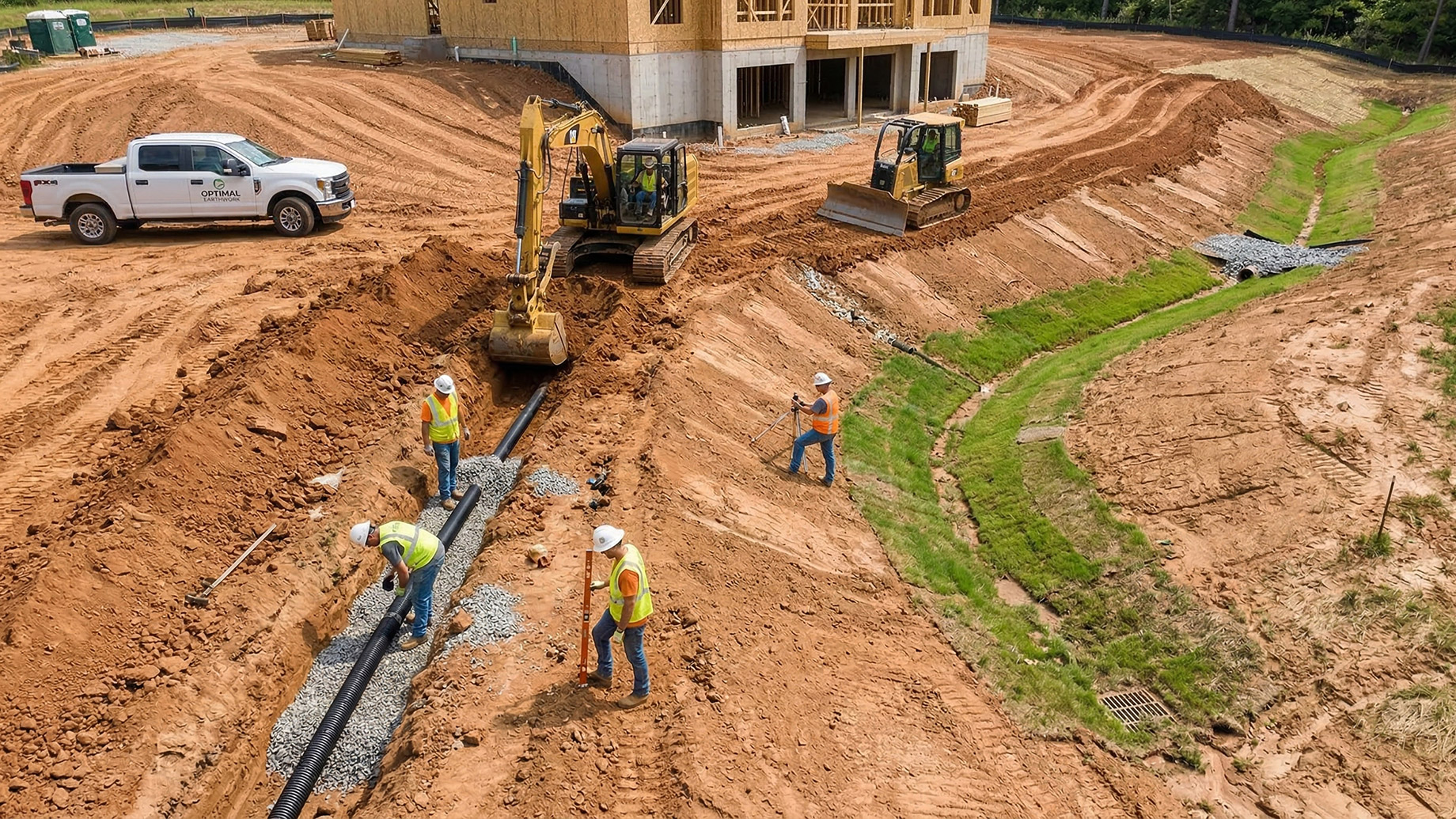
Proper grading and drainage are the foundation of any successful construction project. Without them, water pools where it shouldn’t, soil shifts in unwanted ways, and buildings suffer costly damage. Getting these systems right from the start saves money, prevents problems, and ensures your structure lasts for decades.
Most people don’t think much about what happens below the surface of a building site. Yet grading and drainage work quietly behind the scenes to keep everything stable and dry. When rain falls on your property, that water has to go somewhere. If it doesn’t drain properly, it sits around your foundation, seeps into basements, and weakens the soil beneath buildings. Poor grading means water flows toward your structure instead of away from it. Over time, this causes cracks, mold, flooding, and structural failure. The good news is that proper planning and installation prevent all of these problems.
Why Grading Matters
Grading is the process of shaping the land to direct water flow. Think of it like tilting a surface so water naturally rolls downhill, away from buildings and toward drainage areas. A good grading plan considers the slope of the land, the location of your structure, and where water needs to end up. Even a small slope of just a few inches per foot makes a huge difference in keeping water away from your foundation.
When construction crews begin work on a site, they must first assess the existing ground conditions. Optimal Earthwork professionals understand that every piece of land is different. Some areas have clay soil that holds water like a sponge, while others have sandy soil that drains quickly. This matters because it affects how water moves and where it pools. Professional grading takes these soil conditions into account and shapes the land accordingly.
The goal of grading is simple but important: control water movement. Water should flow away from buildings, not toward them. This means the ground should slope downward as you move away from your structure. In areas where the natural slope doesn’t work, crews add or remove soil to create the right conditions. This is where Optimal Earthwork PGE certified experts come in. They know exactly how much slope you need and how to achieve it safely.
The Role of Drainage Systems
Grading alone isn’t always enough. Many properties need drainage systems to handle water properly. These systems include surface drains, subsurface drains, and channels that direct water away from buildings. Surface drains catch water from paved areas, roofs, and other hard surfaces. Subsurface drains work below ground level, moving water that seeps into the soil away from foundations.
French drains are a popular solution for many projects. These are trenches filled with gravel and a pipe that collects water and moves it away from the building. They work well in areas where water tends to collect. Another option is a curtain drain, which intercepts water before it reaches your structure. Swales are shallow channels in the ground that guide water across a property.
The type of drainage system you need depends on your site conditions, local rainfall, soil type, and building design. A professional assessment helps determine the best approach for your specific situation. Some projects need multiple drainage solutions working together to handle water properly.
Preventing Expensive Problems
The cost of installing proper drainage during construction is small compared to the price of fixing water damage later. Foundation repairs can run tens of thousands of dollars. Mold removal is expensive and harmful to health. Replacing damaged soil and restoring structural integrity costs far more than getting things right the first time.
Water damage also affects how long a building lasts. Constant moisture weakens concrete, corrodes steel, and breaks down materials. Proper grading and drainage extend the life of your structure significantly. Insurance companies understand this too. Buildings with good drainage systems often qualify for better rates because they have fewer claims.
Working with Professionals
Hiring qualified professionals for grading and drainage work is worth the investment. Companies that employ Optimal Earthwork PGE certified crews have proven expertise in this field. These professionals follow industry standards and local building codes. They use proper equipment and techniques to ensure the work is done correctly.
During the planning stage, professionals survey the site and create a grading and drainage plan. This plan shows exactly where water will flow and how it will be managed. They consider future development, changing weather patterns, and potential issues. Once construction begins, they oversee the work to make sure it matches the plan.
Conclusion
Proper grading and drainage are not optional in construction. They protect your investment, prevent damage, and ensure your building remains safe and functional. Whether you’re building a home, a commercial space, or an industrial facility, these systems matter. Working with experienced teams like those certified through Optimal Earthwork PGE ensures your project gets the right foundation from day one. The time and money you invest in proper grading and drainage pays off through years of trouble-free building performance.
- Optimal EarthWork
- 3070 Garden Ave, San Jose, CA 95111
- (408) 603-3805
