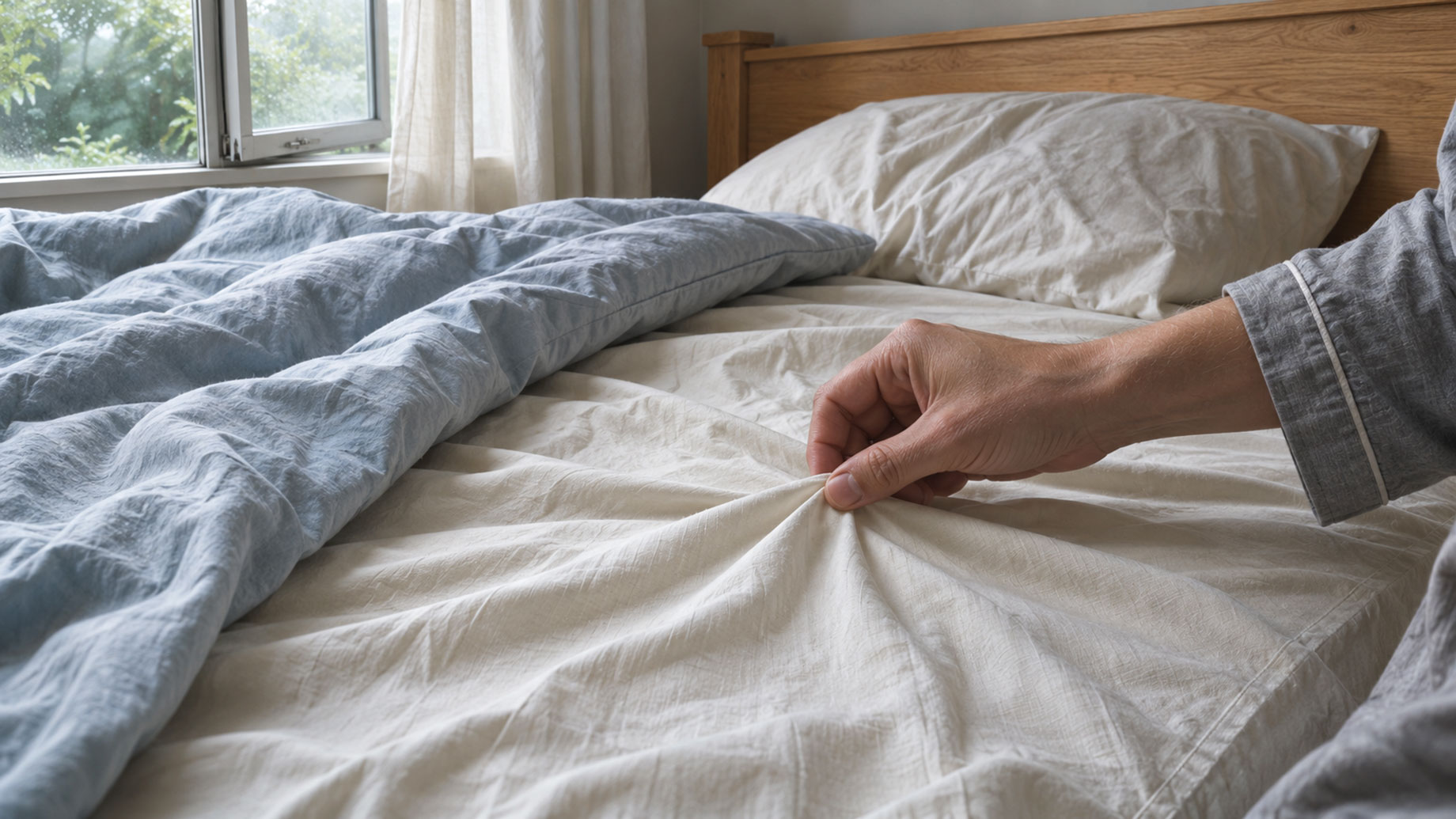
Why your sheets feel clammy by morning comes down to moisture that never left the bed. You sweat a little every night, even in a cool room. If the fabric can’t release that moisture, it settles into the sheets and turns damp and sticky by sunrise. Most people blame a warm bedroom or a heavy comforter. The real cause usually sits in the space between your body and your bedding. This guide covers what builds up there, why some fabrics make it worse, and how to fix it.
What Actually Makes Sheets Feel Clammy
Clammy sheets aren’t a sign you’re sweating more than normal. They’re a sign the moisture you naturally release has nowhere to go.
The Bed Microclimate
A PMC sleep microclimate study found that ambient humidity, moisture buildup in the bed, and skin temperature together shape sleep comfort. When the bed can’t dissipate moisture, it collects on the fabric surface and the sheets feel damp. That small pocket of air between you and the covers behaves like its own climate, and it can run warmer and more humid than the room.
Why It Shows Up in the Morning
Moisture builds slowly through the night. Your body loses water vapor all night long, and the sheets absorb it a little at a time. By early morning, a fabric that held onto that moisture feels clammy to the touch. The sheets felt fine at bedtime, which is why the problem seems to appear out of nowhere.
Humidity Is a Bigger Factor Than Temperature
Many people lower the thermostat and still wake up damp. That’s because humidity, not just heat, controls whether sweat can evaporate.
How Humidity Affects Evaporation
Sweat only cools you when it evaporates. Sleep Foundation guidance explains that humidity between the sheets affects core body thermoregulation, and it points to a bedroom temperature of 65°F to 68°F as a good target. In humid air, evaporation slows down. The moisture stays on your skin and in your sheets instead of escaping into the room.
What You Can Control in the Room
A few room-level changes help the fabric do its job:
- Keep the bedroom between 65°F and 68°F
- Run a dehumidifier if the room feels muggy
- Use a fan to keep air moving across the bed
- Open a window or door in the morning to clear overnight moisture
These steps lower the humidity load, but they can’t fully fix a fabric that traps moisture.
How Your Fabric Makes It Worse
The material touching your skin decides whether moisture moves through or stays put. This is where most clammy-sheet problems actually start.
Synthetic Fabrics Trap Moisture
A PMC textile study evaluated moisture regain and sweat evaporation across different weaves and fibers. It showed that non-breathable synthetic bedding traps moisture, while thermoregulating fabrics maintain a drier microclimate. Polyester and microfiber feel smooth and soft at first. They also hold sweat against the skin, which is the exact setup for clammy sheets.
Dense Weaves Block Airflow
Weave matters as much as fiber. A tight, heavy weave leaves little room for air and moisture vapor to pass through. High thread count is often marketed as a luxury feature, but a very dense sheet can sleep warmer and feel damper than a lighter one made from the same fiber. For moisture control, a moderate thread count in an open weave tends to work better.
What a Breathable Sheet Looks Like
Long-staple cotton in a breathable weave lets moisture vapor move through the fabric instead of pooling on top of it. The fibers are longer and smoother, so the sheet can stay light and airy without losing durability. That open structure is what keeps the surface dry as the night goes on.
The Hygiene Side of Clammy Sheets
Damp fabric doesn’t just feel unpleasant. It also creates the conditions bacteria like best.
Why Moisture Leads to Odor
Warm, damp fabric loaded with skin oils and sweat is a good place for bacteria to grow. That growth is what produces the stale smell many people notice on sheets that haven’t been washed in a few days. Clammy sheets and musty sheets are often the same problem at different stages.
Where Silver Treatment Fits
Breathability handles moisture. It doesn’t stop bacteria on its own. Silver-treated cooling sheets are made from breathable 100% cotton with a Double Pick Insertion weave that promotes airflow. The silver treatment helps reduce up to 99.7% of odor-causing bacteria, so the sheets stay fresher between washes than regular sheets. The two features do separate jobs. The weave moves moisture, and the silver keeps the fabric clean.
Don’t Forget the Top Layer
Your sheets only deal with half the moisture problem. The comforter sits over you and traps whatever your body gives off.
A Heavy Comforter Holds Moisture In
A thick, densely filled comforter seals warm, humid air against your body. That moisture has to escape somewhere, and often it ends up in the sheets. Swapping to a lighter top layer reduces how much humidity gets trapped.
A Cooler Option for Hot, Damp Sleepers
The Cooling Comforter uses a jersey-knit shell that feels up to 4°F cooler on contact, with a lightweight, breathable fill that lets heat escape instead of holding it in. It’s silver-treated to stay fresher between washes. For the full cooling effect, skip the duvet cover and let the shell work directly against your skin.
A Quick Fix Checklist
If you wake up to clammy sheets, work through this list in order:
- Check the fabric. Swap synthetic or microfiber sheets for breathable long-staple cotton
- Look at the weave and thread count. Choose an open weave in the 200 to 400 range
- Lighten the top layer so heat and humidity can leave the bed
- Wash sheets weekly and skip fabric softener, which coats fibers and blocks airflow
- Keep the room cool and dry, with moving air if possible
- Air out the bed in the morning before making it
Making the bed right away traps overnight moisture under the covers. Pulling the covers back for 20 to 30 minutes lets the sheets dry out.
Keep Moisture Under Control All Day
Clammy sheets are usually a moisture problem you can solve with the right fabric and a few room adjustments. Start with breathable materials, then add airflow, a lighter top layer, and regular washing. Your whole bedding setup works best when every layer lets moisture move instead of holding it in.
The same logic applies in the bathroom. Damp towels that never fully dry carry bacteria into the next use, so fast-drying, silver-treated towels help keep the whole routine fresh.
Miracle made builds its sheets around this approach. Breathable cotton handles the moisture, and silver treatment keeps the fabric fresh, so you wake up to a dry bed instead of a damp one.