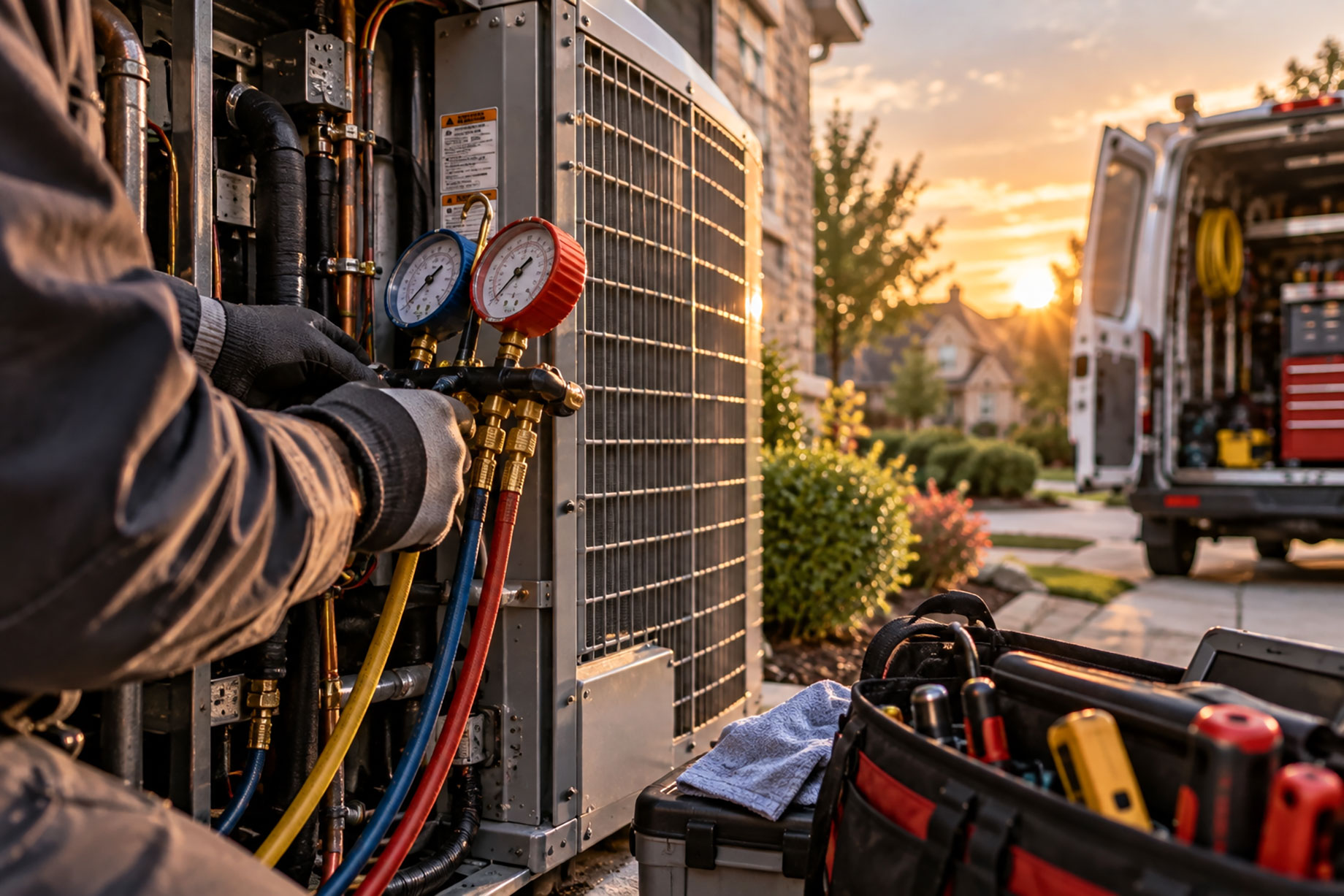
A heating or cooling failure gets harder to manage with every passing hour. Indoor temperatures can shift quickly during Chesterfield’s humid summers and cold winter periods, especially in homes with older equipment. A nearby HVAC provider reduces travel time, understands local conditions, and can respond with practical knowledge of common system faults. Location doesn’t replace technical skill, but it improves service speed and efficiency when the following factors matter most.
Travel Time Affects Dispatch Speed
A nearby provider begins each service call closer to the property. That shorter journey reduces the time between dispatch and arrival, particularly when a technician is already working in the same area. Distance also affects emergency scheduling. A company serving Chesterfield directly can assign local appointments without sending a technician across the wider St. Louis region. This arrangement gives the dispatcher more control over arrival windows and route planning.
For homeowners comparing HVAC in Chesterfield, MO, local coverage provides a practical advantage during urgent breakdowns. A nearby technician can reach a home sooner, inspect the system earlier, and identify whether the issue involves a failed capacitor, blocked condensate line, faulty control, or restricted airflow. Faster access limits discomfort and reduces the chance that a minor fault worsens.
Local Knowledge Improves Initial Diagnosis
Chesterfield homes differ in age, size and construction. Older ranch homes often have aging ductwork, refrigerant systems and uneven airflow between rooms. Larger two-story homes frequently develop hot upstairs bedrooms, while newer, tightly sealed properties can retain excess humidity.
A local HVAC team encounters these patterns repeatedly. That experience helps technicians assess the equipment alongside the building’s layout, insulation, and duct design. The first inspection becomes more focused because the technician knows which conditions commonly affect local homes.
Local Parts Access Reduces Delays
A diagnosis only solves part of an HVAC problem. The repair still depends on having suitable parts, tools, and equipment available. Nearby providers often stock common components on local service vehicles, which reduces the need for a second appointment.
A well-prepared truck can support same-visit work for frequent faults. These faults include electrical component failures, worn motors, clogged filters, and drainage problems. Completing the repair during the first visit restores comfort sooner and reduces disruption for residents or business staff.
Clear Scheduling Supports Faster Service
Fast service requires accurate communication before a technician arrives. A provider that answers calls directly can gather useful details, record the equipment symptoms, and assign the right appointment type.
Specific information improves dispatch decisions. A report of no heating during a cold night receives different attention from a noisy blower or a system that cycles too often. Sharing the system type, age, error code, and recent changes helps the provider prepare for the visit.
An exact appointment window also reduces wasted time. Property owners know when access is needed, while technicians can plan routes without repeated calls. This process keeps the service visit focused on diagnosis and repair rather than avoidable scheduling delays.
Preventive Maintenance Limits Emergency Waiting
A nearby provider also supports faster response before a breakdown occurs. Regular maintenance identifies restricted airflow, worn electrical connections, dirty coils, and drainage problems before those faults stop the system.
Air conditioning maintenance belongs in spring, before the main cooling period. Furnace maintenance belongs in autumn, before extended heating demand begins. Heat pumps also need scheduled checks because they operate through both heating and cooling seasons.
Routine filter changes support airflow and reduce strain on fans and coils. Local servicing makes these appointments easier to schedule, helping property owners address small issues before they require an urgent call during extreme weather.
What To Check Before Choosing A Provider
Location should form part of the assessment, alongside service coverage and technical capability. Property owners should check whether the provider handles their system type, serves both residential and commercial properties, and provides emergency dispatch.
It also helps to ask how the company communicates pricing and arrival times. A clear diagnosis, an agreed price, and a defined appointment window reduce uncertainty during a stressful breakdown.
Service history matters as well. A provider that repairs, maintains, and installs different HVAC systems can support the property beyond one emergency visit. That continuity helps technicians understand previous work and spot recurring faults faster.
Conclusion
Choosing a nearby HVAC provider gives Chesterfield property owners a practical response advantage. Shorter travel distances support quicker dispatch, while local experience helps technicians recognize seasonal and building-related faults. Stocked service vehicles and clear scheduling can reduce repeat visits after diagnosis. Property owners should review emergency coverage, system expertise and maintenance availability before a failure occurs. Saving the provider’s contact details and booking seasonal maintenance creates a faster, more organized response when comfort depends on immediate action.
