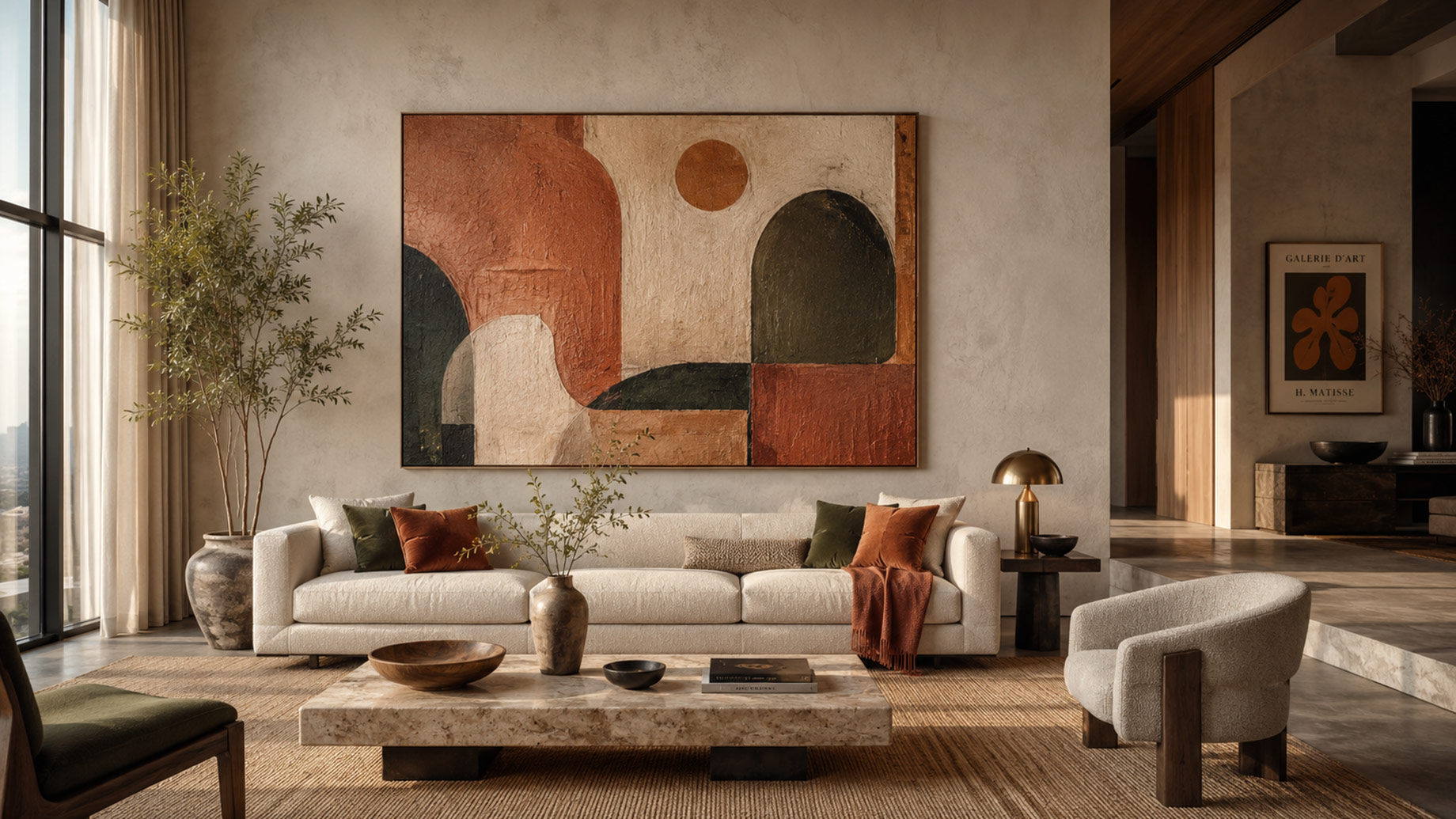
Wall art has stopped being an afterthought in luxury apartments. It now decides how a room feels the moment you walk in. If you are furnishing a high-end space this year, the wall art trends in luxury apartments point toward fewer, bolder pieces, warmer color stories, and a return to real craftsmanship over anything mass-produced.
This guide breaks down the trends actually shaping luxury interiors, with practical advice on sizing, color, and placement so you can apply them without guesswork.
Oversized Statement Pieces Are Replacing Gallery Walls
Designers are moving away from clusters of small frames in favor of one large piece that anchors the room. A single oversized artwork above a sofa or dining table reduces styling decisions and creates an instant sense of scale. This works especially well in apartments with high ceilings, where small art tends to disappear.
If you only invest in one piece this year, make it the largest one your wall can comfortably hold. A good rule is to cover roughly two-thirds of the width of the furniture below it. Anything smaller reads as an accent rather than a focal point.
Art Exhibition Posters Bring Museum Character Without Museum Prices
One of the strongest trends in luxury apartment decor right now is the use of art exhibition posters. These are prints originally designed to announce gallery and museum shows, and they carry the visual weight of fine art at a fraction of the cost of an original painting. Auction houses and design platforms have increasingly carved out dedicated space for exhibition posters, reflecting growing collector interest in the category.
You get the typography, color, and composition of a specific art movement without needing to buy an original. A Bauhaus poster, a Matisse exhibition print, or a Hilma af Klint reproduction all deliver a curated, gallery-like feel while staying flexible enough to move between rooms. For example, these posters have designs tied to real exhibitions and movements rather than generic decorative prints, built specifically around this trend.
This approach also solves a common problem in luxury apartments: matching art to a specific era or design language. Pair a Bauhaus poster with Scandinavian furniture, or Art Deco print with brass fixtures and velvet upholstery, and the room reads as intentional rather than decorated in a hurry.
Earthy, Warm Palettes Are Replacing Cool Minimalism
The stark grey and white palettes that defined luxury interiors for the past decade are fading. In their place, forest green, clay, terracotta, and warm neutrals are dominating high-end apartments. Abstract pieces in these tones pair naturally with wood, linen, and stone finishes, and they photograph better in natural light than anything stark white.
When choosing art for a warm-toned room, look for pieces with at least one earthy undertone even if the composition is bold or abstract. This keeps the piece connected to the rest of the space instead of feeling dropped in.
Texture and Craftsmanship Signal Real Luxury
Flat, glossy prints are losing ground to art with visible texture, whether that comes from brushwork, layered paper, or a matte finish that mimics an original canvas. Buyers increasingly want pieces that look handmade rather than mass-produced, even when they are reproductions.
Choosing Prints That Read as Original
Look for prints on textured or matte fine art paper rather than glossy stock. A matte finish absorbs light instead of reflecting it, which makes a print look closer to an original painting from across the room. This detail matters more in luxury apartments, where guests tend to look closely.
Curating a Gallery Wall the Right Way
Gallery walls have not disappeared, but the rules have tightened. Instead of a random mix of frame sizes and colors, designers are building gallery walls that behave like a single composition. That means:
- Sticking to one or two frame colors across the whole wall
- Keeping consistent spacing (2 to 3 inches between frames works well)
- Choosing pieces that share a color palette, even if the subjects differ
- Anchoring the layout around one larger piece rather than spacing everything evenly
A tighter, more disciplined gallery wall reads as curated. A loose one reads as leftover decor from several different apartments.
Choosing the Right Size and Placement
Size mistakes are the most common reason art looks wrong in an otherwise well-designed room. As a starting point:
- Above a sofa: The artwork should span 60 to 75 percent of the sofa’s width
- Above a bed: Aim for roughly two-thirds of the headboard’s width
- In an entryway or hallway: A single vertical piece works better than a wide horizontal one in tighter spaces
Hang art so the center sits around 57 to 60 inches from the floor, which is the standard eye-level height used in most galleries and museums.
Framing and Finishing Touches
Framing changes how a piece reads on the wall, and it is worth treating as a deliberate design decision. “In high-end interiors, framing should be treated as part of the artwork’s presentation, not a final accessory. At Woodman Frames, our custom framing NYC work focuses on the relationship between the artwork, the room, and the long-term preservation needs of the piece, using frame profiles, matting, and glazing choices that support the design without overpowering the art.” – Tal, Woodman Frames. A simple black or natural wood frame keeps the focus on the artwork itself, while a heavier or metallic frame adds presence in a room that already leans minimal. At Poster Room, framing is available as a paid add-on on every print, so you can decide per piece whether you want it framed or left unframed for your own framer.
If you are working with a mix of pieces, such as a large statement print and a smaller exhibition poster nearby, matching the frame material across both ties the room together without making every piece identical.
Bringing the Trends Together
The wall art trends in luxury apartments share one theme: intention over accumulation. Fewer pieces, chosen with more care, in warmer tones and with visible texture, do more for a room than a wall full of generic prints. Art exhibition posters fit naturally into this shift because they carry real design history while staying affordable enough to build a collection over time.
Start with one strong piece, size it correctly for the wall it will live on, and build outward from there. The result feels closer to a private gallery than a showroom, which is exactly the direction luxury interiors are heading this year.
