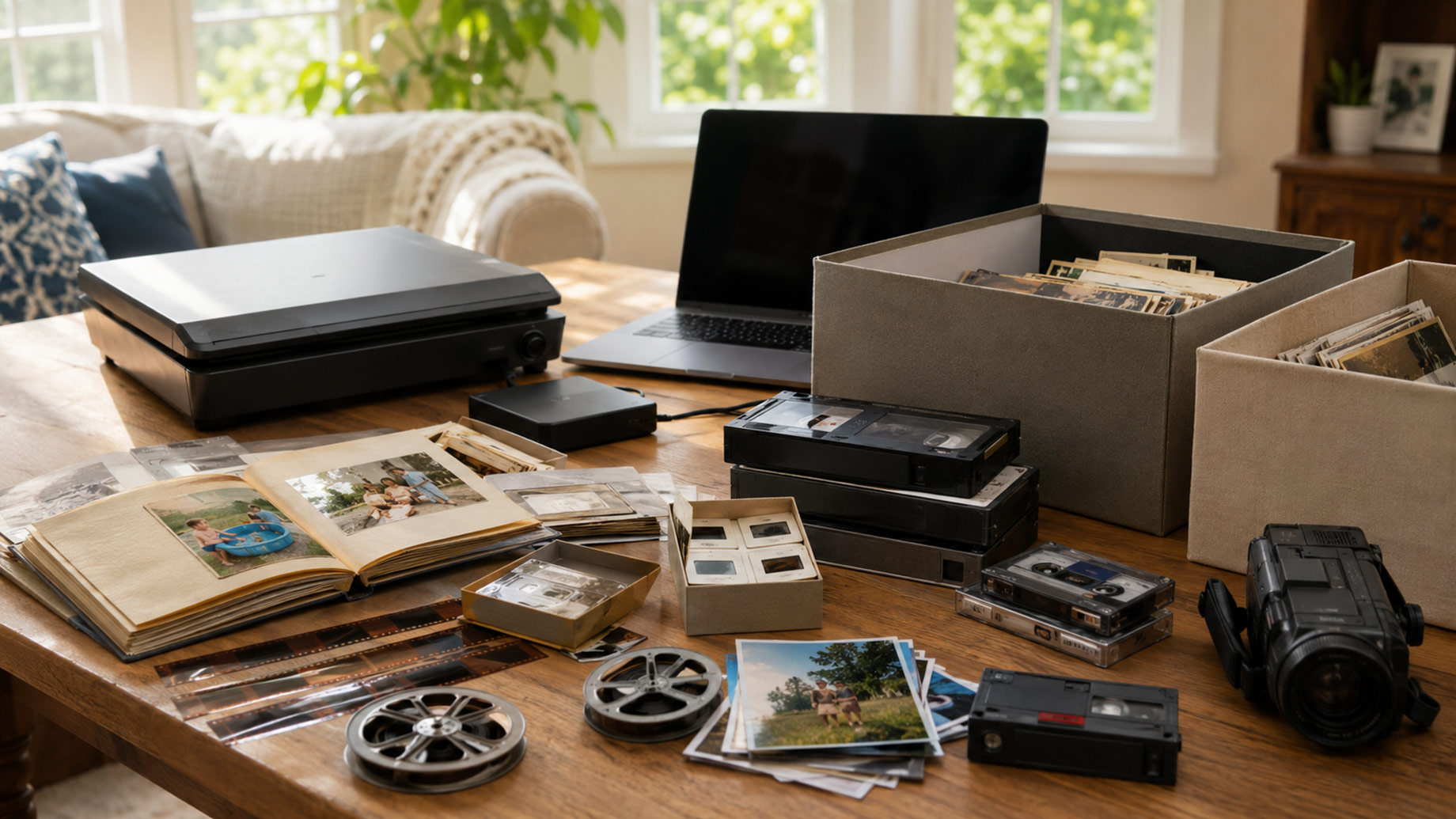
Summer is the perfect time to tackle the boxes that have been sitting in your attic, basement, closet, or garage for years.
If those boxes are full of printed photos, VHS tapes, camcorder tapes, film reels, slides, negatives, and old audio cassettes, do not throw them away.
Instead, take the opportunity to digitize old photos and tapes before age, heat, and humidity cause permanent damage.
Old media becomes more fragile every year. By sorting and preserving it now, you can protect priceless family memories while creating more storage space in your home.
1. Sort Everything Before You Make Decisions
Start by creating separate piles for each type of media. This keeps the project organized and helps you decide what each item needs. Create categories such as:
- Printed photographs from family vacations, birthdays, graduations, and holidays
- Photo albums with handwritten notes, captions, or newspaper clippings
- 35mm slides and negatives stored in boxes, envelopes, or carousel trays
- 8mm and 16mm film reels containing home movies or special events
- VHS tapes, MiniDV tapes, Hi8 tapes, and Video8 tapes from camcorders
- Audio cassette tapes with recorded family stories, music, or interviews
- DVDs and CDs containing digital photos, home videos, or backup files
- Loose keepsakes such as postcards, certificates, newspaper clippings, and handwritten letters
2. Remove Items You No Longer Need
Decluttering does not mean throwing away your family history. It simply means removing items that no longer add value. Set aside things like:
- Multiple copies of the same printed photograph
- Photos that are badly blurred when a clearer version exists
- Blank VHS tapes or cassette tapes that were never recorded
- Empty plastic media cases with no matching contents
- Broken storage boxes that no longer protect your collection
- Loose papers that have no personal or historical significance
- Unlabeled discs or tapes that have already been checked and found to be empty
3. Look for Media That Needs Immediate Attention
Some items should be preserved before others because they are already showing signs of deterioration. Watch for:
- Printed photos with fading colors, cracked surfaces, or curling edges
- Film reels that have a strong vinegar smell or visible shrinkage
- VHS tapes with mold inside the cassette window
- Slides with fading images or damaged cardboard mounts
- Cassette tapes that stick, squeal, or leave residue when played
- Water-damaged albums with pages that no longer separate easily
- Negatives with scratches, fingerprints, or signs of discoloration
4. Decide Which Memories Matter Most
Focus on preserving collections that capture meaningful moments, including:
- Weddings, anniversaries, and family reunions
- Baby photos and childhood milestones
- Graduation ceremonies and school activities
- Military service, family businesses, or important achievements
- Holiday celebrations and birthday parties
- Vacations, road trips, and family camping adventures
- Photos of relatives who are no longer living
5. Create Digital Copies for Long-Term Preservation
Once you know what you want to keep, digitize it as soon as possible. Digital copies help you:
- Share family photos with relatives who live in different states
- Create multiple backups on external drives and secure cloud storage
- View old home movies without using outdated playback equipment
- Turn printed photos into digital albums or slideshow presentations
- Search thousands of files quickly using folders and file names
- Protect memories from floods, fires, accidental spills, and everyday wear
- Preserve tapes before magnetic recordings naturally lose quality
6. Organize Your Digital Collection
A little organization now saves time later. Create folders based on details such as:
- The decade or year the photos were taken
- Individual family members or family branches
- Vacations organized by destination
- Holidays such as Thanksgiving or Christmas
- Weddings, birthdays, anniversaries, and reunions
- School years, sports teams, and graduation events
- Home renovation projects or family milestones
7. Store the Originals the Right Way
Even after digitizing your collection, keep the originals in a safe place whenever possible.
Store photos, film, and tapes in archival-quality boxes or sleeves. Keep them in a cool, dry room with stable temperatures.
Avoid garages, attics, basements, and sheds where heat, moisture, and humidity can speed up deterioration.
When Is Professional Help Worth It?
Some collections are simply too large or too fragile to handle yourself.
A professional media scanning and conversion service has the equipment needed to safely scan delicate photographs, convert aging videotapes, digitize film reels, and preserve older media formats that most homes can no longer play.
Professional help is especially useful if you have inherited family archives, decades of home movies, or media that shows signs of damage.
Final Thoughts
Summer decluttering gives you more than a cleaner home. It gives you the chance to rediscover moments that may have been forgotten inside old boxes for years.
Every photo, home movie, and recorded voice captures a piece of your family’s story that cannot be recreated once it is lost.
By preserving those memories today, you are not simply organizing your belongings.
You are making sure the people, places, and moments that shaped your family can be shared, remembered, and appreciated for generations to come.
