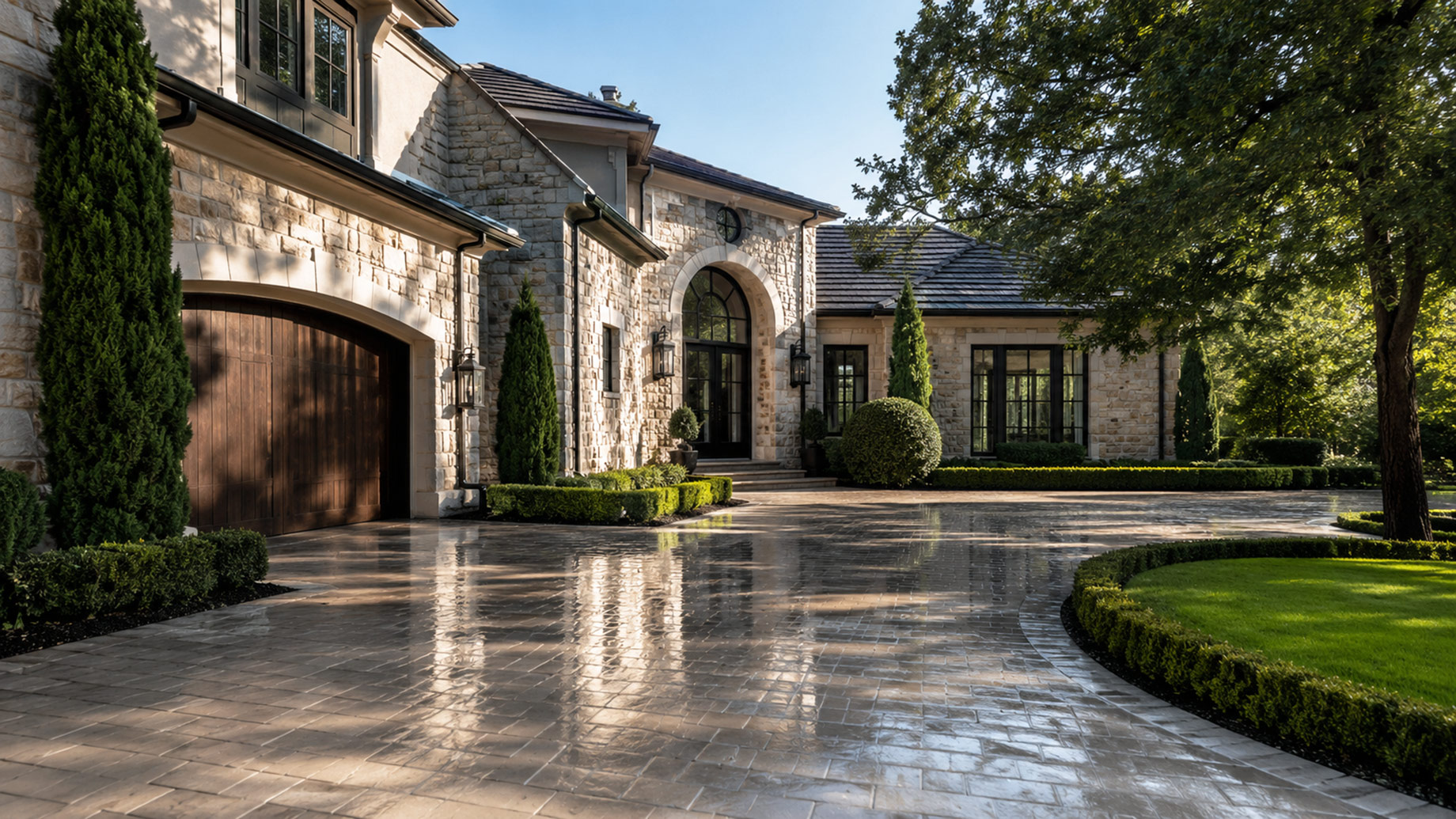
Pressure washing a luxury home safely requires a separate method for each exterior material. Dense concrete may tolerate controlled pressure, while roofing, stucco, painted finishes, wood, and certain natural stones often require soft washing or another low-impact process. The objective is not to use the strongest equipment available. It is to remove contamination without forcing water behind cladding, etching a finish, stripping a coating, or disturbing the details that give the property its character.
Begin With a Materials Inventory
Luxury residences are rarely single-surface buildings. One elevation may combine hand-molded brick, limestone trim, painted metal, cedar, stucco, glass, and architectural concrete. A driveway may include poured slabs, paver borders, natural-stone steps, and sand-filled joints. Treating all of those materials with one nozzle, pressure level, and detergent creates unnecessary risk.
Before cleaning begins, walk the property and identify every surface, coating, sealant, transition, and vulnerable edge. Note repaired mortar, hairline stucco cracks, loose paint, oxidized metal, failed caulking, open weep holes, and areas where water could enter. Photograph these conditions to distinguish existing defects from post-cleaning discoveries.
Match the Method to the Surface
| Exterior Surface | Preferred Approach | Main Risk to Avoid |
|---|---|---|
| Concrete and dense pavers | Controlled pressure after stain pretreatment | Etching, visible wand marks, and displaced joint sand |
| Brick and sound masonry | Low-to-moderate pressure with a test area | Damaged mortar joints and water entry |
| Stucco and painted cladding | Soft washing or low-pressure rinsing | Chipped finishes, streaking, and moisture intrusion |
| Vinyl or fiber-cement siding | Manufacturer-approved low pressure | Driving water behind panels or into openings |
| Natural stone | Stone-safe cleaner and gentle rinsing | Acid etching, discoloration, and damaged sealers |
| Wood decking and screens | Wide fan, low pressure, and grain-aware technique | Raised fibers, gouging, and coating removal |
| Asphalt-shingle roofing | Approved low-pressure treatment only | Granule loss and premature roof damage |
Industry guidance supports this material-specific approach. The Asphalt Roofing Manufacturers Association advises against pressure washing asphalt shingles. The Vinyl Siding Institute says power washing must follow the siding manufacturer’s restrictions and should not be directed upward behind panels. The Natural Stone Institute recommends neutral cleaners and warns that acidic products can etch calcareous stones such as limestone and marble.
Map the Water Path Before Starting
The cleaning plan should account for where water and detergent will travel, not only where the spray will land. On a high-end property, runoff may reach copper gutters, bronze fixtures, custom doors, exterior kitchens, pool coping, automated gates, landscape lighting, security cameras, speakers, or delicate planting beds.
Close windows and doors, cover suitable electrical components, identify exterior outlets, and confirm that drainage routes are open. Move furniture, textiles, planters, and sculptures away from the work zone. Irrigate sensitive landscaping before and after detergent use when the selected product requires it, and follow the product label for dilution, dwell time, containment, and rinsing.
Around pools and water features, cleaning residue should not enter the water, and overspray should not dry on glass fencing, polished metal, or dark finishes.
Use Chemistry to Reduce Mechanical Force
Pressure alone is often the wrong tool for organic staining, oxidation, oil, rust, or mineral deposits. A compatible cleaning agent can loosen a specific contaminant so it can be removed with less force. The cleaner, however, must be selected for both the stain and the substrate beneath it.
A treatment suitable for concrete may damage limestone, vegetation, painted aluminum, or an adjacent sealer. Mixing products can also create dangerous reactions. Professionals should use clearly labeled solutions, avoid improvised chemical combinations, test an inconspicuous area, and rinse surrounding materials before residue dries.
For natural stone, the stain should be identified before treatment. Rust, leaf tannins, grease, algae, and atmospheric dirt do not necessarily respond to the same process. A neutral first approach is safer than immediately applying an aggressive acid or abrasive.
Follow a Controlled Cleaning Sequence
A reliable workflow keeps dirty runoff from recontaminating finished areas:
- Inspect and document defects, materials, and drainage.
- Protect openings, fixtures, electronics, landscaping, and adjacent finishes.
- Pretreat stains and organic growth with a compatible solution.
- Clean from higher areas toward lower hardscape, using the least force that works.
- Rinse transitions, corners, glass, metals, and plants thoroughly.
- Allow surfaces to dry, then inspect for missed areas, damage, or stains requiring a different treatment.
Evaluate test patches after drying. Wet masonry and stone can temporarily appear darker and may conceal uneven cleaning, etching, or residual staining.
Account for Winston-Salem Conditions
In Winston-Salem and the Piedmont Triad, warm, humid periods, wooded lots, rainfall, and seasonal debris can create varied exterior buildup on the same property. Shaded walks may develop moss or algae while sunny elevations collect pollen, dust, and atmospheric residue. NC State Extension describes the Piedmont as hot and humid in summer and notes that moss thrives in wet, humid, shaded conditions.
Timing should follow the property, not a rigid annual date. Inspect after peak pollen, extended wet weather, major storms, landscaping work, or construction. Clean early enough that organic growth has not become deeply established, but avoid washing immediately before exterior painting, sealing, or staining unless adequate drying time has been built into the schedule.
Homeowners who are uncertain about mixed materials, tall elevations, roof staining, or chemical compatibility should use a qualified pressure washing service that can assess the property and choose the method surface by surface. H&N Cleaning Services provides residential exterior cleaning in Winston-Salem and the wider Piedmont Triad.
Preservation is the Standard
A luxury exterior should not merely look cleaner when the work is finished; its materials should remain intact, uniform, and ready for long-term care. That requires restraint, testing, controlled runoff, and a clear understanding of how each finish reacts to water, pressure, and chemistry.
For a property entering the market, this technical approach also complements broader curb-appeal preparation by protecting the architectural finishes that make the residence distinctive. The best result is not evidence of powerful equipment. It is an exterior that looks naturally renewed, with no cleaning marks and no sacrificed detail.
