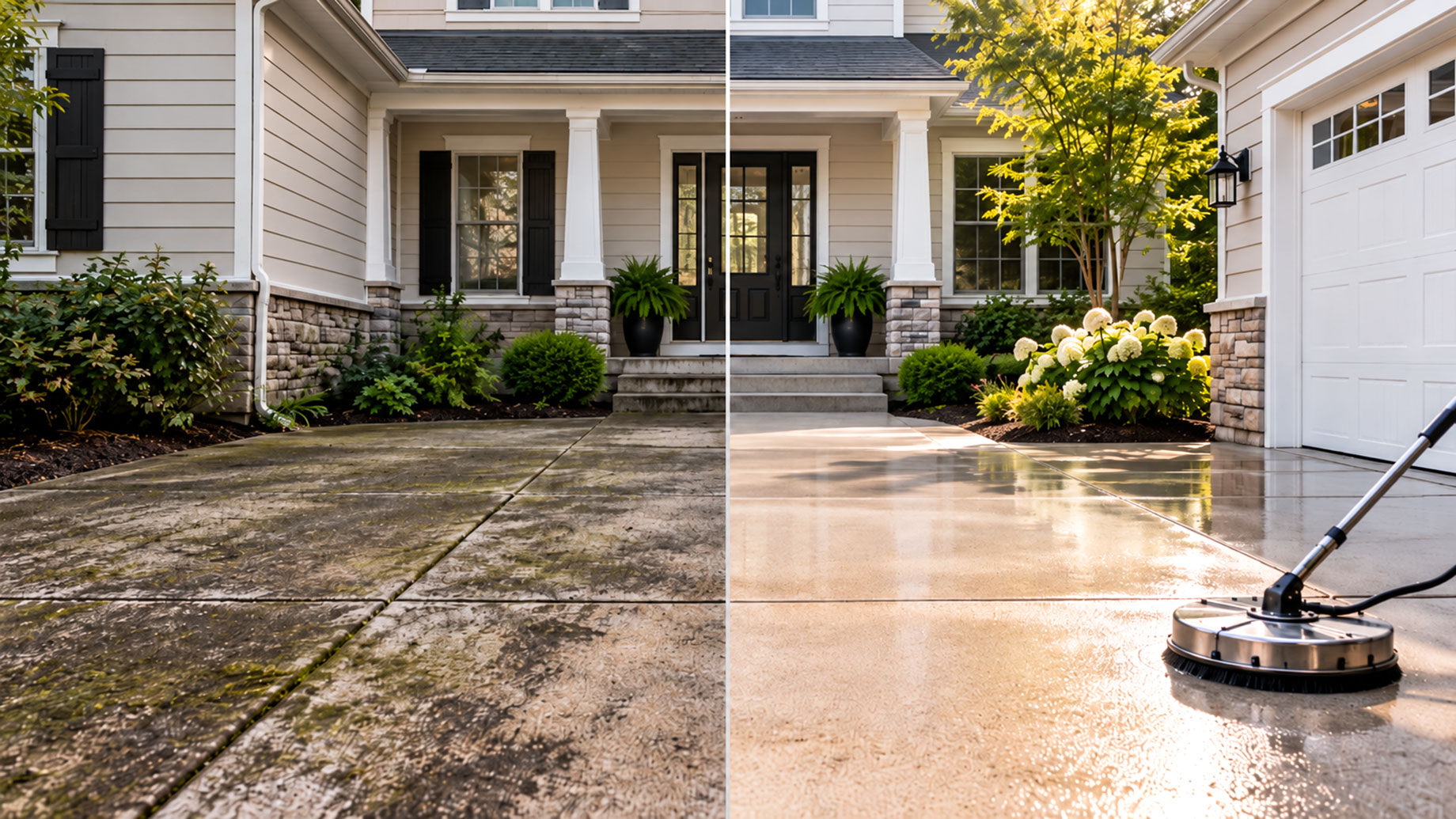
A beautifully designed home can lose some of its presence when the driveway looks dingy, the entrance collects grime, or green streaks appear on the siding. Before planning a larger exterior makeover, consider whether careful cleaning could reveal the appeal already there.
Pressure washing can refresh suitable exterior surfaces, but the best results depend on matching the method to the material. Some areas tolerate controlled pressure; others need gentle rinsing, approved cleaning products, or specialist attention. For homeowners, the goal is a cleaner property with its finishes, landscaping, and architectural details intact.
Start With the Areas That Shape First Impressions
Walk toward your home as a visitor would. Look at the driveway, front path, steps, porch, and walls surrounding the entrance. These connected surfaces frame the arrival experience, making them sensible priorities when the cleaning budget is limited.
Then consider the spaces you use most. A patio beneath outdoor furniture or a deck beside the kitchen may deserve attention before a rarely seen side passage. Cleaning should support everyday enjoyment as well as appearance from the street.
Set realistic expectations. Removing surface dirt can improve presentation, but washing cannot repair cracked concrete, restore missing mortar, or reverse a failing finish. Identify those issues before treating discoloration as a cleaning problem.
Take a few photographs before requesting estimates, including close views of problem areas and wider views of each surface. This gives the contractor useful context and creates a simple reference for reviewing the result once the cleaned areas have dried completely.
Pressure Washing and Soft Washing Serve Different Purposes
Pressure washing uses pressurized water to loosen and remove surface contamination. Soft washing relies more on cleaning solutions and lower pressure. Neither term, by itself, tells you whether a proposed treatment suits your property.
The important details are the surface, its condition, the cleaning product, and the application method. A contractor should explain why each method is appropriate and follow the material manufacturer’s instructions. A single approach across siding, roofing, paving, and decking deserves closer scrutiny.
James Hardie, for example, recommends a low pressure hose and a soft, nonmetal brush for cleaning its siding, warning against high pressure washing. That distinction matters when a home combines several exterior materials: equipment suitable for one area may be inappropriate a few feet away.
Match the Cleaning Plan to Each Material
For driveways and paved entrances, start by identifying the surface and any existing coating. Point out cracks, loose sections, previous repairs, and stains that need separate assessment. Ask for a discreet test area before cleaning a prominent stretch.
Paver patios need attention to their joints as well as their faces. Belgard cautions that power washing can expose aggregate beneath the paver surface and recommends keeping sanded joints filled. Confirm whether the proposed work could disturb jointing material and whether replenishment is included in the quote.
Decking also requires product identification. Trex publishes different care instructions for current decking collections and older products, illustrating why “composite” alone is not enough information. Find the brand and product line when possible, and share any installation or maintenance records with the contractor.
Treat roof cleaning as a separate specialty. The Asphalt Roofing Manufacturers Association advises against power washing asphalt shingles because it can damage the roofing. Roof discoloration should prompt an assessment and a suitable cleaning recommendation, rather than an assumption that stronger water pressure will solve it.
Choose a Professional Who Explains the Process
Homeowners in Mason, Ohio, can begin by discussing their property with a local pressure washing company that offers both pressure washing and soft washing. Describe the surfaces involved, share photographs, and flag anything fragile, recently installed, or already damaged.
A useful estimate should define the work clearly enough to compare it with other proposals. Ask these questions before scheduling:
- Which surfaces are included, and which require a separate service?
- What cleaning method and products will be used on each material?
- How will landscaping, nearby fixtures, and adjacent finishes be protected?
- How will wash water be managed around the property?
- Is joint sand replacement or another finishing step included where needed?
- Can the contractor provide proof of insurance and examples of comparable work?
Discuss stain removal limits, too. Ask which marks are likely to improve and which may remain. Clear expectations help you evaluate the finished work without confusing permanent wear with incomplete cleaning.
Prepare the Property and Choose a Practical Time
Before the appointment, move vehicles, planters, furniture, and decorative pieces out of the agreed work area. Close windows and doors, arrange access to the water supply, and identify electrical fixtures or other features that need protection.
Tell the contractor about leaks, loose trim, deteriorated seals, and any surface that has recently been painted or coated. These details can change the preparation required or the appropriate timing. Follow the relevant product instructions for curing and cleaning restrictions.
If you are preparing for listing photographs or an outdoor gathering, schedule enough time for the surfaces to dry and for a final inspection. Avoid making the cleaning appointment the last task immediately before guests or photographers arrive.
For ongoing care, use a seasonal inspection as a reminder to assess the exterior. The need for cleaning should follow visible conditions and manufacturer guidance, rather than an automatic schedule applied equally to every surface.
Make the Results Part of Regular Home Care
Once the work is complete, walk the property with the contractor. Review the agreed areas, discuss any remaining marks, and ask when furniture can return or when a planned coating can be applied. Keep a record of the methods and products used for future maintenance.
Between professional visits, sweep away leaves and loose debris, address spills with appropriate products, and notice where discoloration returns. Repeated staining in one spot is worth investigating before simply booking another wash.
Thoughtful exterior cleaning helps a home’s materials and design read clearly again. With a considered scope, suitable methods, and realistic expectations, pressure washing becomes a practical part of caring for the property and enjoying its outdoor spaces.
