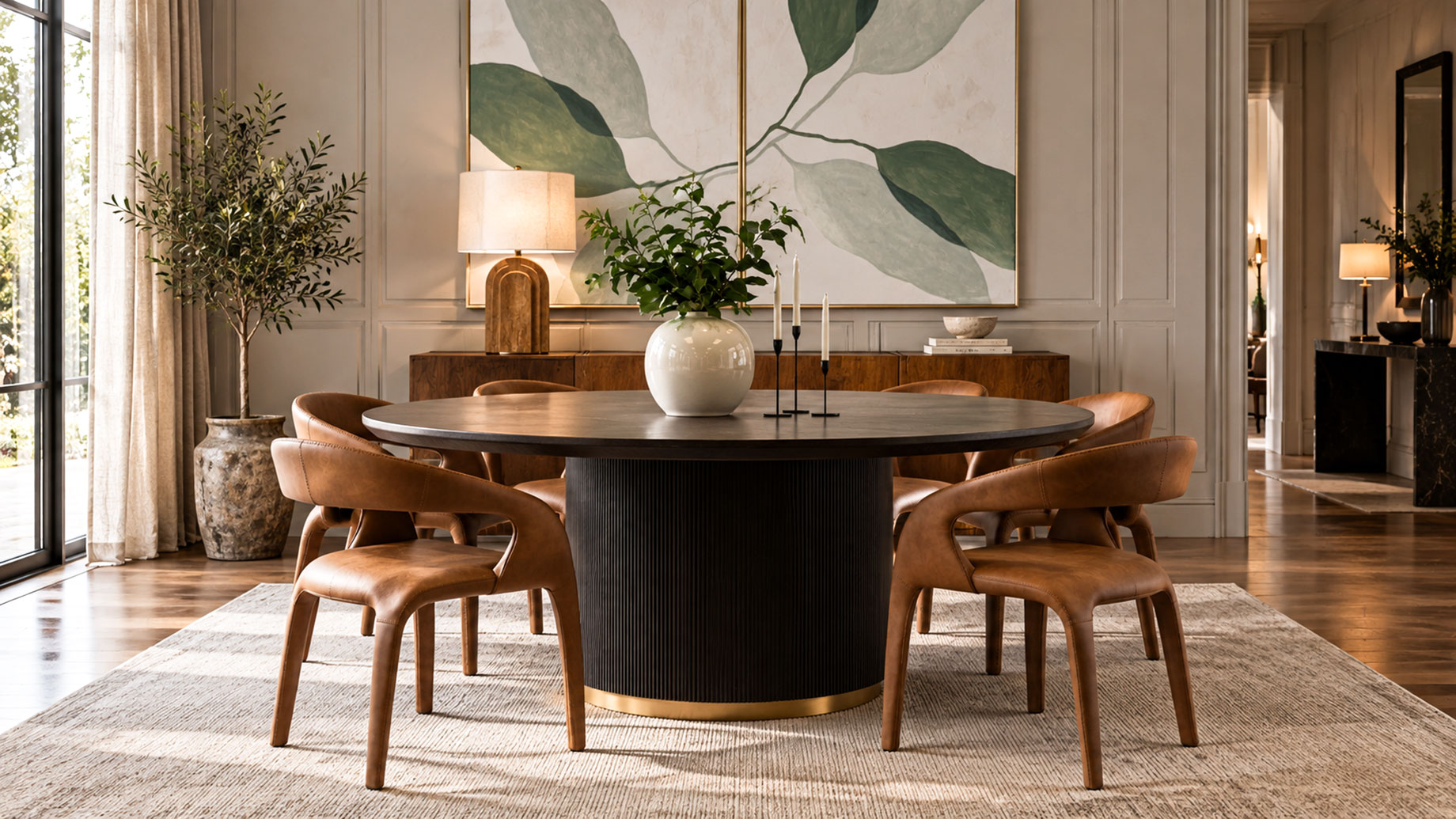
A truly luxurious interior is rarely defined by how much has been added to it. More often, it is the result of restraint, proportion and a carefully considered relationship between architecture, furniture, materials and light.
The most accomplished spaces feel effortless because every element has a purpose. Furniture is selected not simply to fill a room, but to establish scale, rhythm and character. Materials are chosen for depth and longevity rather than novelty, while lighting is used to shape atmosphere and draw attention to the architecture.
Whether designing a contemporary townhouse, a period residence or a modern apartment, several principles consistently distinguish refined interiors from those that simply appear expensive.
Begin With Scale and Proportion
Scale is one of the most influential elements in interior design, yet it is often underestimated.
A large room furnished with pieces that are too small can feel fragmented and unresolved. Equally, oversized furniture in a more intimate space can compromise movement and make the room feel visually heavy.
The objective is not simply to select furniture that fits, but to choose pieces that feel proportionate to the architecture around them.
Ceiling height, window dimensions, circulation routes and the relationship between adjoining spaces should all influence the size and placement of furniture.
In generous interiors, substantial pieces can provide much-needed visual weight. A large dining table, sculptural console or deep sofa can anchor the room and establish a clear sense of hierarchy.
Smaller rooms often benefit from the opposite approach: fewer, stronger pieces with enough space around them to be appreciated.
A carefully selected collection of luxury furniture can provide the foundation for this approach, particularly when individual pieces combine strong proportions, distinctive materials and restrained detailing.
Choose Materials With Character
Materiality has a profound effect on how an interior feels.
Natural timber, marble, stone, glass, linen and thoughtfully finished metals introduce subtle variation that cannot easily be reproduced by highly uniform surfaces. Grain, veining, patina and texture create depth, allowing furniture to develop a stronger visual relationship with its surroundings.
The most sophisticated interiors rarely rely on a large number of competing finishes. Instead, they establish a restrained palette and repeat selected materials throughout the space.
Warm timber might be balanced with honed stone. Brushed brass can introduce softness against darker cabinetry. Smoked glass can provide contrast without adding visual weight.
The result should feel layered rather than busy.
Material also influences longevity. Pieces chosen for the inherent quality of their surfaces and construction tend to remain relevant long after more decorative trends have passed.
Let One Piece Establish the Room
The strongest rooms usually have a clear focal point.
In a living room, this may be a sculptural coffee table or an architectural sofa. In a hallway, carefully selected statement console tables can establish an immediate sense of arrival, particularly when paired with a large mirror, artwork or sculptural lighting.
The principle is simple: allow one element to lead and let the surrounding pieces support it.
When everything in a room demands attention, nothing feels particularly important.
A strongly veined stone surface, for example, may require little additional decoration. A console with an expressive base might look more sophisticated with one carefully chosen object rather than an arrangement of numerous accessories.
This restraint gives individual pieces space to be appreciated and creates the visual calm often associated with the most successful luxury interiors.
Make the Dining Table an Architectural Feature
Few pieces influence a room as strongly as the dining table.
It determines circulation, defines the relationship between furniture and lighting, and often becomes the natural centre of the space.
Contemporary designer dining tables increasingly combine materials such as oak, marble, glass and metal, allowing them to function almost as architectural objects rather than purely practical furniture.
A substantial rectangular table can reinforce the proportions of a long dining room, while a round table introduces a softer geometry and can improve movement within more compact spaces.
The base is equally important. Pedestal, sculptural and architectural forms can give a dining table presence without requiring excessive decoration elsewhere in the room.
When selecting a table, consider not only its dimensions but also the amount of space around it. Generous circulation immediately makes a dining area feel more comfortable and considered.
Use Lighting to Reinforce the Composition
Lighting should be designed alongside the furniture rather than treated as a finishing touch.
A chandelier positioned above a dining table creates a natural visual relationship between the two elements. In double-height spaces or large entrance halls, an appropriately scaled light fitting can connect the upper architecture with the furniture below.
The key is proportion.
A small pendant above a substantial dining table can make both elements feel disconnected. A larger chandelier or multi-tiered installation can create balance and strengthen the composition of the room.
Decorative lighting should then be layered with wall lights, table lamps and architectural lighting to create depth throughout the day.
The best lighting schemes are rarely dependent on a single source. Instead, they combine practical illumination with softer pools of light that reveal materials, textures and architectural details.
Leave Space Around Exceptional Pieces
One of the clearest signs of confidence in interior design is knowing when to stop.
Exceptional furniture does not need to be surrounded by constant decoration. In fact, space often makes an object feel more significant.
Allowing visual breathing room around a dining table, console, armchair or sculptural accessory gives the eye time to understand its form and material.
This is also what separates a collected interior from one that feels overly styled.
Luxury is not created by filling every surface. It is created by choosing well, editing carefully and understanding how individual pieces relate to the architecture around them.
When proportion, material, furniture and lighting are considered as one composition, the result feels sophisticated without becoming formal or contrived.
The most memorable interiors are not simply expensive. They are coherent, purposeful and distinctive — spaces in which every element has been chosen for a reason.
