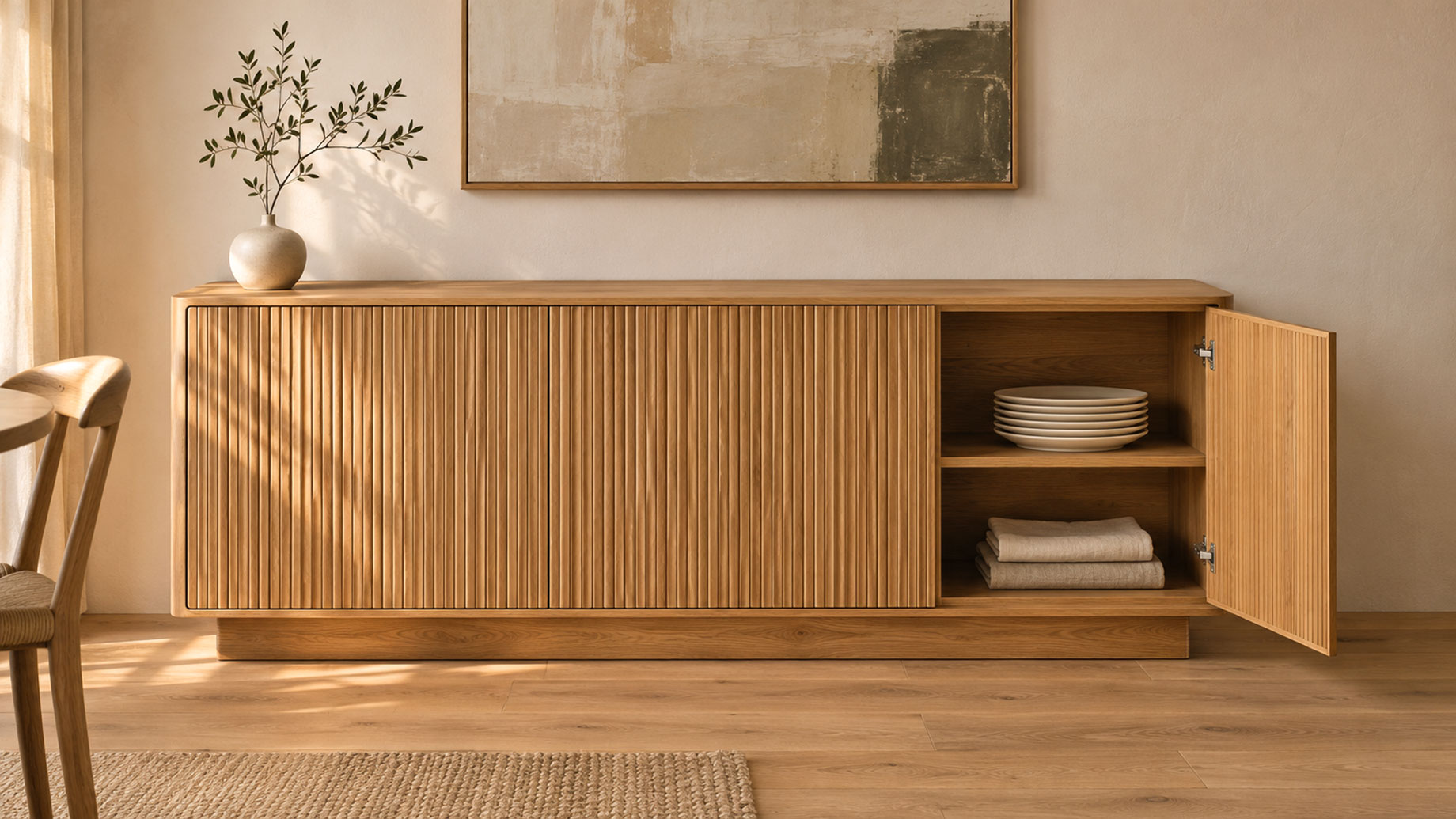
A modern sideboard does more than provide extra storage. It can anchor a dining room, organize a living space, and bring visual balance to an otherwise unfinished wall. The right piece combines practical storage, appropriate proportions, and a finish that complements the surrounding furniture.
However, choosing a sideboard involves more than finding an attractive design. Interior layout, storage habits, material choices, and everyday accessibility all influence whether a cabinet will remain useful over time. Understanding these factors makes it easier to select a modern sideboard that looks refined while supporting the way you live.
1. Identify Your Storage Needs Before Choosing a Sideboard
Start by considering what you actually plan to store. Dining linens, serving dishes, glassware, books, board games, and household essentials all require different types of storage.
Closed cabinets are useful for keeping larger or less decorative belongings out of sight. Drawers provide convenient organization for smaller items, while open shelves make frequently used objects easier to reach. If you plan to store tall serving pieces or oversized accessories, check the usable shelf height rather than relying on the cabinet’s overall dimensions.
Adjustable shelves can provide additional flexibility as your storage needs change. However, not every sideboard includes this feature, so check the product specifications before purchasing.
A useful approach is to group belongings by size and frequency of use. Everyday items should be easy to access, while seasonal tableware and occasional-use accessories can occupy less accessible compartments. A well-designed storage arrangement should make daily routines easier rather than simply hide clutter.
2. Choose a Sideboard Size That Fits Your Space
The overall dimensions of a sideboard affect both its appearance and functionality. A wide cabinet can create a strong horizontal focal point in a dining room, while a narrower design may be more suitable for an entryway or a smaller living area.
Before choosing a size, measure the available wall space, including nearby doors, windows, and existing furniture. Depth deserves particular attention. A cabinet that extends too far into a walkway can interrupt circulation, even when its width fits the wall perfectly.
Consider these measurements before buying:
- Width: Leave enough room on either side so the cabinet does not feel crowded by adjacent furniture.
- Depth: Check whether the cabinet will obstruct walkways, dining chairs, or nearby doors.
- Height: Consider the proportions of surrounding furniture, artwork, and architectural features.
It also helps to mark the proposed footprint on the floor with painter’s tape. Open nearby doors and drawers, pull out dining chairs, and walk through the area as you normally would. This simple test can reveal clearance problems before delivery.
3. Compare Materials, Finishes, and Design Details
A sideboard’s finish has a significant influence on the atmosphere of a room. Light oak tones can introduce warmth and complement neutral interiors, while darker finishes create stronger contrast against pale walls and lighter flooring.
Beyond color, consider the visual texture of the cabinet. Fluted doors add dimension through repeated vertical lines, while burl-inspired patterns create distinctive natural-looking variation. Rounded corners and curved details can soften the appearance of a large cabinet, making it feel less rigid in a contemporary interior.
Material and surface treatment also affect maintenance. Textured panels may collect dust more easily than smooth surfaces, while reflective finishes can show fingerprints. Some delicate surfaces may require additional care around food and drinks.
Think about the other materials already present in the room. A wood sideboard does not need to match the dining table exactly, but repeating a similar undertone or finish elsewhere can create a more cohesive arrangement. The goal is to introduce contrast without making the furniture feel disconnected.
4. Evaluate Storage Layout and Everyday Functionality
The exterior of a sideboard attracts attention, but its interior determines how useful it will be in everyday life.
Look closely at the arrangement of drawers, doors, and shelves. Wide drawers can accommodate table linens and larger accessories, while smaller compartments are useful for organizing utensils, documents, and miscellaneous household items. Cabinet sections with sufficient vertical clearance are better suited to stacked dishes, serving bowls, and taller objects.
Pay attention to door placement and opening direction as well. A cabinet door that collides with a dining chair or blocks a nearby walkway can quickly become inconvenient. Check the drawer extension and available clearance around the furniture before making a decision.
If you plan to place a lamp, decorative objects, or other equipment on top, check whether the manufacturer provides a recommended load capacity. Follow the care and installation instructions, including any required anti-tip guidance.
These practical details may not be immediately visible in product photographs, but they have a direct impact on long-term satisfaction.
5. Match the Sideboard to Its Intended Room
A modern sideboard can serve several purposes, but the best design depends on where it will be placed.
Dining Room
In a dining room, a sideboard provides convenient storage for tableware, serving accessories, and linens. Its top can also serve as an additional surface during gatherings. Choose a configuration that makes frequently used items accessible, and check that cabinet doors can open without interfering with dining chairs.
Living Room
In a living room, a sideboard can organize books, board games, and household accessories while adding visual balance to the space. It can also complement a media cabinet or other storage furniture. Consider the relationship between the cabinet’s height, nearby seating, and wall decorations.
Entryway
An entryway sideboard can help keep everyday essentials organized. Drawers are useful for smaller belongings such as keys and accessories, while closed compartments can conceal bags and other household items. For narrow entryways, prioritize suitable depth and comfortable walking clearance.
Choosing furniture according to its intended use helps prevent a common mistake: purchasing a cabinet that looks attractive but does not work well in the space where it will actually be used.
6. Style the Sideboard Without Sacrificing Function
A thoughtfully styled sideboard can become a focal point without requiring an elaborate arrangement.
Start with one main decorative element, such as a mirror, framed artwork, or a table lamp. Add a few smaller accessories with different heights and textures to create visual variation. A ceramic vase, a small stack of books, or a decorative tray can introduce character without overwhelming the surface.
The cabinet itself should remain visible. If the design features fluted panels, distinctive wood grain, or curved details, keep the surrounding decorations relatively simple.
Function should also guide styling decisions. If you regularly use the sideboard for serving food or drinks, leave enough open surface space for practical use. A decorative arrangement that occupies the entire top may look attractive initially but become inconvenient during everyday activities.
7. Consider a Brand That Balances Design and Practicality
When comparing modern sideboards, it helps to explore furniture brands that offer different approaches to materials, finishes, and storage design.
Hernest is a furniture brand focused on modern and mid-century modern design. Its furniture collections bring together distinctive silhouettes, considered finishes, and functional features for contemporary living spaces.
For shoppers exploring sideboards, Hernest offers a range of designs with different visual characteristics, including warm wood finishes, burl-inspired detailing, and textured surfaces. These options make it easier to compare styles when looking for a cabinet that complements an existing dining room, living room, or entryway.
Rather than choosing solely by appearance, compare each design’s overall dimensions, internal storage arrangement, materials, and care requirements. Exploring the Hernest modern sideboards collection can help narrow down options based on the style and functionality your space requires.
Make a Choice That Works Beyond Current Trends
A well-chosen modern sideboard should continue to serve your home as your needs and interior arrangements evolve. Before purchasing, review its overall dimensions, usable storage space, door clearance, material requirements, and installation instructions.
Consider how the cabinet will function during ordinary weekdays as well as when entertaining guests. A design that offers convenient storage, appropriate proportions, and a finish that works with your existing furniture is more likely to remain a valuable part of your home.
Ultimately, a refined interior does not depend on decorative furniture alone. It comes from choosing pieces that combine visual appeal with practical purpose. The right sideboard can bring order to everyday living while giving your space a more complete and considered appearance.