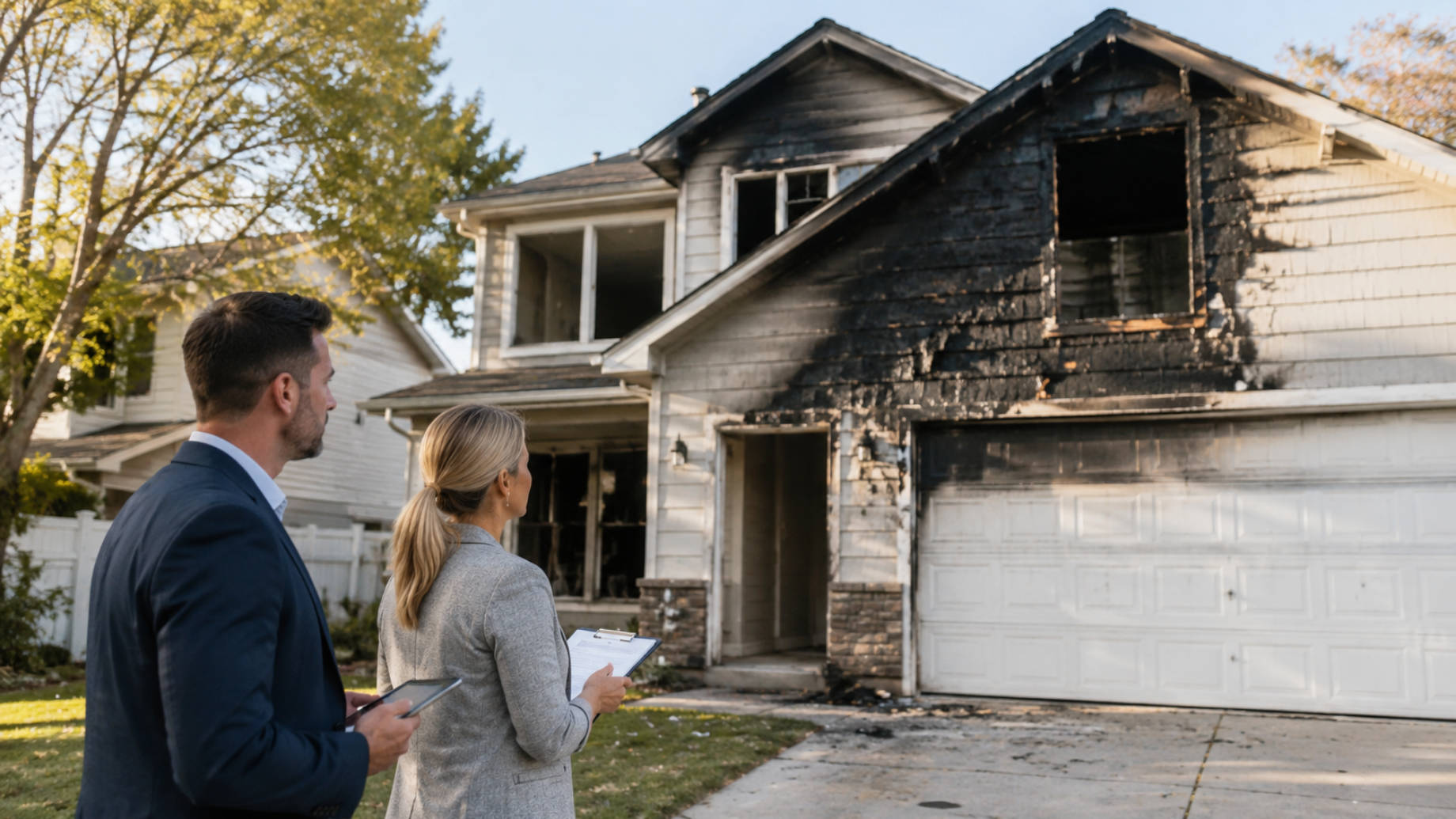
Investors inspect homes that have been burnt by comparing the after-repair value with the purchase price plus the entire cost of restoration, and then ensuring that the difference still allows for profit and risk. The usual guideline is the 70 percent formula: an investor pays at the most, 70 percent of the after-repair value less repair costs. When it comes to fire damage, the repair estimate contains more hidden risk than a cosmetic flip, so prudent buyers buffer their figures and step aside from deals where the margin is tight.
The factor that distinguishes a profitable fire-damage deal from a disastrous investment is the precision of the damage evaluation. It is quite possible that two houses that appear equally burnt from the street can be very different in price by tens of thousands of dollars once you consider whether the fire has affected the framing, the wiring, and the foundation. Well-versed investors understand that the visible burn is only part of the story, and they calculate the unknowns into every offer.
What the 70 Percent Rule Looks Like on a Fire-Damaged Property
After-repair value (ARV) is the starting point in this calculation. ARV is the market price of a house that has been completely renovated in agreement with other houses in the neighborhood. For example, if a comparable renovated home sells for $300 000 then per the 70% rule, the maximum investor’s offer is $210,000 minus the cost of repair. In other words, if restoration costs $90 000 then the maximum they would pay is $120,000, and in fact, many will offer below that to create an extra cushion.
Yet, fire damage affects the way this cushion is calculated. A cosmetic flip can comfortably use a 70 to 75 percent multiplier but experienced buyers even go down to 65 percent or less for fire-damaged houses because the extent of the work usually increases after demolition. Smoke reaches drywall cavities and HVAC ducts in ways no inspection can show. So, an investor who prepares for the worst and is pleasantly surprised will survive financially. But, the one who expects the best will lose the margin to unforeseen events.
Holding costs are also a heavy factor here. A fire-damaged rehab may take 4 to 9 months while a light cosmetic flip takes 8 to 12 weeks, and each month incurs taxes insurance loan interest, and utilities. These carrying costs, which are very often overlooked, reduce the profit, so those investors who plan for more time factor the price of their offers Because of this.
How Investors Assess the True Extent of Fire Damage
Obviously the first question for any potential buyer is, how far did the fire spread? Most affordable scenario is when only one room is affected by surface smoke and soot, and a clean-and-paint job with a sealing primer is the usual work. Prices start soaring in cases when flames have reached the structural elements, since when framing is charred it loses its load-bearing capacity and replacement is usually required instead of treatment.
Investors highly examine the systems which fire and fire-fighting water are most likely to damage. Electric wiring that has been exposed to heat may become unreliable and wiring might be needed almost from scratch, which for an average single-family home can cost $8,000 to $20,000. In such a scenario the HVAC system normally carries the smoke residue throughout the ductwork, and as an aftermath the water used to put out the fire leads to a new type of damage, e.g. the subfloors get warped and after 48 to 72 hours of the house being wet there will be mold.
The wise decision is to hire a licensed contractor and sometimes even a structural engineer before making a commitment. Spending a couple of hundred dollars on a correct inspection will save you from a mistake costing six figures. Most investors also check the fire report to identify the cause, as an electrical fire is an indicator of the whole house having old wiring, whereas a kitchen grease fire may mean that the rest of the structure was completely spared.
Where Fire-Damaged Deals Come From and How Pricing Differs by Market
Most fire-damaged inventory reaches investors through a few channels: distressed sellers who lack the funds or the appetite to rebuild, insurance situations where the payout went to the homeowner who chose to cash out, and specialized buyers who acquire and then wholesale these properties. Sellers in this position usually prioritize speed and certainty over squeezing the last dollar, which is exactly the dynamic that creates margin.
Companies like We Buy Fire Damaged Houses acquire these properties directly from homeowners and then move them to investors, which means a meaningful share of deals never hits the open market. For an investor, building relationships with those sources matters more than scanning the MLS, because the best fire deals are usually gone before they ever get listed.
Pricing discipline shifts with the market too. In a high-appreciation metro where after-repair values climb $400,000 and up, an investor can absorb a larger repair budget and still clear a healthy profit. In a flat or rural market where restored homes top out at $150,000, the same $90,000 rebuild simply does not pencil, and the land value can exceed the value of saving the structure. That is why some fire-damaged purchases end as teardowns and new builds rather than restorations, particularly when the foundation is compromised or the lot is worth more empty.
Calculating Profit, Risk, and Exit Strategy Before Buying
Profit from these deals derives not just from the resale price. It’s about purchasing at the right figure, managing the rehab effectively, and selecting an exit strategy that aligns with the property. A neat renovation in a good neighborhood, for example, will generally indicate a retail flip. A house in a neighborhood dominated by rentals, once repaired, is more likely to make buy-and-hold a better cash flow option, turning the discount on purchase into long-term equity rather than a one-time profit.
But, the risk aspect needs to be given as much consideration. Getting a permit for rebuilding a house after a structural fire can be a major headache with delays of several weeks. Besides, bringing a house up to the present building codes generally entails additional work and expense that the owners of older homes never had to deal with. The fire-damage rehab segment is one faced with budget overruns more frequently than standard flips, mostly due to expansion of the scope once the walls are opened. A smart investor not only relies on the contractor’s first quote but also reserves 15-20% of the repair budget for possible unforeseen issues.
Most deals that fail have one thing in common: the buyer was so enamored with the post-repair value that the rehab was disregarded. Successful deals are those which see the repair estimate as the determining factor for or against the profitability, and they check it with those who have actually rebuilt fire-damaged houses rather than simply guessing from a picture on the phone.
