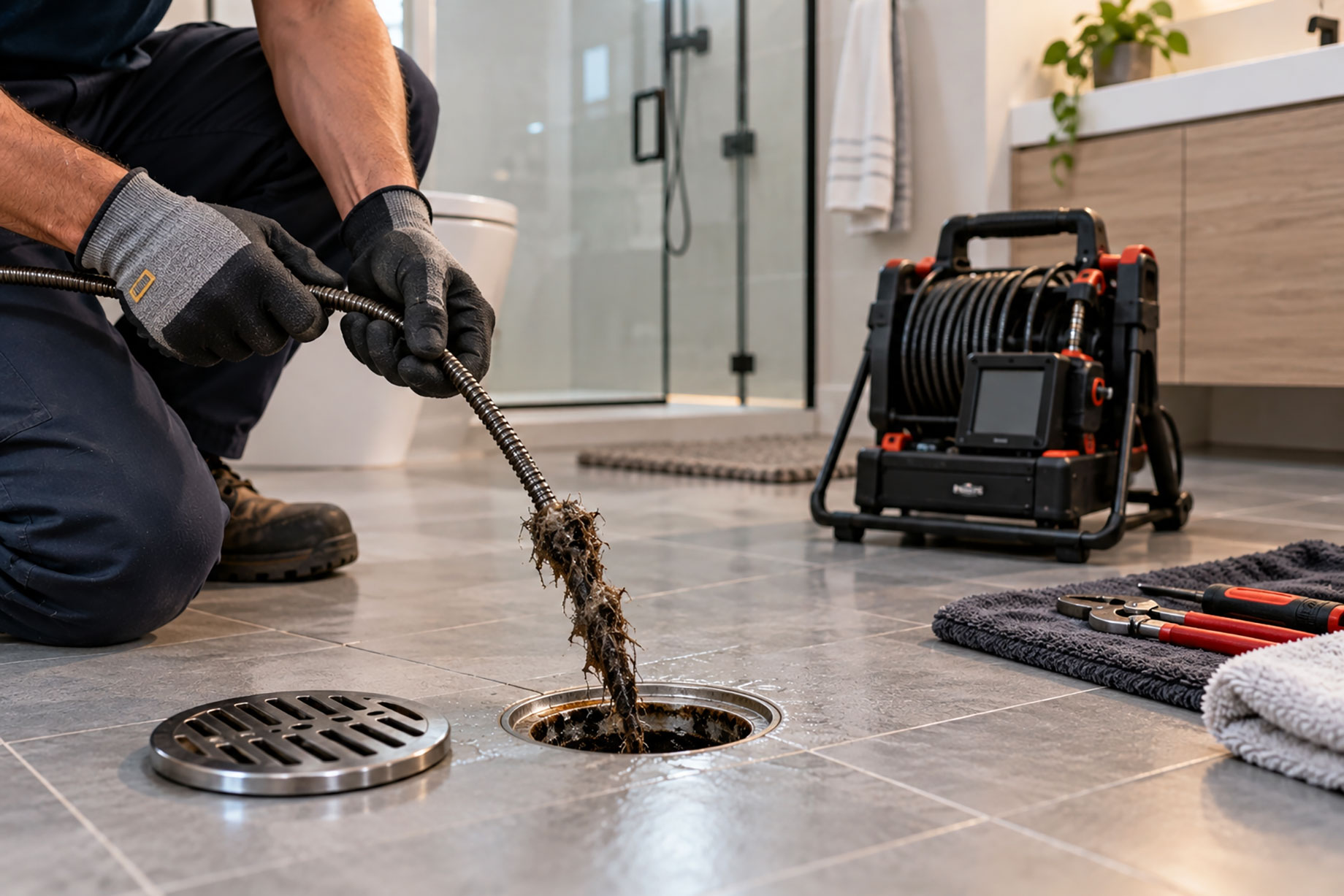
A single slow drain is usually just a slow drain. Multiple slow drains throughout a house, happening around the same time, are almost always something bigger. That distinction matters because a main sewer line clog affects every drain connected to it, not just one fixture, and catching the difference early can mean the gap between a straightforward cleaning and a much messier, more expensive repair.
Understanding what typically causes clogged sewer drains and recognizing the early warning signs gives homeowners a real chance to address the problem before it turns into sewage backing up into the house, which is about as unpleasant and costly a plumbing emergency as it gets.
Quick Answer: What Causes Sewer Line Clogs and How Do You Spot One?
Sewer line clogs commonly result from tree root intrusion, grease and fat buildup, flushed non-flushable items, and aging or collapsed pipes. Warning signs include multiple slow drains throughout the house occurring simultaneously, gurgling sounds from drains or toilets, sewage odors, and water backing up in unexpected locations like a shower or floor drain when another fixture is used.
Why Multiple Slow Drains Signal a Bigger Problem
A single slow-draining sink usually points to a localized clog, hair, soap residue, or debris caught somewhere in that specific fixture’s pipe. A main sewer line clog behaves differently. Because every drain in the house eventually connects to the same main line before it exits to the municipal sewer or septic system, a blockage there affects multiple fixtures simultaneously, not just one.
This is exactly why recognizing patterns matters when diagnosing clogged sewer drains. If your kitchen sink, bathroom sink, and shower all start draining slowly around the same time, or if flushing a toilet causes water to back up into a shower or floor drain, that’s a strong indication the problem sits in the main line rather than an isolated fixture. Treating it as a simple individual clog, plunging one drain repeatedly, often wastes time while the underlying main line issue continues to worsen.
Tree root intrusion is one of the more common causes of main line clogs, particularly in older homes with clay or older PVC piping. Tree roots naturally grow toward moisture sources, and even a tiny crack or joint gap in a sewer pipe can attract roots that gradually infiltrate and expand within the pipe, eventually causing a significant blockage or even structural pipe damage.
Key Benefits of Recognizing Sewer Clog Warning Signs Early
- Avoiding sewage backup into the home. Catching a developing clog before it fully blocks the line prevents the far more serious and unpleasant scenario of sewage backing up into sinks, tubs, or floor drains.
- Lower repair costs. A partially clogged line addressed early, through cleaning or hydro-jetting, is typically far less expensive than dealing with a complete blockage or pipe damage from prolonged root intrusion.
- Reduced risk of pipe damage. Some causes of clogs, particularly tree root intrusion, can eventually damage the pipe itself if left unaddressed, leading to a repair that’s more extensive than simple clearing.
- Faster, cleaner resolution. Identifying a main line issue early, before it becomes a full blockage, generally allows for cleaner remediation than an emergency response to an active sewage backup.
Buying Guide: What to Watch For and Check
| Warning Sign | What It Often Indicates |
|---|---|
| Multiple slow drains simultaneously | Suggests a main line clog rather than an isolated fixture issue |
| Gurgling sounds from drains or toilets | Air trapped by a partial blockage, often an early indicator before a full clog develops |
| Sewage odor inside or outside the home | Can indicate a blockage or a crack allowing sewage gas to escape |
| Water backing up in unexpected fixtures | Using one fixture causing backup in another strongly suggests a shared main line problem |
| Frequent need for drain clearing | Recurring clogs in the same area may point to root intrusion or a structural pipe issue |
| Age and material of home’s sewer pipes | Older clay or cast iron pipes are more prone to root intrusion and structural degradation |
| Lush, unusually green patches in the yard | Can indicate a leaking sewer line providing extra moisture and nutrients to grass above it |
If your home has mature trees near the sewer line’s path, particularly with an older pipe system, periodic camera inspection can catch early root intrusion before it becomes a full blockage.
Common Mistakes to Avoid
- Treating a main line clog like an isolated fixture issue. Repeatedly plunging or snaking a single drain won’t resolve a main line clog affecting multiple fixtures.
- Ignoring gurgling sounds as a minor annoyance. This is often an early warning sign of a developing blockage, worth investigating before it progresses further.
- Flushing non-flushable items regularly. Wipes, feminine hygiene products, and similar items, even those labeled “flushable,” frequently contribute to main line clogs over time.
- Pouring grease or fat down kitchen drains. These substances solidify inside pipes over time, gradually narrowing the passage and contributing to eventual blockages.
Expert Tips
Pay attention to whether slow drainage affects a single fixture or multiple fixtures around the same time, since this distinction is one of the clearest indicators of whether you’re dealing with a localized clog or a main line issue.
Consider a camera inspection of your sewer line if your home has mature trees nearby and older piping, since this can identify root intrusion or pipe damage before it causes a complete blockage.
Avoid pouring grease down drains, and dispose of it separately once cooled, since grease buildup is one of the most preventable contributors to sewer line clogs over time.
Why Choose A Licensed Plumber
Understanding the difference between an isolated fixture clog and a genuine clogged sewer drains situation is exactly the kind of practical knowledge licensed plumber helps homeowners build. Recognizing warning signs early, multiple slow drains, gurgling, unexpected backups, gives homeowners the chance to address a developing problem before it becomes a sewage backup emergency.
Homeowners get clear guidance on what causes sewer line clogs, which warning signs matter most, and when a situation calls for professional inspection or clearing rather than a simple DIY attempt.
FAQs
How do I know if I have a main sewer line clog versus a single fixture clog?
Multiple drains slowing down simultaneously, or water backing up in one fixture when another is used, strongly suggests a main line issue rather than an isolated clog.
Can tree roots really cause significant sewer line damage?
Yes. Tree roots grow toward moisture and can infiltrate even small cracks or joint gaps in sewer pipes, gradually expanding and causing significant blockages or structural damage over time.
Is it safe to use chemical drain cleaners for a main line clog?
Chemical drain cleaners are generally not recommended for main line clogs, as they’re often ineffective against significant blockages and can be harsh on older piping.
What does a gurgling sound from my toilet or drains actually mean?
Gurgling typically indicates trapped air caused by a partial blockage somewhere in the line, often serving as an early warning sign before a full clog develops.
How often should I have my sewer line inspected if I have older pipes?
This varies by home and pipe age, but periodic camera inspection, particularly if you notice recurring clogs or have mature trees nearby, can help catch developing issues early.
Can flushing “flushable” wipes still cause a sewer clog?
Yes. Despite the labeling, many of these products don’t break down as easily as toilet paper and can contribute significantly to clogs over time.
What should I do if water is backing up in multiple drains at once?
This typically indicates a main line clog, which is best addressed by a professional who can properly diagnose and clear the blockage, since DIY attempts on a main line issue are often ineffective.
Conclusion
Sewer line clogs develop gradually, and the warning signs, multiple slow drains, gurgling sounds, unexpected backups, are usually there well before a full blockage causes a sewage backup emergency. Recognizing these patterns early, understanding common causes like tree roots and grease buildup, and knowing when to call a professional gives homeowners the best chance of addressing a developing clog before it becomes a much bigger problem.
