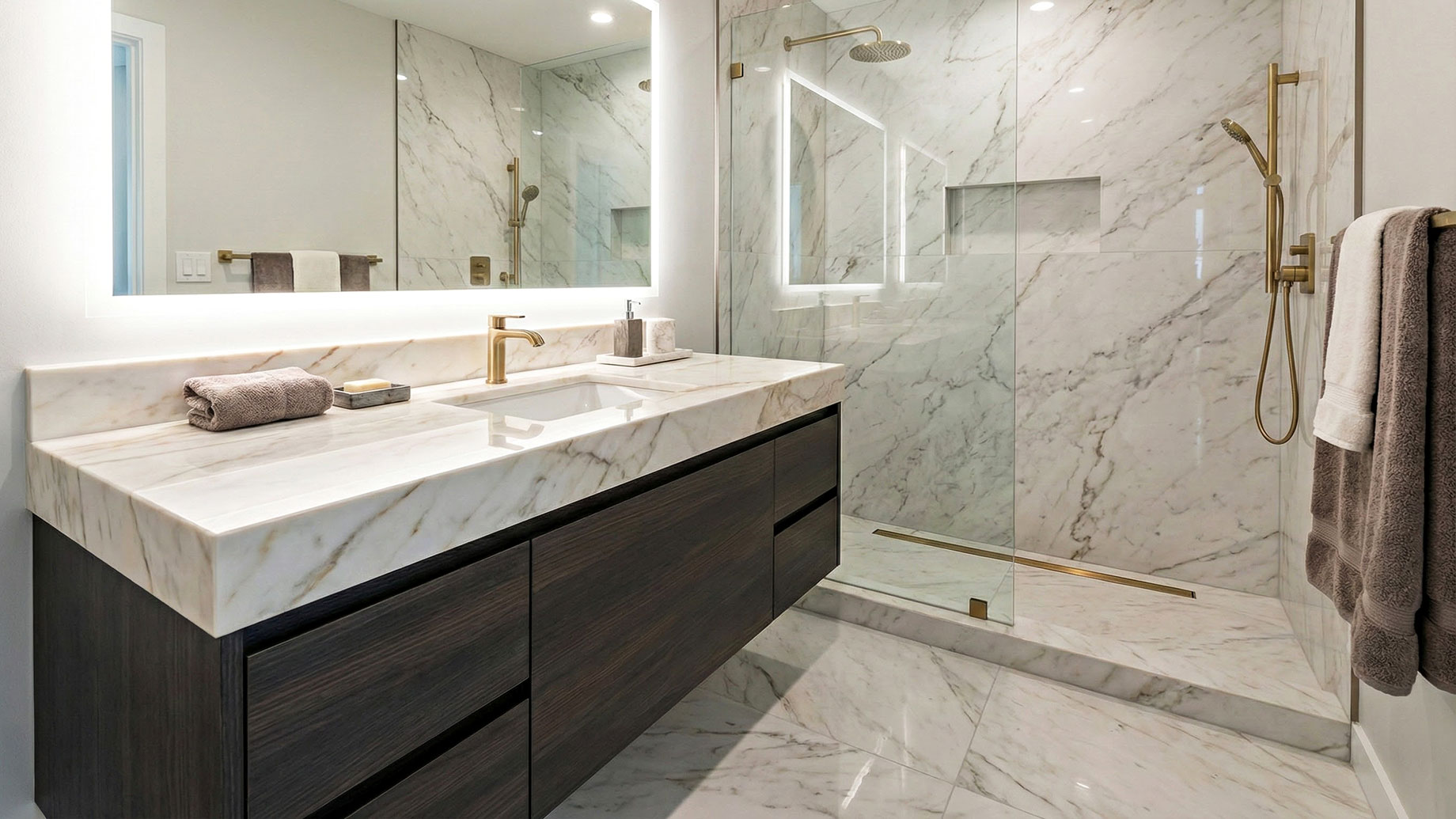
Want a bathroom that actually lasts?
Choosing cheap or poor-quality materials is one of the biggest mistakes people make when remodeling their bathrooms. Cracked tile, peeling finishes, and constant repairs quickly become a reality.
What you’ll discover:
- Why material selection for a bathroom remodel is more important than most people realize
- The best flooring materials for a bathroom
- Countertop materials that will hold up to daily use
- Wall materials and shower materials are worth your investment
- Common bathroom remodel material mistakes to avoid
Why Material Selection Is More Important Than You Think
Water, humidity, and temperature changes subject a bathroom to more abuse than almost any room in a house.
Every single day it has to deal with steam from showers, splashing water, humidity spikes, and wide temperature fluctuations. Weak or porous materials cannot handle this environment.
Good bathroom remodeling contractors know this. It is one of the main reasons a professional company like bathroom remodeling services in Lancaster focuses so heavily on material selection before the work even begins.
Let’s take a look at what is at stake:
The median bathroom remodel costs rose 11% in just one year from $13,500 to $15,000 according to the latest industry data. That’s a significant investment. Nobody wants to do it all over again in five years because they skimped on materials.
The U.S. market alone was worth over $59 billion in 2024. Homeowners are spending more money than ever before but they also want the remodeling to last.
What to Know About Flooring Materials for a Bathroom
Flooring takes the biggest abuse in any bathroom. Pools of water sit on it. People walk on it with wet feet. Humidity and moisture attacks it relentlessly.
That is why porcelain tile is considered the gold standard for bathroom floors.
Made by firing at extremely high temperatures, porcelain is much denser and harder than ceramic or stone tile. It barely absorbs any water with an absorption rate of less than 0.5%. Tiles that absorb 0.5% or less water are considered impervious materials.
Porcelain tile that is installed and maintained properly can last 50 years or more. Compare that to budget laminate floors that might only last 10 years in a bathroom.
Ceramic tile is also an excellent choice for bathroom floors.
Ceramic is very similar to porcelain but slightly less dense. Advantages of ceramic tile include:
- Less expensive than porcelain tile
- Easier to cut and install
- Wide range of styles and colors available
- 20-30 year lifespan with proper maintenance
Luxury vinyl flooring is becoming more popular as a bathroom floor material.
Advances in technology have made luxury vinyl planks (LVP) and tiles (LVT) better and more durable than ever before. Luxury vinyl is also waterproof and feels softer underfoot than tile.
Vinyl works well for homeowners on a budget or who want to upgrade an existing bathroom without a huge investment.
Flooring Options to Avoid
Natural wood looks great until water ruins it. Unless it has been specifically treated for wet locations, natural wood does not belong in showers or within a few feet of water in a bathroom.
Particle board and laminate floors are also poor choices. The wood fibers expand with moisture exposure, leading to swelling, warping, and dislodged boards.
Best Countertop Materials to Consider
Countertops in a bathroom deal with water, soaps, toothpaste, makeup, and all sorts of cleaning chemicals. Water resistant, stain resistant, and easy to clean surfaces are a must.
Engineered stone countertops like quartz are one of the best choices.
Engineered stone is non-porous and extremely resistant to staining and scratching. Quartz does not require any sealing and can last a lifetime with proper care.
Natural stone countertops provide a timeless elegance and beauty.
Granite, marble, and other natural stones look great but they are porous and require regular sealing to protect against water damage and staining.
Solid surface countertops like Corian are another option.
Solid surface materials resist water and stains. Scratches are usually minor and can be sanded out.
Wall and Shower Materials Worth Your Money
Shower walls and surrounds need the most protection from water damage in any bathroom.
Tile remains the most popular shower wall material.
No surprise here: 87% of homeowners choose tile for their shower walls and floors according to the latest survey data.
Large format porcelain tiles create seamless panels that reduce the number of grout lines and joints.
Glass tile is waterproof and reflects light better than any other material.
The tiles are completely waterproof and mold resistant. Small glass tiles work especially well on shower floors since the additional grout lines create a non-slip surface.
Solid surface shower panels are an emerging option.
Solid surface panels cover the entire shower wall and install directly over the existing wall.
Tips for Shower Waterproofing
Materials are only part of the solution when it comes to shower waterproofing. Areas behind tile and around fixtures have to be well sealed and protected. Otherwise water seeps into walls and subfloors causing mold and structural damage.
Cover all walls and floors behind the tile with cement backer board. Use waterproof membranes to cover all surfaces before installing tile.
Mistakes to Avoid When Selecting Remodeling Materials
Homeowners who are smart about other remodeling decisions still make these common material selection errors.
Mistake #1: Use porous materials in wet areas
Unless it has been specifically treated for bathroom use, wood has no place in showers or next to tubs.
Mistake #2: Ignore slip resistance
Polished marble is stunning but it becomes dangerously slippery when wet. Textured or matte finishes provide more slip resistance.
Mistake #3: Skip proper waterproofing
Drywall cannot handle moisture. Cement backer board should be used in all wet areas.
Mistake #4: Choose style over substance
Bold colored tiles may feel dated in three years. Classic, neutral materials like white subway tile will stay timeless for decades.
Mistake #5: Forget to consider maintenance requirements
Some materials need to be sealed once per year or more. Factor in how much maintenance the materials require before you make your final decision.
Wrapping Things Up
Material selection for bathroom remodels makes the difference between short-term solutions and long-term investments.
Focus on materials that were designed to handle the wear and tear of wet areas. Porcelain tile and ceramic tile dominate for a reason: they are highly moisture resistant and can last for decades.
Quick recap:
- Porcelain tile is the most durable for floors and walls
- Quartz countertops resist staining and require no sealing
- Large format tiles reduce the need for grout maintenance
- Always use proper waterproofing behind visible materials
- Factor in maintenance requirements before making final choices
Selecting the right remodeling materials means your bathroom will stay beautiful for years and years. The effort will pay off every day for decades to come.
