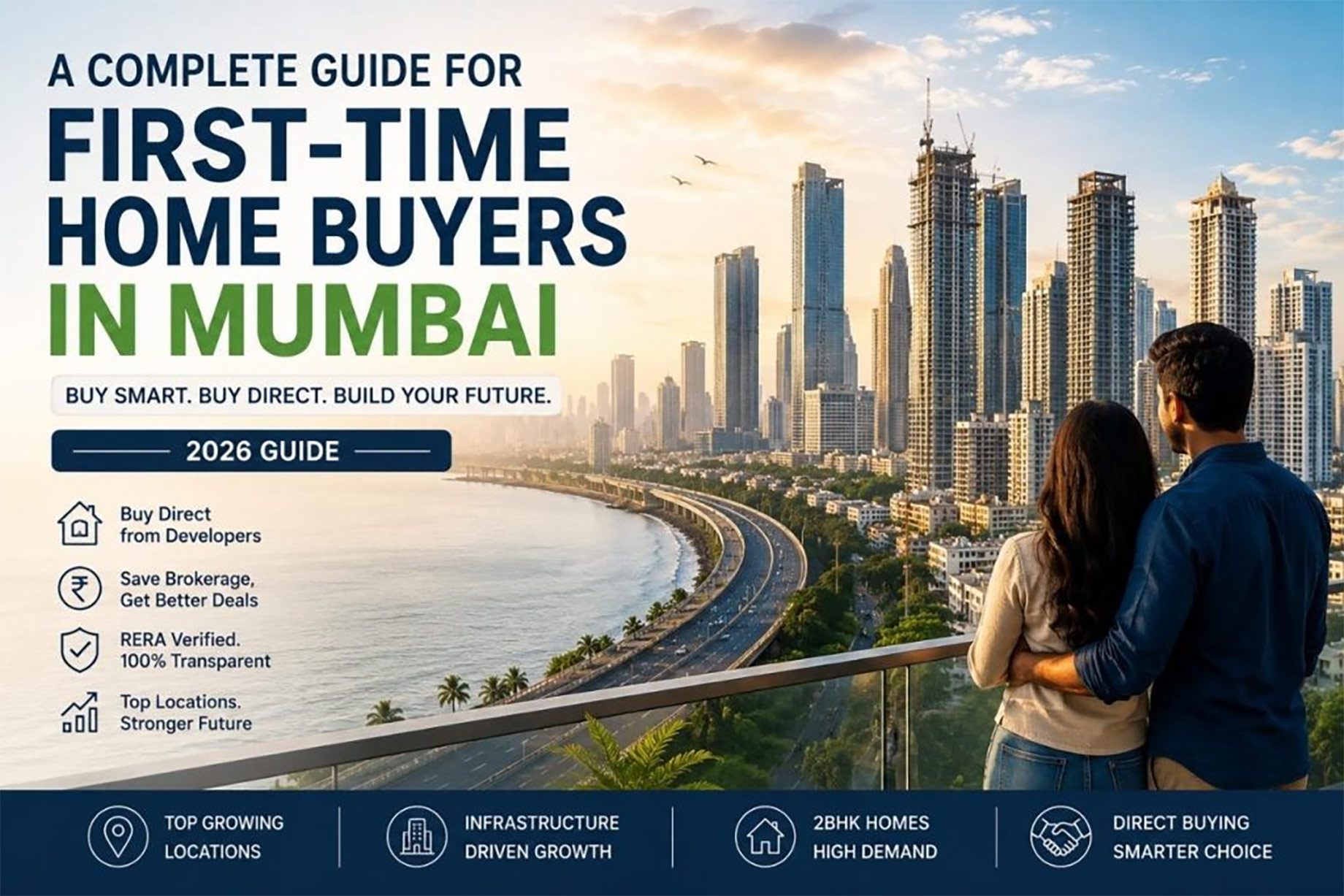
Mumbai is a city of dreams. These people come here with the motivation of ambition, determination and a desire to create a better future. But, in 2026, one dream remains bigger than life for most people: To get a house in Mumbai.
However, the skyrocketing level of property prices, countless papers, tangled legalities, furious brokerage calls, and the fear that one will make a wrong investment decision often leave first-time buyers feeling all-agitated and completely overwhelmed.
For years, most conversations about real estate in Mumbai were dominated by brokers. Buyers relied very heavily on middlemen for project details, negotiation, site visits, and even to assist them with paperwork. But things are changing very quickly.
Homebuyers today are smarter, more knowledgeable, more connected digitally, and more skittish about excessive brokerage spending. As of 2026, more and more buyers actually prefer to buy homes directly from developers rather than through brokers in the market. The strategy doesn’t just save brokerage fees; it contributes to a more transparent and streamlined buying experience.
Meanwhile, Mumbai’s real estate sector is changing its face, also in the same breath. New residential hotspots are emerging across the city with infrastructure projects like improvements to the Metro, connectivity along Coastal Roads and influence from the Trans Harbour Link and the growth of suburban commercial areas.
If you do want to buy your first home in Mumbai, without involving brokers, this detailed guide helps you get all the answers.
The New Home Buyers Don’t Use Brokers Anymore in 2026
Ten years ago, the majority of buyers were looking primarily at brokers because they lacked information on projects. Buyers can now access project information, floor plans, pricing trends, legal approvals, developer histories, and other data directly online.
Some key reasons how first-time buyers are selecting direct purchasing:
Saving Brokerage Charges
Brokerage fees can easily go into lakhs in Mumbai. Brokers usually charge between 1% and 2% of the value of the property. That is a significant additional expense on a ₹2 crore apartment.
For first-time buyers who already have down payments, registration charges, GST, interiors and EMIs on their backs, removing brokerage costs brings a huge financial benefit.
Better Transparency
Many customers complain about inconsistent price information from a number of other brokers. Some say they even feel pressured to make fast decisions.
When buyers get to know developers directly, conversations are more transparent about the pricing, offers, availability of inventory, payment arrangements, and timeline for possession.
True Developer Offerings Are Accessible
Builders may provide direct launch benefits, flexible payment plans, discount on inventory, a modular kitchen kit, stamp duty assistance, parking or any parking benefits for direct buyers.
These benefits often never trickle down to buyers when many intermediaries are involved.
Easier Research Process
Modern property platforms give buyers a means of doing their local exploration, comparing projects and planning visits directly, without a middleman who is likely to speak with them.
It’s turned the process into an even more buyer-centric one like never before.
Guide for Buying First Home in Mumbai Now in Mumbai, Without a Broker: Steps by Step
Step 1: Realistically Understand Your Budget
Even before scrolling through projects, have a sense of how much home you really can afford. You must not overextend your finances simply because the bank approves a bigger loan amount and you’re out of pocket.
Your preferred budget for property should incorporate:
- Down payment
- Registration and stamp duty
- GST (if applicable)
- Interior costs
- Moving expenses
- Emergency savings
- Monthly EMI comfort
Normally financial experts suggest keeping your EMI under 40% of your monthly household income. This becomes more critical in Mumbai because of the already high living expenses.
Step 2: List Fast Growing Real Estate Corridors in Mumbai
The classic mistake: the first-time buyer will only pay for a recognized, well-known luxury area. In 2026, intelligent buyers will also choose growing new growth corridors that can still be appreciated.
Some of Mumbai’s fast-growing residential zones are this.
Goregaon
Goregaon has become one of Mumbai’s most balanced residential destinations. It offers connectivity, commercial development, metro access, malls, schools, entertainment options, and high-end residential development.
Demand for 2BHK flats in Goregaon under 3cr is still high since Goregaon is seen by buyers as a sensible mix of quality lifestyle and investment.
The western area is also conveniently bordered by Film City, Mindspace, business districts and ready access to new infrastructure.
Why Goregaon Is Growing Fast
- Metro connectivity
- Strong rental demand
- Corporate office expansion
- Premium lifestyle projects
- Better social infrastructure
Thane
Although technically outside Mumbai city limits, Thane has grown to become one of the most important residential markets for buyers in Mumbai.
Thane is quite attractive to early customers due to large integrated townships, relatively low pricing as compared to Mumbai suburbs, broad roads and more connected roads.
Key Growth Drivers
- Metro Line expansion
- Ghodbunder Road development
- Commercial office growth
- Better lifestyle infrastructure
- Larger apartment sizes
Navi Mumbai
Navi Mumbai infrastructure like the Navi Mumbai International Airport and connectivity upgrades, along with the development of infrastructure, will be leading to a tremendous transformation in Navi Mumbai.
Young buyers keep flocking to districts such as Ulwe, Panvel, Kharghar and Taloja.
Why Buyers Prefer Navi Mumbai
- Planned infrastructure
- Better affordability
- Wide roads and open spaces
- Upcoming airport impact
- Expanding IT and commercial industry
Mulund
Mulund has developed into a leading destination for all things affordable, with incredible access to the central and western suburbs, making it a very attractive option.
The neighbourhood appeals to buyers who seek luxury combined with practicality.
Mulund’s Real Estate Strength
- Strong railway connectivity
- Metro development
- Quality educational institutions
- Premium gated communities
- Great long-term appreciation
Chembur
Chembur has transformed in the past decade. It is now an immensely appealing residential destination with better road connections and infrastructure development.
Reasons Behind Chembur’s Growth
- Eastern Freeway connectivity
- Commercial growth
- Redevelopment projects
- Luxury residential developments
- Faster access to South Mumbai and BKC
Research the Builder Thoroughly — Stage 3
If you buy directly from a developer, it will work well only when you pick a well-respected builder. Don’t place your eggs in a basket of advertisements or fancy brochures.
Research the developers:
- Past projects
- Delivery timelines
- Construction quality
- Legal approvals
- Customer reviews
- Financial stability
- RERA registration details
In a construction project, a successful builder has an edge in reducing risks.
Step 3: Confirm the RERA Registration
In 2026, looking for RERA registration is absolutely non-negotiable. Now, by requiring developers to disclose certain critical information about projects, the Maharashtra Real Estate Regulatory Authority also has increased transparency in the property market.
Check:
- Project registration number
- Completion timelines
- Approved layouts
- Legal approvals
- Litigation history
- Construction updates
This protection insulates buyers from fraudulent or delayed projects.
Step 4: Visiting the Place First-hand
Do not buy a house solely from pictures online or virtual tours. Live in the area in real time.
Visit during:
- Peak traffic hours
- Evenings
- Weekends
- Monsoon season if possible
Observe:
- Waterlogging conditions
- Noise levels
- Grocery availability
- Hospital proximity
- Safety
- Future infrastructure activity
The apartment that’s beautiful sometimes fails to appeal due to the other bad surrounding infrastructure.
The carpet area is also one of the main areas where consumers often take a very detailed look; many first-time buyers conflate carpet area with built-up area or super built-up area.
Always remember carpet area — that’s where the real usable space is in the home. In Mumbai, where every square foot counts, this contrast is truly vital.
In fact, a slightly less expensive project without a larger carpet area will not necessarily be a more advantageous deal.
Step 5: Go to the Developer and Negotiate Directly
Buyers often think builder price is fixed, many buyers think. That is not always true. Developers typically offer flexibility in:
- Floor rise charges
- Parking charges
- Clubhouse fees
- Payment plans
- Stamp duty assistance
- Limited-time offers
Negotiation tends to move faster when you buy directly from builder Mumbai because communication is much more straightforward and transparent.
Step 6: Understand Home Loan Eligibility
Before finalising a land asset obtain pre-approved loan eligibility from banks. This can help you:
- Know your actual purchasing capacity
- Negotiate confidently
- Prevent last-minute rejection of the loan
- Accelerate the booking process
Compare:
- Interest rates
- Processing fees
- Prepayment penalties
- Loan tenure flexibility
Step 7: Read each Agreement with Intention
Do not rush through evidence. Important documents also involve:
- Agreement for sale
- Allotment letter
- Payment schedule
- Possession clauses
- Maintenance charges
- Parking allotment
- Cancellation terms
If you can, speak with a property lawyer before signing. This mere legal expense might save huge future headaches.
Step 8: Assess Future Appreciation Potential
Your first home is more than an emotional decision. It is also a financial asset.
Study drivers of future growth, for instance:
- Metro expansion
- Commercial developments
- School and hospital infrastructure
- Upcoming highways
- Redevelopment activity
Regions undergoing infrastructure transformation frequently show stronger appreciation through the years.
Common Mistakes First-Time Buyers Should Keep an Eye Out For
Ignoring Hidden Costs
Most buyers base their calculations on apartment cost and loan EMI alone. But other expenses include but are not limited to:
- Registration charges
- GST
- Maintenance deposits
- Society charges
- Interior work
- Moving expenses
Always keep a financial buffer.
Buying for Discounts Only
It may not be long-term value if one is buying a property to discount in a poor area.
Focus on:
- Builder credibility
- Connectivity
- Infrastructure growth
- Resale demand
Instead of temporary offers.
Overstretching Budget
More and more first-time buyers emotionally stretch their budgets for larger homes or fancy city locations. That long-lasting financial stress.
You often need to go for a 2BHK more than luxury apartment that you’re no match for to get good results, often going to a comfortable 2BHK is good enough.
Ignoring Connectivity
Traffic in Mumbai does impact daily quality of life in a big way.
Check:
- Metro access
- Railway connectivity
- Road infrastructure
- Office commute time
Before reaching a decision.
In Mumbai, Direct Builder Platforms Are On the Rise
Today, the most dramatic shift in Mumbai real estate is the ascendancy of direct developer connection platforms. Buyers no longer seek endless broker calls, duplicated listings, misinformation and pricing confusion.
Instead, they want:
- Verified projects
- Direct developer interaction
- Transparent pricing
- Easy site visit scheduling
- Organized property discovery
This is a trend it would surely have a further upward trajectory for all the years ahead.
How Infrastructure Is Reshaping Mumbai’s Real Estate Market
Infrastructure is still Mumbai’s No. 1 growth driver for real estate. Key projects impacting buyer decisions are:
Mumbai Metro Expansion
Metro connectivity is restructuring property demand across suburbs: commuting through the metro space is drastically reduced, and demand is also driving up sales.
So with the metro corridors, areas are seeing great upturn and desire from buyers.
Coastal Road Project
The Coastal Road scheme should enhance connectivity in the western corridor and relieve congestion. This might bode well for residential demand in a number of western suburbs.
Mumbai Trans Harbour Link
Mumbai is connecting Mumbai to Navi Mumbai better with the MTHL and that opens huge new investment opportunities. Residential growth will be shaped by this infrastructure project for years to come.
Navi Mumbai International Airport
The imminent airport remains a driver of demand in Navi Mumbai areas such as Panvel and Ulwe. Buyers are also seeing these locations as a long-term investment destination.
Why are 1st Time Buyers Applying for 2BHK Homes in 2026?
The 2BHK sector continues to rule Mumbai’s hotel and residential market.
Why? Because it is the most affordable, practical and flexible option to pursue.
Young couples, increasing families, remote contractors, investors- all demand 2BHK arrangements because it offers:
- Better resale demand
- Comfortable living space
- Easier rental potential
- Work-from-home flexibility
This is one reason demand for 2BHK flats in goregaon under 3cr remains consistently high for first-time buyers.
The Emotional Side of Buying Your First Home
purchasing your first home in Mumbai is not just making a purchase. It embodies:
- Stability
- Security
- Family aspirations
- Financial achievement
- Independence
For a lot of individuals, this is the outcome of years of saving, sacrificing, planning. That is why the process should feel empowering, not stressful.
Be careful not to rush decisions as brokers, relatives or market hype might pressure you. Stick to what is right for you, research the right houses, and choose the one that suits your lifestyle and your future career goals the best.”
Key Takeaways
Mumbai real estate market for 2026 offers first-time buyers with strong prospects if they can research and the will to purchase carefully.
Once again, buying out of brokers can save people huge amounts of money, while the buying process will at the same time be more open and transparent.
In the 21st century, new towns such as Goregaon, Thane, Navi Mumbai, Mulund, and Chembur, in particular, will continue to enjoy explosive market expansion as high-growth real estate development is made possible.
Credibility of builders, verification by RERA, Locality Research, carpet area comparison and connectivity of the future are the key factors when purchasing a property.
Buyers are now using direct developer interaction more and more as they seek clarity in pricing and smoother communication.
Good financial planning and realistic budgeting go a long way to circumvent long-term financial hardship post-purchase.
Conclusion
Acquiring your first home in Mumbai in 2026 might seem daunting — if in a world of opaque data brokers — but the process is now more transparent and buyer-friendly than ever.
Today’s buyers have better information, more vetted projects, digital property platforms and direct communication with developers that lessen reliance on brokers.
The trick, they say, is being able to do the research, think of local growth, check legal approvals and make financially practical decisions instead of emotional.
Platforms such as Housiey are changing the game for the buying of homes by enabling buyers to meet directly with developers, rather than sending their contact details to several brokers in a more seamless, transparent and hassle-free manner.
For the first time homebuyer in this process of finding a home in Mumbai, it makes a huge difference.
Your first home is the single most important milestone of your life. Decide wisely, be patient and research carefully and invest in a place that works for the way you live now, and then the kind of place you want to be.
FAQs
1. Buying a house without a broker: is buying safely in Mumbai?
Yes, it’s totally safe to buy without a broker, if buyers can check RERA registration to make sure they’ve done it and have all the required legal approvals and if they can build confidence in a builder’s credentials. Buyers of today are more comfortable with direct developer interaction due to improved transparency.
2. How I know if a builder is a trustworthy one?
Inspect the developer’s past projects, delivery history of work which has been built, customer reviews and records from RERA. Checking on the completion of projects has also helped to understand construction quality and maintenance standards.
3. In 2026, which real estate locations are the fastest growing ones in Mumbai?
Some of the fastest-growing residential markets are Goregaon, Thane, Navi Mumbai, Mulund and Chembur. Infrastructure expansion continues and it’s driving very strong demand in these areas.
4. Buyers want to invest in Goregaon, and why?
Goregaon has high connectivity, metro access, commercial outlets, and premium residential developments. It is also a balanced mix of lifestyle and investment potential.
5. Why do buyers benefit from buying direct from developers?
Direct buying avoids brokerage fees and is more transparent pricing. Buyers also receive exclusive builder deals and payment options.
6. Are 2BHK apartments preferred by first-time buyers?
Certainly, 2BHK homes have the benefit of practical space for families with additional kids and better sales. Work-from-home setups are also a feature of their properties.
7. What should first-time buyers look for before they book a property?
First-time buyers must always check RERA registration, carpet area, legal clearance from building authorities, builder reputation and all the connectivity required. Checked ahead of time also should be the eligibility of loans.
8. Is Navi Mumbai an acceptable investment for the year 2026?
Yes, there’s vigorous infrastructure growth in Navi Mumbai as the airport and connectivity get stronger in the future. Potential for property appreciation still looks good.
9. How influential is metro connectivity (including metro connectivity) for buying property in Mumbai?
Metro connection does reduce travel time drastically and makes it convenient. Local buildings close to metro nodes tend to experience heightened demand and appreciation.
10. Should buyers visit the locality multiple times before they buy?
Yes, multiple times to get a feel for the area’s traffic conditions, flooding and neighborhood quality as well as flooding risks and city safety and quality are the key to buying. A realistic view is during peak hours.
11. What unspoken costs are buyers trying to consider when doing a property transaction?
Buyers must also consider stamp duty, registration fees, GST, interior, maintenance and chargeables, parking fees along with property cost. These extra expenses are likely to substantially add to the end budget.
12. Why is RERA so important for home buyers?
RERA improves transparency and helps protect buyers from delays and bad information in the projects they are participating in. It helps ensure developers legally disclose critical project details.
13. Is Thane a good location for first time homebuyers?
Yes, Thane is better affordable than many Mumbai suburbs, along with larger apartments. Infrastructure developments boost its residential demand even more.
14. Are buyers able to negotiate prices with builders directly?
So yes, developers are very flexible with pricing, payment plan and extra charges. Direct dialogues can also open special benefits up.
15. What appeals for residential investment in Chembur?
Chembur has good connectivity, redevelopment projects, and the proximity to the main business districts. It has turned into a high-end residence.
16. Why are 2026 buyers moving away from brokers?
Buyers are demanding more transparency, verified information, and direct communication with developers. A big reason is also the avoidance of brokerage fees.
17. Normally that is how much down payment is the minimum amount required to make a home transaction?
Around 75% to 90% of a property value is financed by most banks depending on eligibility. Usually, buyers must arrange the balance alone.
18. Is carpet area more important than super built-up area?
Yes, carpet area is an actual usable space inside the apartment. carpet area comparisons are a priority for any buyer.
19. What impact does infrastructure have on property value appreciation?
Infrastructure projects increase connectivity and drive demand for residential living in adjacent communities. This tends to result in more favorable long-term appreciation.
20. Why Homebuyers are Growing Popular with Property Platforms?
Contemporary companies make real-time reporting, builder contact by email, and scheduling for site visits easier. Buyers also now need organized and transparent property searches.
Sources
- Maharashtra Real Estate Regulatory Authority (MahaRERA)
- Reserve Bank of India Housing Loan Guidelines
- Mumbai Metropolitan Region Development Authority (MMRDA)
- Mumbai Metro, MTHL and government infrastructure announcements
- Reports on the industry by top Indian real estate research houses
- Official developer project documents and market reports
- Trend Reports on Real Estate Market for Mumbai and Navi Mumbai
- Data available on housing finance and property registration at Maharashtra government portals