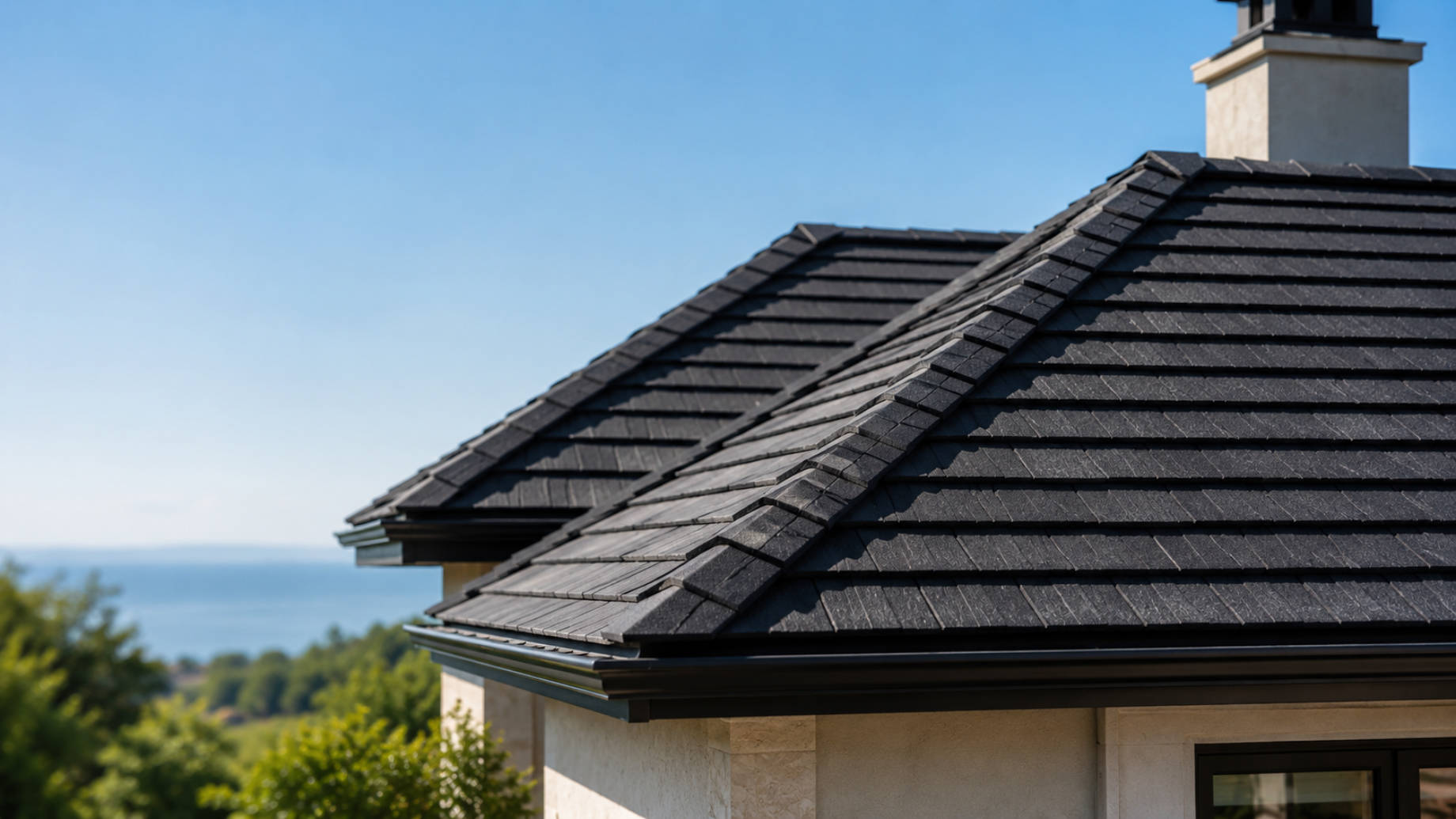
At the top of the residential market, a sale rarely turns on granite counters or a wine cellar. It turns on the things that are expensive and disruptive to fix, and few of those loom larger than the roof. Sophisticated buyers, and the inspectors and agents who advise them, know that a roof problem on a multimillion-dollar property can mean a six-figure repair, a stalled closing, or a sharp renegotiation. During due diligence, the roof gets read far more closely than most sellers expect.
Understanding what those buyers actually look for is useful on both sides of a transaction. For a seller, it is a checklist of what to have in order before listing; for a buyer, it is a guide to where the real risk, and the real leverage, tends to sit.
Remaining service life
The first question a serious buyer asks is not “what does it look like?” but “how many years does it have left?” A roof nearing the end of its life is a known, dated liability, and buyers price it accordingly. Age and material drive this calculation directly: an asphalt roof approaching twenty years reads very differently from a slate, tile, or metal roof with decades of rated life still ahead.
This is one reason long-lived materials, such as stone-coated metal profiles, carry weight in the luxury market. A roof with a long remaining service life removes an entire category of near-term risk from the purchase, and buyers will often pay for that certainty rather than inherit a replacement they can see coming.
Documentation, warranties, and transferability
In a high-end transaction, paperwork is scrutiny. Buyers and their advisors want to see what the roof is, when it was installed, who installed it, and what protection remains, in writing. A roof supported by a manufacturer warranty is more reassuring than one without, but the detail that matters most is transferability: a warranty that passes to the new owner is an asset that conveys with the property, while one that lapses at sale is worth little to a buyer.
Because of this, the specifications behind a roof are worth having on hand. Manufacturer documentation for durable roofing typically sets out the warranty term, what it covers, and whether it transfers, and having those documents ready can turn a point of uncertainty into a point of confidence during diligence.
Material quality and performance ratings
Beyond age and paperwork, discerning buyers increasingly look at how a roof is rated to perform, particularly in regions exposed to wind, hail, fire, or salt air. Third-party ratings give them an objective basis for that judgment: impact classifications under standards like UL 2218, wind-uplift ratings, and fire ratings all speak to how a roof is likely to hold up, and in some markets to how readily and affordably the home can be insured.
This is where the material itself enters the conversation. Engineered options, whether painted metal roof systems or textured stone-coated ones, are often specified on high-end homes precisely because their ratings are documented and their performance is predictable. For a buyer, a rated, well-documented roof is easier to underwrite and easier to insure; for a seller, it is easier to defend at the negotiating table.
Signs of past problems
No amount of paperwork substitutes for what an inspection reveals. On a luxury property, a thorough roof inspection looks past the surface for the quieter signs of trouble: staining or patched repairs that hint at past leaks, failing flashing around chimneys and skylights, compromised valleys, and evidence of standing water on low-slope sections. Interior clues matter too, from attic moisture to ceiling stains that suggest an intermittent leak.
Ventilation and the wider assembly draw attention as well. A roof that has been kept watertight but poorly ventilated can hide moisture and premature aging beneath an intact-looking surface, and experienced inspectors know to check for it. The goal is to distinguish a roof that merely looks good from one that has genuinely been maintained. On larger estates, the sheer scale of the roof compounds this: more surface area, more penetrations, and more complex geometry mean more places for a problem to begin, and a correspondingly larger bill if one is missed.
How the roof shapes the deal
All of this feeds directly into price and terms. A roof with clear documentation, strong ratings, transferable coverage, and years of life ahead tends to move quietly through diligence and support the asking price. A roof that is aging, undocumented, or showing signs of neglect becomes leverage: buyers will seek credits, escrow holdbacks, or price reductions, and in the worst cases walk away entirely.
For sellers, the lesson is to treat the roof as part of the sale narrative rather than a variable to be discovered. Gathering installation records, warranty documents, and inspection reports before listing, and addressing obvious issues in advance, removes a common source of friction. For buyers, the roof is one of the clearest windows into how a property has been cared for overall. A meticulously maintained roof, with records to match, signals an owner who has looked after the parts of the house that do not show, and that impression tends to color the rest of the diligence in the seller’s favor.
The bottom line
In luxury real estate, the roof is rarely the feature that sells a home, but it is often the one that complicates a sale. Buyers scrutinize it because it sits at the intersection of large cost, real risk, and long time horizons, and because it tends to reveal the true standard to which a house has been built and maintained. A roof that can answer the buyer’s questions, on age, documentation, ratings, and condition, without hesitation is one less thing standing between a listing and a clean, confident close.
