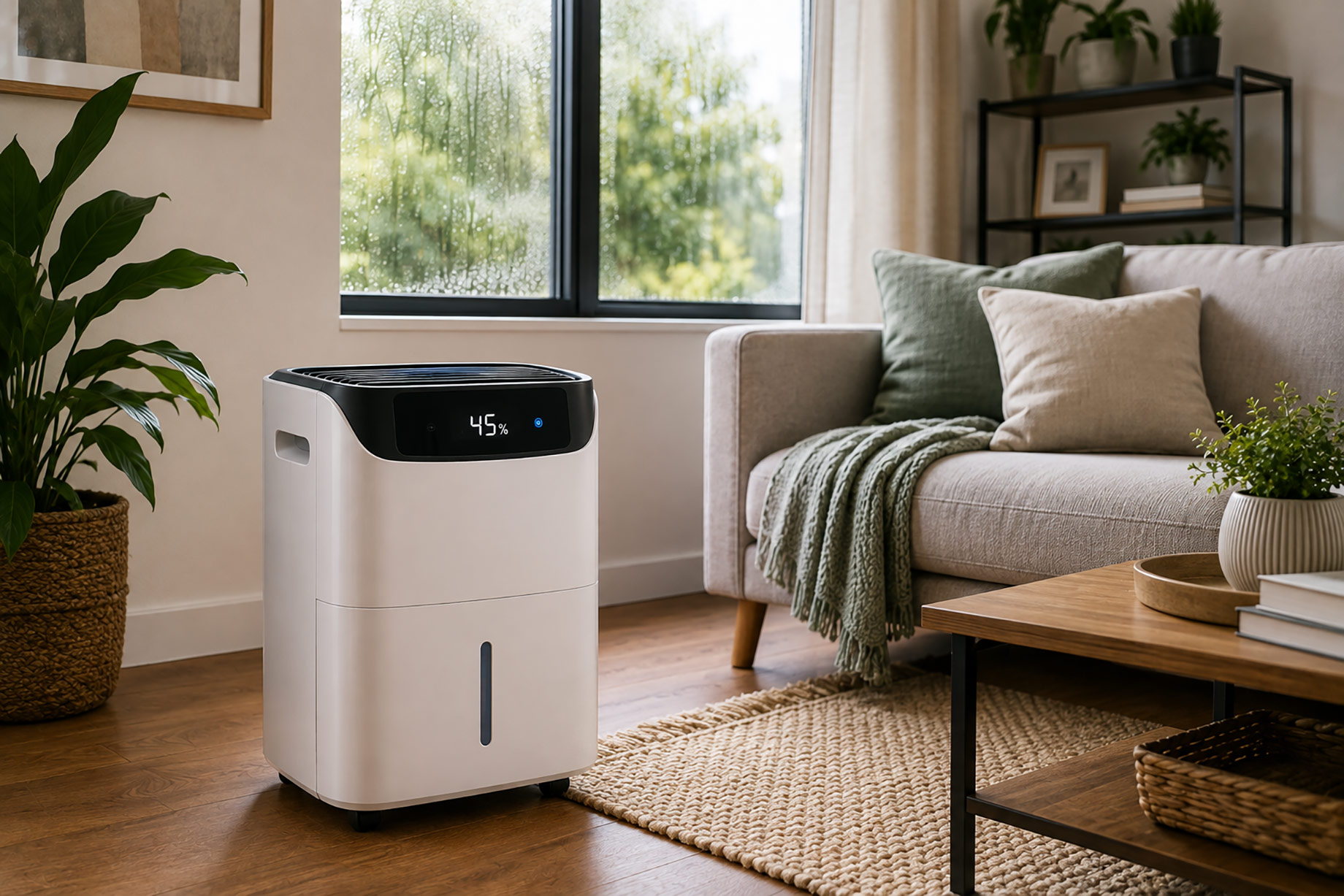
A musty smell that will not go away, windows fogging up overnight, or a faint damp patch creeping across a wall are all small signs that quality dehumidifiers could solve a problem that has been quietly building for months. Excess moisture does more than make a home feel a little stuffy. Left unchecked, it damages paint, warps timber and creates conditions where mould can take hold, all of which cost far more to fix later than a dehumidifier costs to run now.
Spotting the Warning Signs Early
Condensation on windows, a persistent musty smell, or visible mould in corners and along skirting boards are all clear signals that indoor humidity has climbed too high. Tom’s Guide lists the tell tale signs you need a dehumidifier, including warped timber, peeling paint and that distinctive damp odour, all of which point to excess moisture sitting in the air rather than a one off spill or leak that will simply dry out on its own.
Understanding Healthy Humidity Levels
Most guidance suggests keeping indoor humidity somewhere between 30 and 50 percent for comfort and genuine health reasons. Trane explains when a dehumidifier actually makes sense, noting that humidity climbing above 55 percent starts creating real discomfort, while levels past 60 percent can trigger both health concerns and visible property damage over time, particularly in bathrooms, laundries and any room without much natural airflow.
Which Rooms Need One Most
Bathrooms, laundries and basements or under house areas typically carry the highest humidity in any home, simply due to how they are used or their limited natural ventilation. Homes in genuinely humid climates may benefit from a whole home solution, while others might only need a single portable unit for the specific problem room causing the most trouble across a season.
Choosing the Right Size and Type
Portable units suit a single room or an occasional damp problem, while larger capacity units are designed for basements or homes with more persistent, widespread humidity issues. Checking a unit’s rated capacity, expressed in litres removed per day, against your actual room size prevents both an underpowered unit that never quite solves the problem and an oversized one that wastes energy running longer than genuinely necessary.
Running Costs and Everyday Use
Modern dehumidifiers are considerably more energy efficient than older models, and running one only during the genuinely damp months rather than year round keeps electricity costs reasonable for most households. Emptying the water tank regularly, or connecting a continuous drain hose where the setup allows for it, keeps a unit running effectively without constant attention. Placing a dehumidifier centrally in a room, away from walls and furniture, also helps it draw in air more efficiently, which shortens how long it needs to run to bring humidity back into a healthy range.
Dehumidifiers and Allergies
Beyond protecting paint and timber, controlling humidity also plays a real role in managing common household allergens. Dust mites and mould, two of the most common indoor allergy triggers, both thrive in humid conditions and struggle considerably in a well controlled, drier environment. Households with family members who suffer from asthma or dust related allergies often notice a genuine improvement in symptoms once indoor humidity is brought consistently back into a healthy range, making a dehumidifier as much a health investment as a practical one for protecting the home itself.
Signs a Unit Might Be Undersized
If a dehumidifier is running almost constantly without ever quite bringing humidity down to a comfortable level, it is likely undersized for the space it is trying to manage. This is a common mistake in larger open plan areas or homes with particularly persistent damp issues, where a small portable unit simply cannot keep pace with how quickly moisture builds back up. Checking a room’s approximate size against a unit’s rated coverage before buying prevents this frustration and ensures the unit can actually keep up with the moisture load it is facing.
A Simple Maintenance Routine
Cleaning or replacing the filter every few months keeps a dehumidifier running efficiently and prevents dust building up inside the unit itself. Wiping down the water tank periodically also stops any mould developing inside the unit, which would otherwise undermine the exact problem the dehumidifier is meant to solve in the first place. Keeping the area immediately around the unit clear of furniture and curtains also helps air circulate properly, which allows it to work through a room more evenly and efficiently.
Everyday Habits That Help Too
A dehumidifier works considerably better alongside a few simple habits: running exhaust fans during and after showers, opening windows briefly on dry days, and fixing any small leaks quickly before they become a genuine, ongoing moisture source. None of these steps replace a dehumidifier in a genuinely damp home, but together they reduce how hard the unit has to work and how often you empty its tank.
A Small Investment That Protects Your Home
Fixing damp, mould and musty smells after they have taken proper hold in a home is far more expensive and disruptive than preventing them in the first place. A well chosen dehumidifier, matched to the room and used consistently through the wetter months, protects paint, timber and air quality alike, quietly making the whole home feel fresher, cleaner and considerably more comfortable to live in.
