Hidden moisture often stays out of sight until mold, odors, or structural damage appear. A professional mold inspection helps uncover conditions that ordinary visual checks often miss before they become expensive repairs.
Moisture rarely spreads randomly. It follows building materials, airflow, and plumbing paths. Understanding how inspections identify concealed moisture helps property owners make informed decisions and protect indoor environments over time.
Why Hidden Moisture Matters More Than Visible Mold
Moisture problems usually begin long before mold becomes visible. Understanding mold inspection cost helps property owners plan for early evaluations that can identify conditions encouraging mold growth and hidden water damage. Prompt inspections may also reduce repair costs while supporting healthier indoor air quality.
Key Reasons Hidden Moisture Should Never Be Ignored
- Hidden leaks can remain active for months before becoming visible.
- Moisture trapped inside walls weakens building materials over time.
- Mold colonies often grow where occupants cannot easily see them.
- Indoor humidity affects wood, drywall, insulation, and flooring.
- Early inspections reduce the likelihood of major restoration work.
- Moisture mapping helps locate problems without unnecessary demolition.
- Professional testing provides documented findings for property owners.
| Hidden Moisture Source | Common Location | Potential Result |
| Plumbing leaks | Behind walls | Mold growth |
| Roof leaks | Ceiling cavities | Wood deterioration |
| HVAC condensation | Mechanical rooms | Elevated humidity |
| Window intrusion | Wall framing | Drywall damage |
| Foundation seepage | Basements | Persistent dampness |
How Mold Inspections Reveal Moisture You Cannot See
Professional inspections involve much more than searching for black spots on walls. Inspectors evaluate building conditions, moisture patterns, ventilation, and environmental factors that contribute to hidden water problems.
1. Moisture Meters Measure Water Inside Building Materials
Visual inspections only tell part of the story. Moisture meters help inspectors determine whether drywall, wood, or flooring contains elevated moisture beyond acceptable ranges.
These readings reveal developing problems before staining or mold become visible. Comparing moisture levels across nearby surfaces also helps identify the direction of water movement.
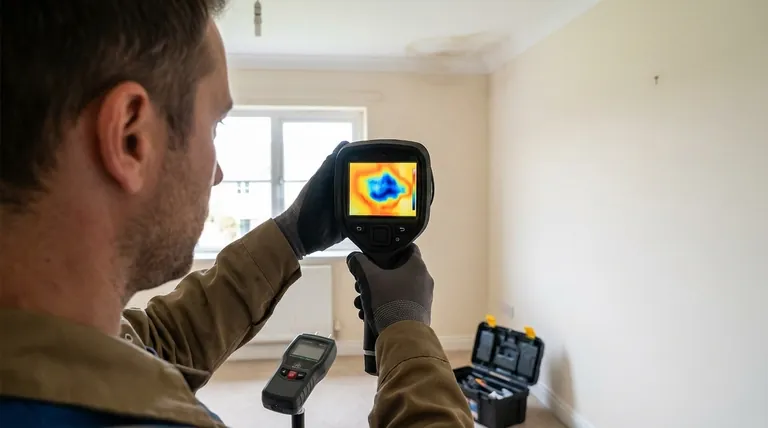
2. Infrared Cameras Identify Temperature Differences
Thermal imaging does not detect water directly. Infrared technology identifies unusual temperature patterns that often indicate trapped moisture behind finished surfaces.
Cooler areas may suggest wet insulation, leaking pipes, or moisture intrusion. Inspectors then confirm findings with additional testing before reaching conclusions.
3. Relative Humidity Reveals Environmental Conditions
Indoor humidity plays a major role in mold development. Relative humidity measurements help inspectors determine whether environmental conditions support microbial growth.
According to the EPA, maintaining indoor humidity below approximately 60 percent reduces conditions favorable for mold. Monitoring humidity also helps identify ventilation concerns.
4. Building History Provides Valuable Clues
Past flooding, plumbing failures, or roof leaks often explain recurring moisture problems. Property history allows inspectors to focus attention on higher risk areas.
Occupant observations also matter. Persistent odors, peeling paint, recurring stains, or unexplained allergy symptoms frequently point toward concealed moisture sources.
5. Airflow Patterns Influence Moisture Movement
Air does not remain still inside buildings. Air circulation carries moisture throughout enclosed spaces where condensation can develop under suitable conditions.
Inspectors evaluate ventilation systems, exhaust fans, crawl spaces, and attic airflow because poor ventilation often contributes to ongoing moisture issues.
6. Surface Conditions Tell an Important Story
Minor defects sometimes reveal larger hidden problems. Surface changes such as bubbling paint, warped trim, or soft drywall often indicate moisture trapped behind finished materials.
Experienced inspectors recognize these warning signs and investigate further using specialized equipment rather than relying on appearance alone.
Additional Benefits of Professional Mold Inspections
A quality inspection does more than confirm whether mold exists. It identifies moisture sources, evaluates building conditions, and provides practical recommendations that reduce the chance of future problems.
Professional findings also create a documented record that supports maintenance planning, insurance discussions where applicable, and informed repair decisions instead of unnecessary guesswork.
Moisture Mapping Supports Accurate Repairs
Repairing visible damage without locating the source often leads to recurring problems. Moisture mapping identifies affected areas so repairs target the true cause instead of surface symptoms.
This approach reduces unnecessary demolition and helps contractors focus restoration efforts where moisture actually exists. Better information usually leads to more efficient repairs.
Professional Sampling Answers Important Questions
Not every inspection requires laboratory testing. Professional sampling is recommended when visual findings, moisture readings, or occupant concerns require additional confirmation.
Air and surface samples can identify mold types and concentrations when interpreted alongside inspection findings. Results should always be considered within the broader building assessment.
Hidden Moisture Can Affect Indoor Air Quality
Moisture encourages microbial growth that may influence indoor air quality over time. Indoor environmental conditions deserve attention even when mold remains hidden behind building materials.
People may notice musty odors, persistent dampness, or increased discomfort indoors. Identifying moisture early helps reduce conditions that allow contamination to continue spreading.
Early Detection Helps Protect Building Materials
Drywall, framing, insulation, and flooring all respond differently to prolonged moisture exposure. Early intervention helps preserve materials before significant deterioration develops.
Small repairs performed quickly often cost less than replacing structural components that have remained wet for extended periods. Prevention almost always saves time and expense.
Certified Inspectors Follow Recognized Standards
Professional inspections rely on established practices rather than assumptions. Industry standards published by organizations such as the IICRC guide inspection methods and documentation.
Qualified inspectors understand building science, moisture behavior, sampling limitations, and inspection procedures. Their recommendations are based on evidence collected during the assessment.
A Detailed Inspection Report Guides Next Steps
Inspection findings become far more valuable when clearly documented. Property owners who schedule comprehensive mold inspection services through experts like gacenvironmental.net mold inspections provide information that helps prioritize repairs and understand the conditions contributing to hidden moisture.
A thorough report typically includes moisture readings, affected locations, photographs, observations, and practical recommendations. This documentation supports informed decisions instead of relying on assumptions.
Signs That Suggest You Need a Mold Inspection
Moisture problems often leave subtle clues before major damage appears. Paying attention to these warning signs helps property owners respond before conditions become more difficult to correct.
Ignoring small changes rarely makes moisture disappear. Early evaluation provides clarity and helps determine whether further investigation or remediation is necessary.
Common Warning Signs
- Musty odors that persist after cleaning.
- Water stains on ceilings, walls, or flooring.
- Paint that bubbles, peels, or cracks unexpectedly.
- Warped wood flooring or swollen baseboards.
- Condensation appearing repeatedly on windows.
- Recent plumbing leaks, roof leaks, or flooding.
- Increased indoor humidity without an obvious cause.
- Allergy symptoms that seem worse indoors.
- Visible mold returning after previous cleaning.
- Soft drywall or discolored building materials.
Conclusion
A professional mold inspection can reveal hidden moisture problems long before visible mold or structural damage appears. By combining specialized equipment with proven inspection methods, experts identify the source of moisture instead of treating only the symptoms. Acting early helps protect indoor air quality, preserve building materials, and reduce the risk of costly repairs. Investing in a thorough inspection provides the clarity needed to keep your property safe, healthy, and well maintained.