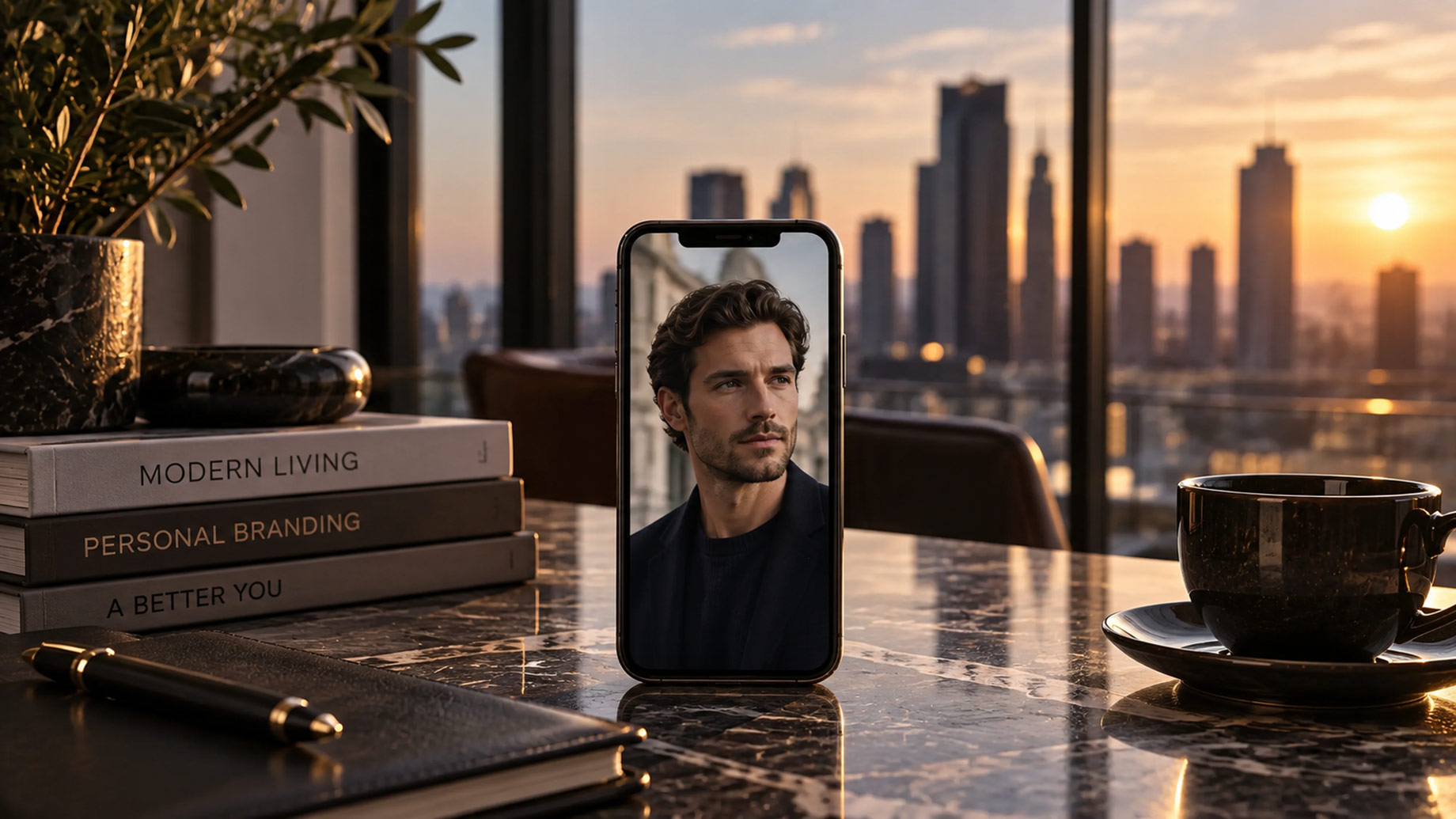
No serious agent lists a property without staging it. The furniture gets rearranged, the lighting gets warmed, the clutter disappears, and the photography is handled by someone who knows what a wide-angle lens does to a living room. Everyone involved understands that buyers decide in seconds, from photos, long before they ever walk through the door.
Then the same people who would never list a property with phone snapshots turn around and represent themselves online with a five-year-old photo taken in a car.
The asymmetry is worth examining, because the modern profile photo, on dating apps especially, but also on LinkedIn, in speaker bios and everywhere else a face stands in for a person, has quietly become one of the most frequently viewed assets a person owns. It is seen more often than the house, the car or the watch. It is also, for most people, the least managed.
The Staging Logic, Applied to a Face
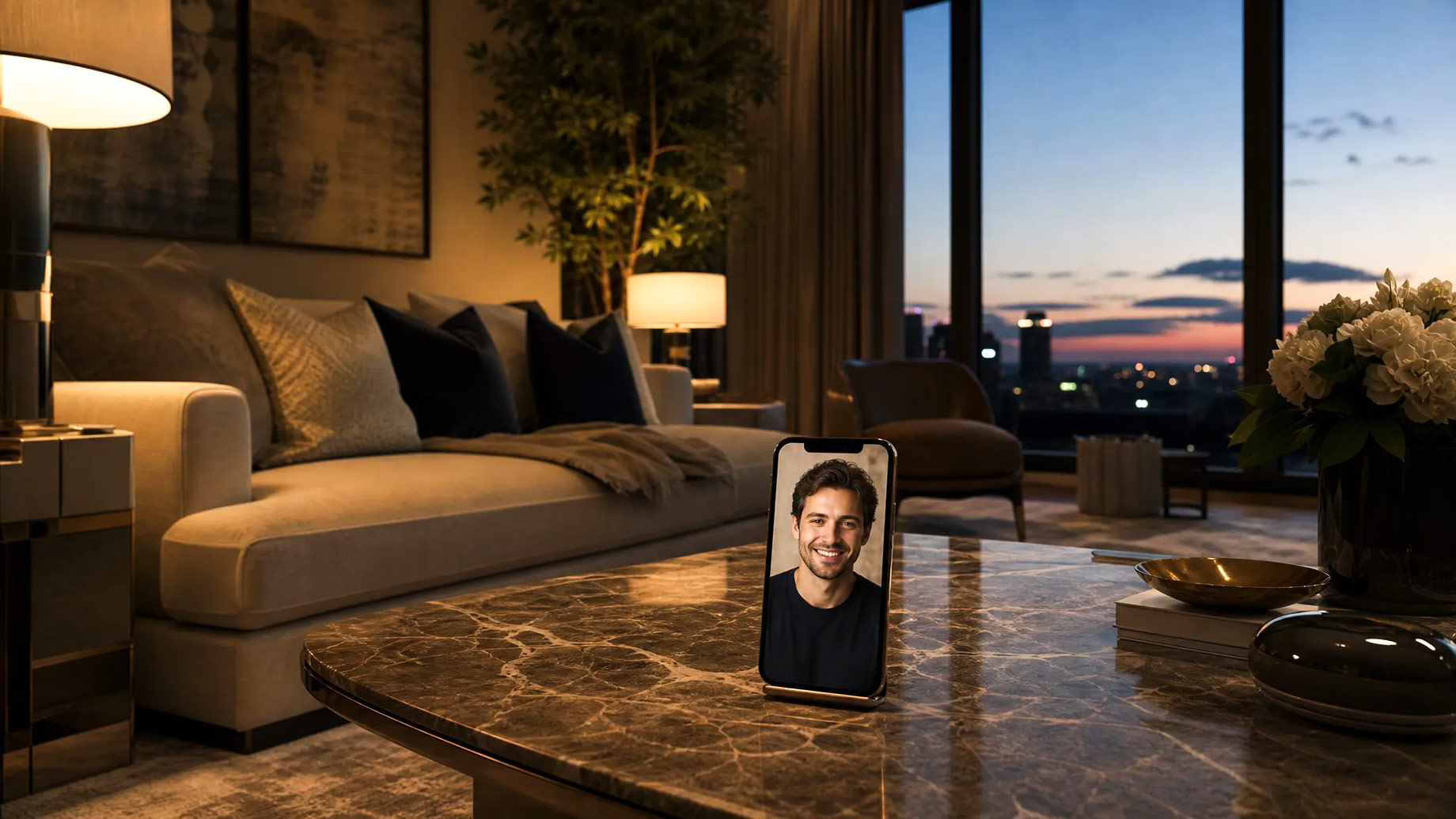
Staging works because it removes friction from imagination. A buyer walking into an empty house has to do cognitive work to picture a life there; a staged house does the work for them. The premium properties command better offers not because the staging deceives anyone, but because it presents the truth in its best light, deliberately.
Profile photos operate on identical mechanics. A viewer swiping through a feed is doing the same instant appraisal a buyer does with a listing: can I picture a life that includes this? A dim bathroom mirror shot forces the viewer to do all the imaginative work. A well-lit photo of a person at ease in an attractive setting does the work for them. Same person, same truth, different presentation, different outcome.
The luxury world has never needed convincing on this point. It simply has not applied the principle to the one image that gets more views than any listing.
Real estate photography itself makes the case numerically. Listings with professional photography sell measurably faster and closer to asking, which is why no agent debates the expense anymore; the industry settled that argument a decade ago. The personal photo market never had its equivalent reckoning, even though the appraisal dynamics are the same and the viewing volumes are far higher. A listing might be seen by a few thousand buyers. An active dating profile is appraised by more strangers in a month than most homes are in a full sales cycle.
Why the Market Undersupplied This
The obvious question is why people with the means to stage everything else leave their own presentation unstaged, and the answer is that the market never offered a proportionate product.
Commissioning a portrait photographer runs $300 to $500 for an afternoon: one location, one outfit, a few dozen frames. It is a reasonable spend for corporate use. For a dating profile it feels disproportionate and, frankly, faintly embarrassing to book, which is why almost nobody does. Below that price point sat nothing at all. The choice was studio formality or the camera roll, and the camera roll won by default.
That gap, a demand for polished, natural-looking personal imagery at an impulse price, is precisely the one the current generation of AI photography closed.
The New Production Economics
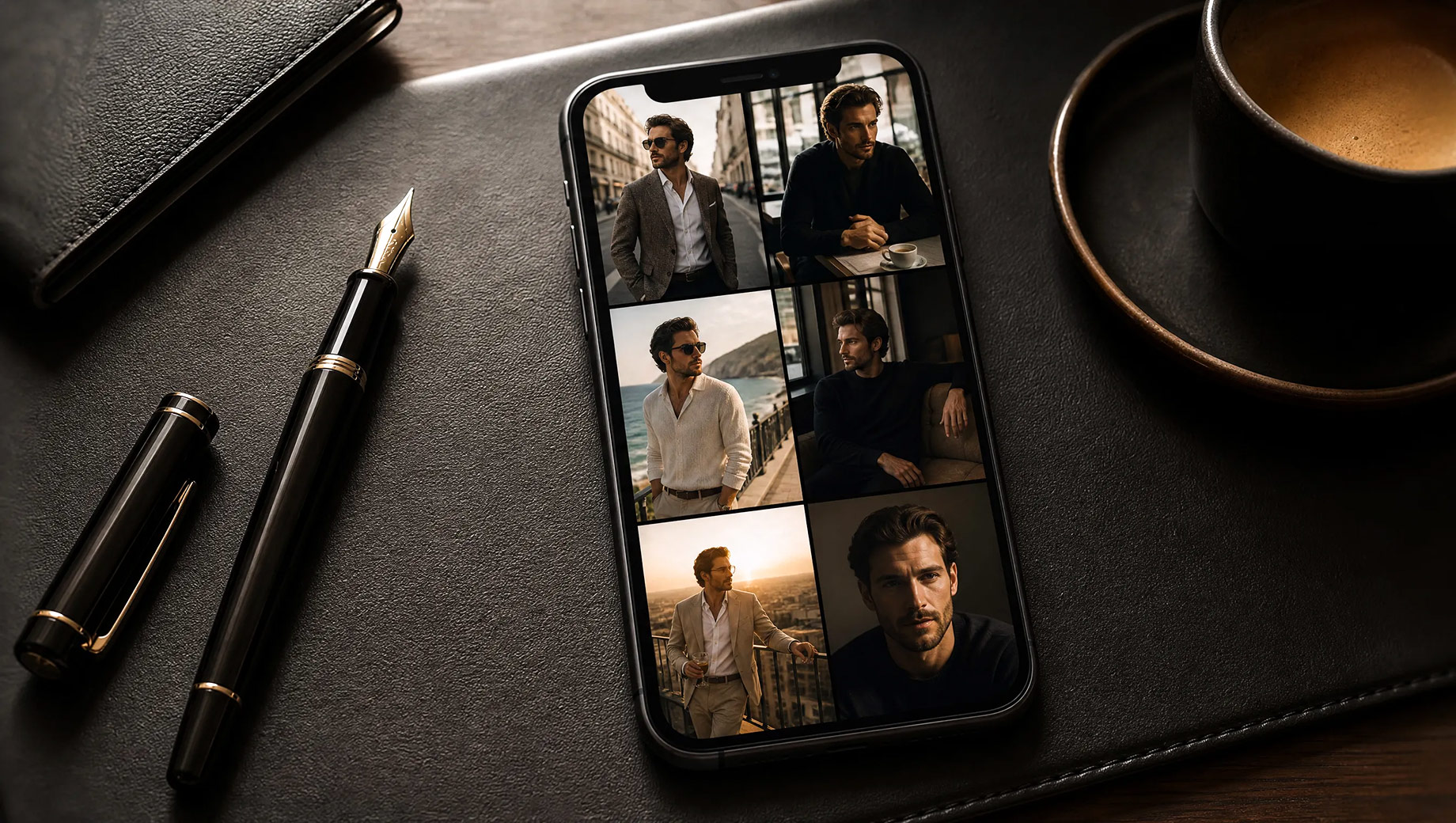
Services built around dating photos now work from a batch of ordinary selfies and return 80 to 180 images of the same person across roughly 45 settings: city streets, cafes, coastal walks, well-lit interiors, the scenes a lifestyle photographer would spend a week arranging. Turnaround is twenty to thirty minutes and the cost is a one-time $29 to $79, closer to a bottle of decent wine than a photography contract.
DatePhotos, an AI dating photo generator built for Tinder, Bumble and Hinge, is representative of how the better tools handle quality control: every output is scored from 0 to 100 on how natural it reads, with 85 as the recommended threshold. The scoring matters because generation is imperfect, and the value is not in producing two hundred images but in confidently discarding the hundred and ninety that miss. Any art director would recognise the workflow. Shoot wide, edit ruthlessly, publish six.
The Rule Luxury Already Understands
There is a boundary, and the luxury market is better equipped than most to respect it, because it already lives by the relevant rule: quality is not exaggeration. A staged home never adds a bedroom that does not exist. Doing so would not be presentation, it would be fraud, and the deception would surface at the walkthrough.
The same enforcement applies here, on a shorter timeline. A generated photo that drifts from the actual face, younger, leaner, restructured, wins attention and forfeits it at the first meeting. The sensible use is the staging use: the real person, presented deliberately, in the settings and light their camera roll never captured. The tools that score for naturalness rather than glamour are enforcing exactly this line, and it is the same line a good stager walks.
An Asset Worth a Half Hour
The economics of attention have made the personal photo a strange kind of property. It is appraised thousands of times by strangers, it materially affects outcomes in dating, hiring and business, and until recently it was the only high-exposure asset with no professional market beneath the luxury tier.
That has changed, and the barrier that remains is not cost or effort but simply the habit of not thinking of a personal photo as an asset at all. The calculation is now the one this readership applies everywhere else. When a half hour and the price of dinner can move an asset from unmanaged to deliberately presented, leaving it unmanaged is not modesty. It is simply an oversight, and in any portfolio, those are the first things to fix.
