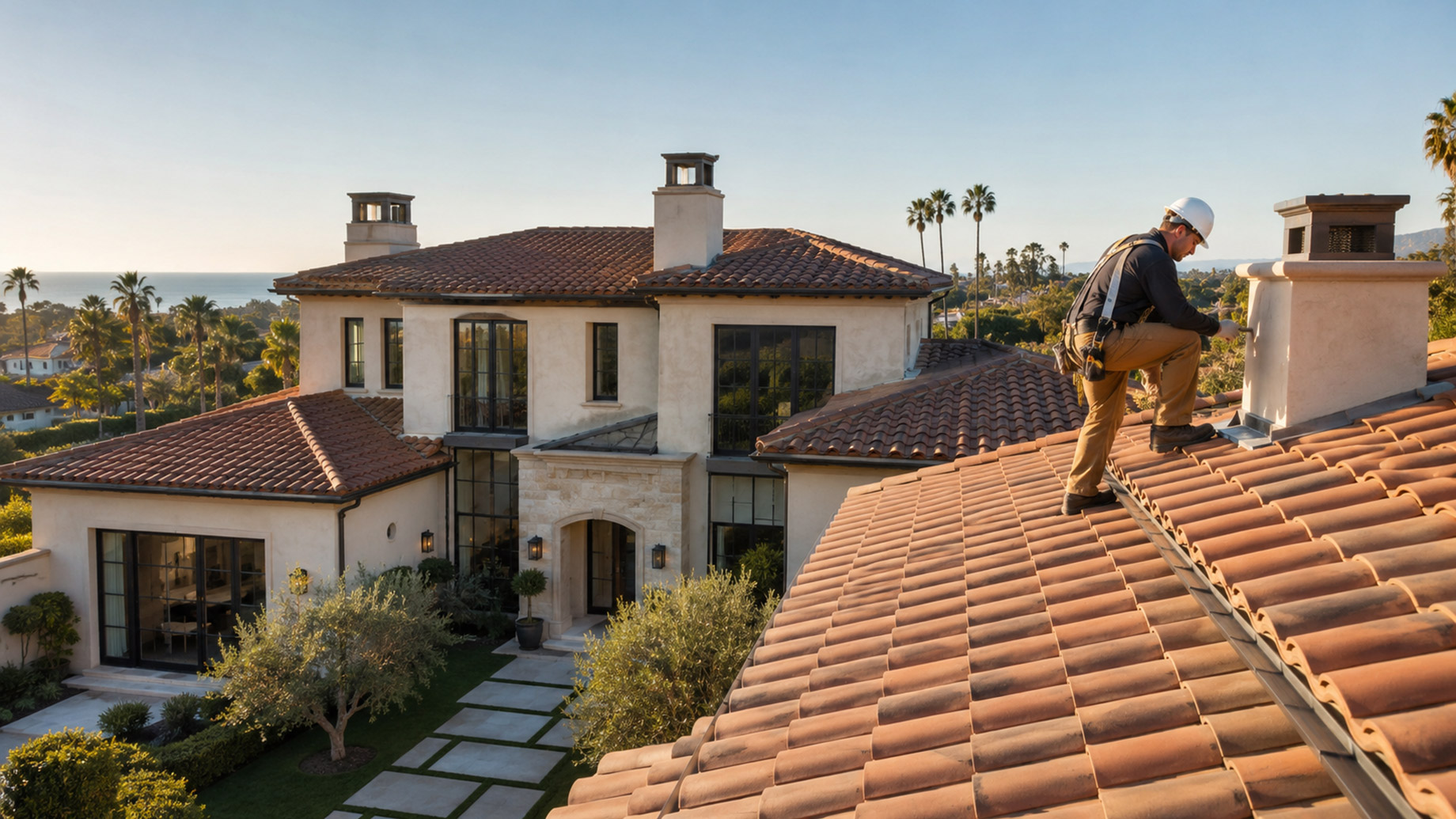
A $15 million California estate. A small roof leak was ignored for 18 months. Fifty thousand dollars in structural repairs that started as a $600 flashing fix.
The true cost of luxury isn’t in the finishes, it’s in the diligence. Here’s why the wealthiest homeowners treat roof maintenance as seriously as their investment portfolios.
The Math Nobody Wants to Do
Roof deterioration on a high-value property follows a predictable pattern. Understanding it is the first step to avoiding it, and it’s why luxury home maintenance starts, above all else, at the roof.
How Small Failures Become Structural Problems
Deferred maintenance on a high-value property doesn’t pause while you’re busy. It compounds.
A minor flashing failure around a chimney or skylight allows moisture in slowly enough that there’s no visible stain, no obvious alarm. Over 12 to 18 months, that moisture cycles through the decking, saturating the framing below.
A routine inspection that catches deteriorating flashing runs a few hundred dollars. The same issue, after two winters of unchecked infiltration, can cost $30,000 to $60,000.
Why Luxury Roofing Materials Demand Specialist Eyes
Luxury roofing materials add a layer of complexity. Slate, copper, clay tile, and standing seam metal all have significantly longer lifespans than standard asphalt, according to the National Roofing Contractors Association.
Premium materials like slate and clay tile can last 50 years or more, but their failure modes are highly specific.
Cracked slate from foot traffic. Copper flashing separated at the seam. Clay tile with broken mortar at the ridge. None of these are visible from the ground, and none of them show up on a standard home inspection checklist. Only trained eyes catch them before they become expensive.
What a Professional Inspection Actually Covers
A general inspector notes obvious issues: missing shingles, visible moss, and sagging sections. A dedicated roof inspection goes considerably deeper. The distinction between a surface-level check and a thorough specialist evaluation is significant, and on a high-value property, it’s the difference that matters:
- Flashing integrity at every penetration point: chimneys, skylights, dormers, valleys, and vents
- Deck condition beneath the surface material, including soft spots and compression damage
- Drainage performance across all slopes, gutters, and downspout outlets
- Ventilation assessment for moisture buildup that accelerates deterioration from below
- Photographic documentation of the current condition across every slope
That last point matters most. A dated inspection report with photographs creates a defensible record when an insurance claim is at stake.
For Pittsburgh properties, expert roofers in Pittsburgh conduct the kind of thorough, documented inspection that serves both your maintenance planning and your insurance file.
Spring and Fall: Why Timing Is the Strategy
Two inspections per year is the professional standard, and the timing of each one is deliberate.
Spring: The Diagnostic Window
Pittsburgh winters are hard on roofs. Freeze-thaw cycling stresses flashing seals, ice damming can force water beneath shingles, and debris accumulation through the winter traps moisture against the surface.
A spring inspection identifies what the season inflicted before that damage has a chance to progress through a wet spring and summer.
Fall: The Intervention Window
Any deterioration identified before freeze season can still be addressed before conditions make repair work difficult or impossible. A missing section of flashing sealant caught in October is a $200 repair.
The same gap discovered in February, after three months of ice and snowmelt infiltration, is a different conversation entirely.
Seasonal Residences and Multiple Properties
For owners of multiple properties or seasonal residences, the timing strategy is worth adapting. Align inspections with occupancy calendars: inspect before you arrive for extended stays, not after. A property that sits vacant through winter should be inspected in early spring before you assume everything is fine.
Warning Signs That Can’t Wait for the Next Inspection Cycle
Scheduled inspections are the baseline. These signals require immediate attention regardless of where you are in the calendar.
Visible Sagging or Deflection Along the Roofline
A straight roofline is a healthy roofline. Any deviation indicates structural compromise below the surface. This is not a monitoring situation.
Water Staining on Upper-Floor Ceilings or Walls
If staining appears after a rain event, active infiltration is already occurring. The stain represents moisture that has already traveled through the decking and insulation.
Heavy Granule Accumulation in Gutters
Granules are the protective layer of asphalt shingles. Heavy shedding after a storm indicates accelerated material breakdown and that the roof is likely closer to the end of its service life than the installation date suggests.
Daylight Visible from the Attic
If light is getting in through gaps in the decking or ridge, so is water. Even a small opening is enough for moisture, insects, and cold air to infiltrate, and what looks minor from the attic floor can represent a serious breach in the roof assembly above.
Recurring Ice Damming at the Eaves
Occasional ice dams after extreme events are normal. Recurring dams in the same location every winter indicate an underlying ventilation or insulation issue that will not resolve on its own.
The Insurance Angle Most Homeowners Miss
Owners of high-value properties typically carry replacement cost coverage through high-end carriers. What many don’t realize is how aggressively those carriers can scrutinize maintenance history before honoring a claim.
Without documentation of prior condition, insurers have significant latitude to attribute damage to neglect, reducing or eliminating the payout.
A professional inspection report dated before a weather event establishes baseline condition, demonstrates active maintenance, and makes the argument for you. Some carriers now explicitly require documented maintenance histories as a condition of coverage on properties above certain valuations.
Building It Into the Property Calendar
Two inspections per year is the professional standard. Add a third after any severe weather event: significant hail, high winds, or heavy ice accumulation.
For owners working with property managers, a structured approach to property management makes this straightforward: a standing order with a specific contractor tied to spring and fall dates removes the variable entirely.
Maintain a running log of every inspection, repair, and contractor invoice and keep the paperwork organized. Over time, that file becomes one of the more valuable records associated with the property, useful at sale, essential at claim time, and genuinely informative for long-term capital planning.
The Roof Doesn’t Care About Your Schedule
The $50,000 lesson from that California estate wasn’t that the leak was severe. It’s that 18 months of inattention turned something manageable into something structural.
The difference between a well-maintained luxury property and an expensive liability is usually a scheduled appointment and the discipline to keep it. Two inspections a year, the right contractor, and a habit of documentation. That’s the entire system.
