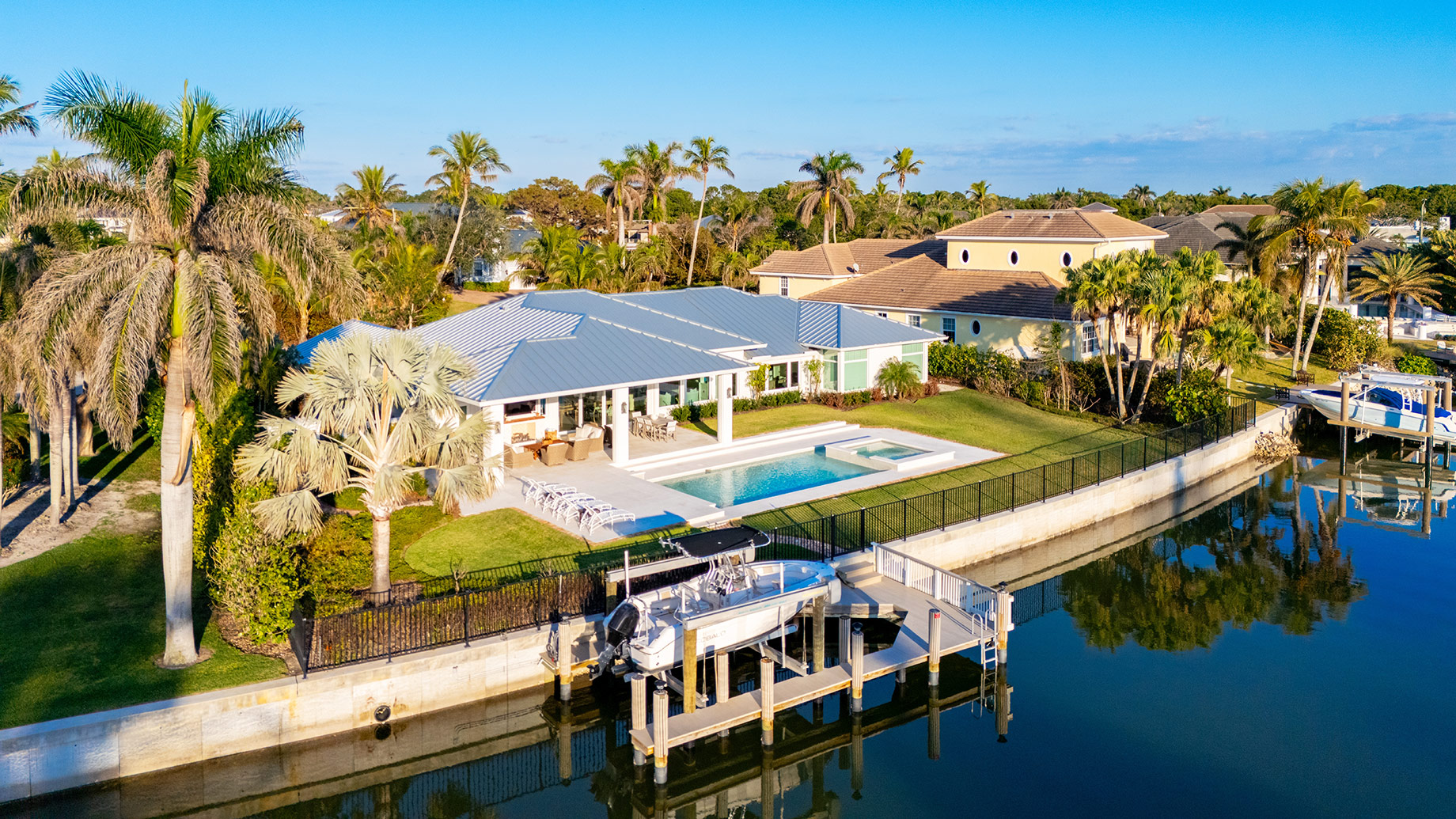
For decades, the deep green lawn has been shorthand for a well-kept luxury property. Walk through any gated enclave in Naples, Sarasota, or the estates lining the canals of Cape Coral, and the message is consistent: the lawn is the frame around the architecture. What has quietly changed in the last few years is how the most demanding homeowners are achieving that frame — and what it costs them to keep it.
Across South and Southwest Florida, a growing number of high-end residences, boutique resorts, and waterfront developments are replacing natural grass with premium synthetic turf. Not the flat, plastic-looking material of a decade ago, but engineered landscape systems with variable blade heights, thatch layers in muted olive and brown tones, and drainage rates designed specifically for subtropical rainfall. The result reads as a flawless lawn from the street and from the lanai — every month of the year.
The Real Cost of a Perfect Lawn in the Subtropics
Florida is one of the hardest places in America to maintain natural grass at a luxury standard. St. Augustine and Zoysia varieties demand constant irrigation through the dry season, aggressive fungicide and pest programs against chinch bugs and sod webworms, and near-weekly mowing during the summer growth surge. On a large estate lot, that routine easily translates into a five-figure annual landscaping line item — before accounting for periodic re-sodding after drought stress, salt exposure, or a single missed irrigation cycle during a hard water restriction.
Water is the pressure point. Outdoor irrigation is consistently one of the largest components of residential water use in the state, and municipal restrictions in counties like Lee and Collier tighten almost every dry season. For homeowners who split time between properties, the risk is straightforward: return after six weeks away to a lawn that has visibly declined, on a street where appearances are part of the property’s value.
Synthetic turf removes that variable entirely. There is no irrigation, no fertilization, no chemical program leaching toward the canal or the bay, and no gap between how the property looks in March and how it looks in September.
What “Luxury Grade” Actually Means in Turf
The perception gap around artificial grass is largely a memory of older products. Contemporary systems intended for estate work differ in several concrete ways:
- Blade architecture. Premium turf combines multiple blade shapes and heights in a single product — taller emerald blades over a shorter, curled thatch layer in tan and olive. This mimics the slight irregularity of a healthy natural lawn and eliminates the uniform sheen that made early products look artificial.
- Thermal and UV engineering. Florida sun is unforgiving. High-end turf lines now carry UV-stabilized yarns warrantied against fading for 15 years or more, and infill options that measurably reduce surface temperature — a meaningful detail for barefoot pool decks and play areas.
- Drainage capacity. A properly built base over compacted aggregate can move well over 30 inches of rainfall per hour through the system. In a state where a summer afternoon can deliver two inches in an hour, this is the difference between a lawn that is usable minutes after a storm and a natural lawn that stays soggy into the next day.
- Installation quality. This is where outcomes diverge most sharply. Seam placement, base compaction, edge detailing against pavers and pool coping, and infill selection determine whether the finished surface reads as a manicured lawn or as carpet. Working with experienced synthetic turf installation specialists in Florida matters more than the product spec sheet — the same premium turf can look extraordinary or ordinary depending entirely on the crew that builds the base beneath it.
Where Estates Are Using It
The most common misconception is that synthetic turf is an all-or-nothing decision. In practice, luxury properties tend to deploy it strategically:
- Pool surrounds and lanai borders, where chlorinated splash-out and constant foot traffic destroy natural grass, and where a crisp turf edge against travertine or marble pavers creates a resort-grade finish.
- Putting greens and short-game areas, now practically a standard amenity in golf-community estates from Fort Myers to Palm Beach.
- Side yards and narrow passages that irrigation systems chronically underserve.
- Rooftop terraces and courtyards in condominium and new-build projects, where soil depth and drainage make natural grass impractical.
- Pet areas, with antimicrobial infill and dedicated rinse drainage.
Full front-lawn conversions are increasingly common as well, particularly in coastal zones where salt-laden air and sandy soil make natural turf a permanent struggle.
The Value Conversation
Does synthetic turf help resale? The honest answer is that it depends on execution. A poorly installed lawn with visible seams is a liability. A professionally built system with realistic product selection is increasingly treated by buyers and agents as a premium feature — a lawn with zero maintenance obligation, no water bill attached, and a documented warranty. For investment properties and seasonal residences in particular, the arithmetic is compelling: the upfront cost is typically recovered within a handful of years through eliminated landscaping and irrigation expenses, after which the surface simply continues performing.
There is also a quieter argument, one that resonates with how luxury buyers in Florida increasingly think: resilience. A landscape that looks identical before and after a drought, a water restriction, or six weeks of absence is one less system to manage in a home that may already juggle generators, hurricane glazing, and smart-home infrastructure.
The green lawn is not going anywhere as a symbol of the well-tended Florida estate. What is changing is what lies beneath it — and for a growing share of the state’s most impressive properties, it is engineered rather than grown.
