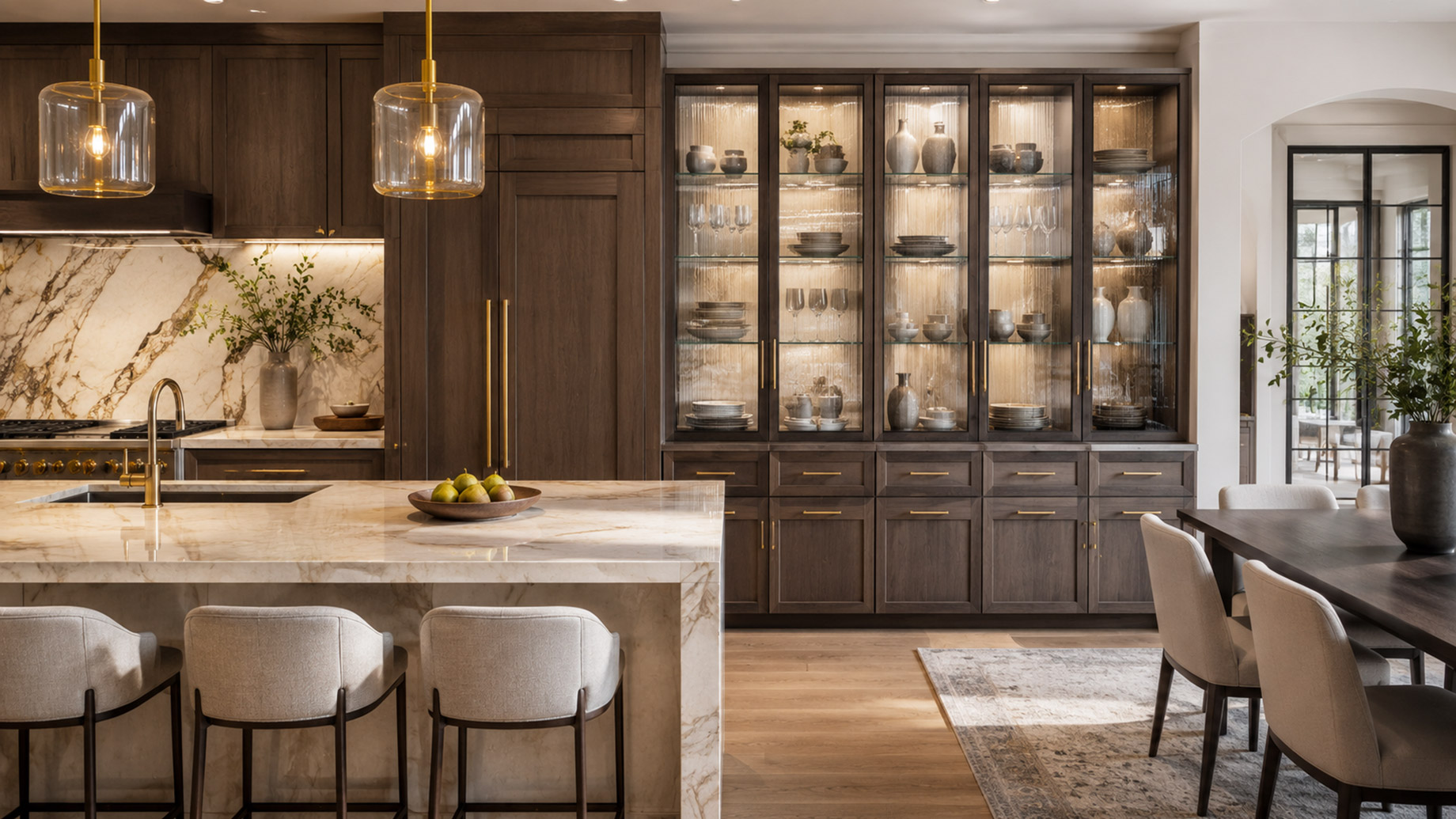
In high-end interiors, the most telling design decisions are rarely the ones that command the most attention. Grand staircases and cathedral ceilings register immediately. But it is the quieter choices — the material selected for a cabinet door, the way light moves through glass — that communicate something deeper about a homeowner’s design fluency.
Cabinetry, long treated as a functional afterthought, has steadily claimed a more prominent role in luxury residential and commercial spaces. What fills those frames is no longer a default. It is a deliberate statement.
The Shift from Function to Intention
For decades, solid cabinet doors dominated upscale kitchens and living spaces. The logic was straightforward: concealment is orderly, and order signals wealth. But that logic has shifted. Today, discerning designers and homeowners are turning toward glass cabinet doors not to show off possessions, but to create depth, movement, and a sense of curated restraint.
The glass choice itself carries meaning. Clear glass communicates confidence — a willingness to be seen. Frosted or reeded glass offers a softer invitation, obscuring just enough to invite curiosity while maintaining visual calm. Leaded or textured panes reference craftsmanship and heritage.
Each option belongs to a different design of vocabulary, and selecting among them requires more than aesthetic instinct. It requires an understanding of how light behaves in a room across different hours of the day, how the surrounding materials respond, and what visual weight a space can carry before it tips into excess.
The Role of Reflectivity in Spatial Design
One of the more underused tools in cabinet design is reflective glass. Decorative cabinet glass, with its range of textures, tints, and surface treatments, has found renewed relevance in interiors that resist the sterile quality of modern minimalism. It adds character without artifice — warmth without weight. Placed inside a cabinet frame, it reflects the room’s personality back in a way that feels lived-in rather than staged.
Reflective and textured surfaces in cabinetry do something that flat paint or veneer simply cannot: they interact with the room dynamically. As light shifts, so does the surface. This
responsiveness gives a space an almost atmospheric quality, one that photographers and interior stylists have long understood, but that homeowners are only recently beginning to seek out intentionally.
Cabinets as a Design Signature
In luxury interiors, the most confident rooms tend to share one quality: consistency of language. Every material speaks the same dialect. When cabinet glass is chosen with the same care as the stone countertop or the hardware finish, the room achieves a coherence that is immediately felt, even if it cannot be immediately named.
This is where cabinetry transitions from background element to design signature. A kitchen with fluted glass doors, aged brass pulls, and honed marble reads as a complete thought. A living room with leaded glass built-ins, dark stained oak, and linen upholstery establishes a narrative. The glass is not detailed. It is a sentence in a longer story.
Choosing with Long-Term Vision
Trend-driven interiors age quickly. Glass cabinet choices that lean into genuine material quality — texture, depth, handcrafted variation — hold their relevance far longer than those selected for novelty alone. The interiors that photograph well five years after completion tend to be the ones where each decision was made with long-term visual logic rather than immediate impact.
For anyone approaching a renovation or new build at the upper end of the market, cabinetry glass deserves the same conversation as flooring species or facade material. It is not a finishing touch. It is one of the most quietly expressive surfaces in a room — and it rewards the homeowners and designers who treat it that way.
