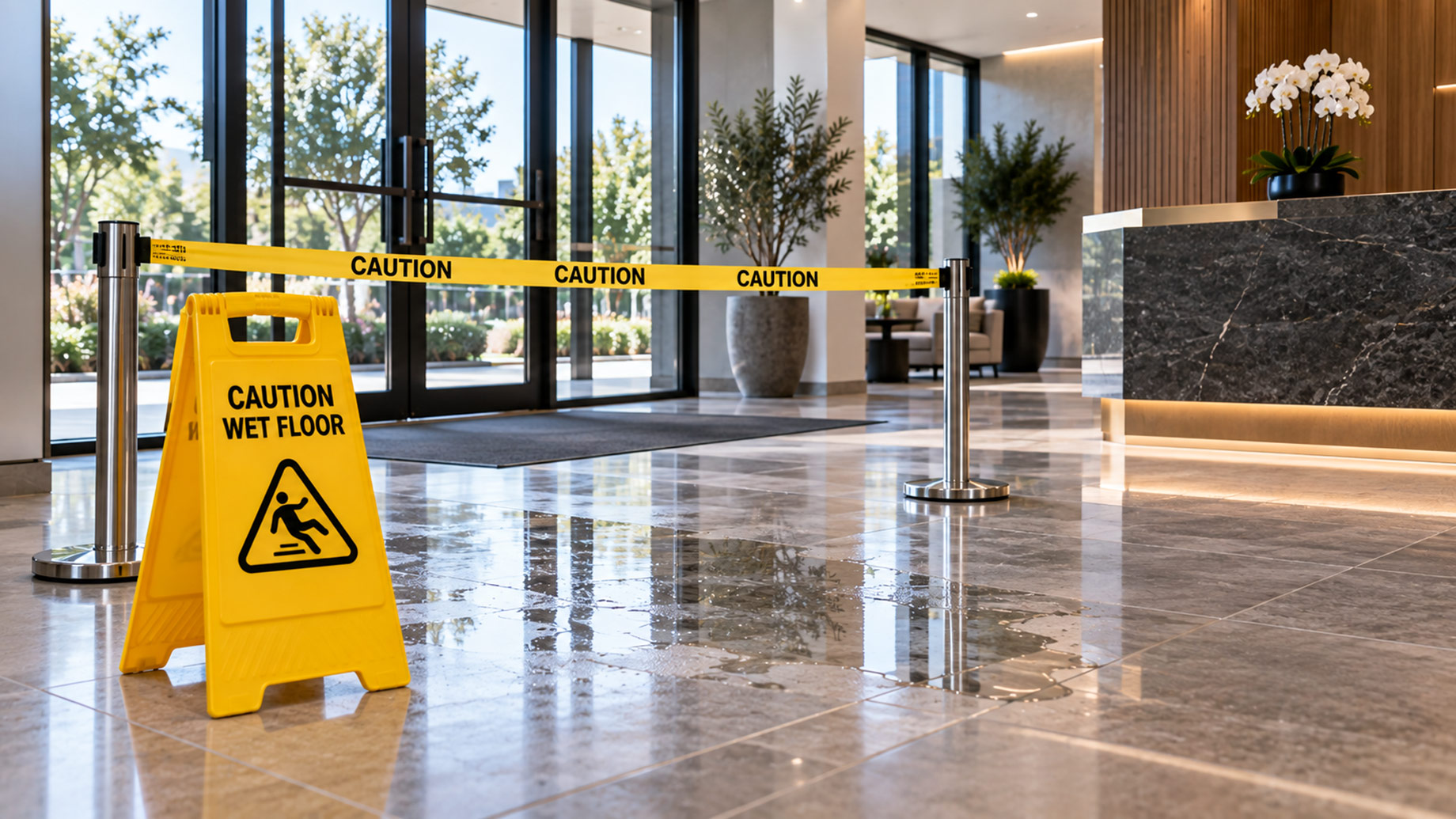
Accidents can occur on any commercial or residential property without prior warning. Property owners and facility managers must react with structured steps to protect injured visitors and limit potential financial liabilities.
Navigating the immediate aftermath requires organization, thorough documentation, and calm communication. Taking correct steps early helps maintain full control over a complex situation.
Secure the Scene and Provide Immediate Medical Aid
Quick action keeps an injured person safe right after a slip or fall on site. Staff members must dial 911 immediately or guide paramedics straight to the spot. Clear paths help emergency teams reach the location without unnecessary delays.
Block off the area right away so nobody else steps into danger. Setting up bright orange cones or yellow caution tape creates a clear barrier. It keeps pedestrians away from slick floors or broken concrete until fixes happen.
Property managers carry a legal obligation to protect visitors from known hazards. Taking quick control of the physical space limits ongoing liability risks. Fast reactions demonstrate real care while keeping the entire building safe for everyone.
Document the Incident and Scene Details
Detailed documentation creates an accurate factual record of what took place during the event. Taking clear photographs of the physical space, hazard, and surrounding environment captures valuable contemporaneous evidence.
Property managers need clear protocols when unexpected accidents happen on site. Reaching out to a qualified San Antonio Personal Injury Lawyer, for example, can help clarify local liability standards before claims escalate. Taking early legal guidance prevents simple administrative missteps from turning into costly legal disputes. Proper communication remains a key element of risk management.
Writing down exact timestamps, weather conditions, and ambient lighting details creates operational clarity. Keeping written observations accurate helps clear up future confusion during formal insurance reviews.
Collect Witness Statements and Contact Information
Gathering statements from third-party bystanders gives you an unbiased look at what happened. Write down full names, active phone numbers, and email addresses right away. Clear contact details make future follow-up calls simple and direct for insurance agents.
Third-party witnesses offer neutral views on actual property conditions during the incident. Real estate owners hold legal responsibility when dangerous spots harm visitors on site. Having independent voices corroborates accurate facts if claims turn into official legal battles.
Legal claims require solid proof that a specific physical hazard directly caused physical damage. Recording written notes right after an accident preserves fresh memories before details fade. Collecting key details early protects your operations against skewed stories later on.
Notify Your Insurance Carrier Right Away
Notifying insurance providers right away fulfills mandatory policy reporting rules under commercial coverage agreements. Delaying the communication might compromise coverage limits or lead to coverage denials.
Policyholders should provide clear factual details without offering personal speculations or opinions on legal fault. Standard legal doctrine notes that property owners owe a duty of care to anyone entering their land.
Maintaining organized files speeds up insurance evaluations and helps claims adjusters process matters smoothly:
- Save written incident logs immediately after the event.
- Store photographs and video security footage securely in digital archives.
- Keep clean copies of all written communication records.
Maintain Detailed Records and Repair Logs
Detailed maintenance records show strong proof of regular care and ongoing safety checks. Inspection logs show that work happened on strict schedules to keep walkways clear. Keeping organized files demonstrates that your management team takes property oversight seriously every day.
Written maintenance reports serve as concrete defense evidence during formal legal disputes. Consistent tracking proves that your facility followed standard safety guidelines across all areas. Solid proof helps clear up confusion when insurance investigators look into reported injuries.
Save vendor work orders, repair invoices, and routine physical checklists in digital files. Storing complete paperwork protects real estate assets against expensive financial claims down the road. Organized files help your legal team build a firm stance during official claim reviews.
Understand Legal Duties Owed to Visitors
Legal standards categorize property visitors into distinct legal classes with varying levels of legal protection. Property managers should understand how classifications shape ongoing legal obligations.
A legal guide explains that property owners owe guests the highest duty of care under premises liability rules. Meeting the standards requires proactive hazard identification and prompt repair actions.
Key considerations for maintaining visitor safety include:
- Conduct regular physical inspections of walkways, stairwells, and entry points.
- Repair physical hazards like loose handrails, broken steps, or uneven tiles.
- Post prominent warning signs near temporary maintenance risks.
Communicate Carefully and Avoid Admitting Fault
Managing initial conversations after an incident takes complete restraint from every property staff member. Expressing sympathy feels natural, but making casual apologies creates complex legal issues down the road. Employees must stick strictly to observable facts during initial discussions.
Staff members need to refrain from offering personal opinions or speculating on underlying causes. A legal resource notes that injured parties should notify management about property incidents right away. Clear protocols keep initial statements simple and direct.
Standardized reporting documents keep incident descriptions uniform across the entire workforce. Standard forms help record objective facts without adding unnecessary commentary. Following the steps protects property owners against unintended admissions of financial liability during future legal disputes.
Implement Safety Upgrades to Prevent Future Incidents
Reviewing the primary root cause of an accident helps management teams identify required physical property repairs. Fixing broken structural features right away removes dangerous hazards quickly. Taking fast action protects guests walking through the exact same area.
Installing brighter exterior lighting fixtures improves visibility in dark hallways and outdoor lots. Repairing cracked concrete walkways and adding non-slip flooring materials protect visitors against dangerous falls. Physical modifications support basic safety goals across the commercial location.
Proactive structural changes reduce long-term liability risks across commercial real estate locations. Scheduling regular physical property audits keeps facility management teams aligned with local building safety codes. Maintaining high structural standards guards guests against physical harm and preserves asset value for owners.
Handling an injury on commercial or residential property demands clear protocols and precise execution. Following structured steps protects visitors while safeguarding valuable property assets.
Proper documentation, clear communication, and ongoing risk management create a strong defense against claims. Taking proactive measures maintains safety and operational stability across all properties.