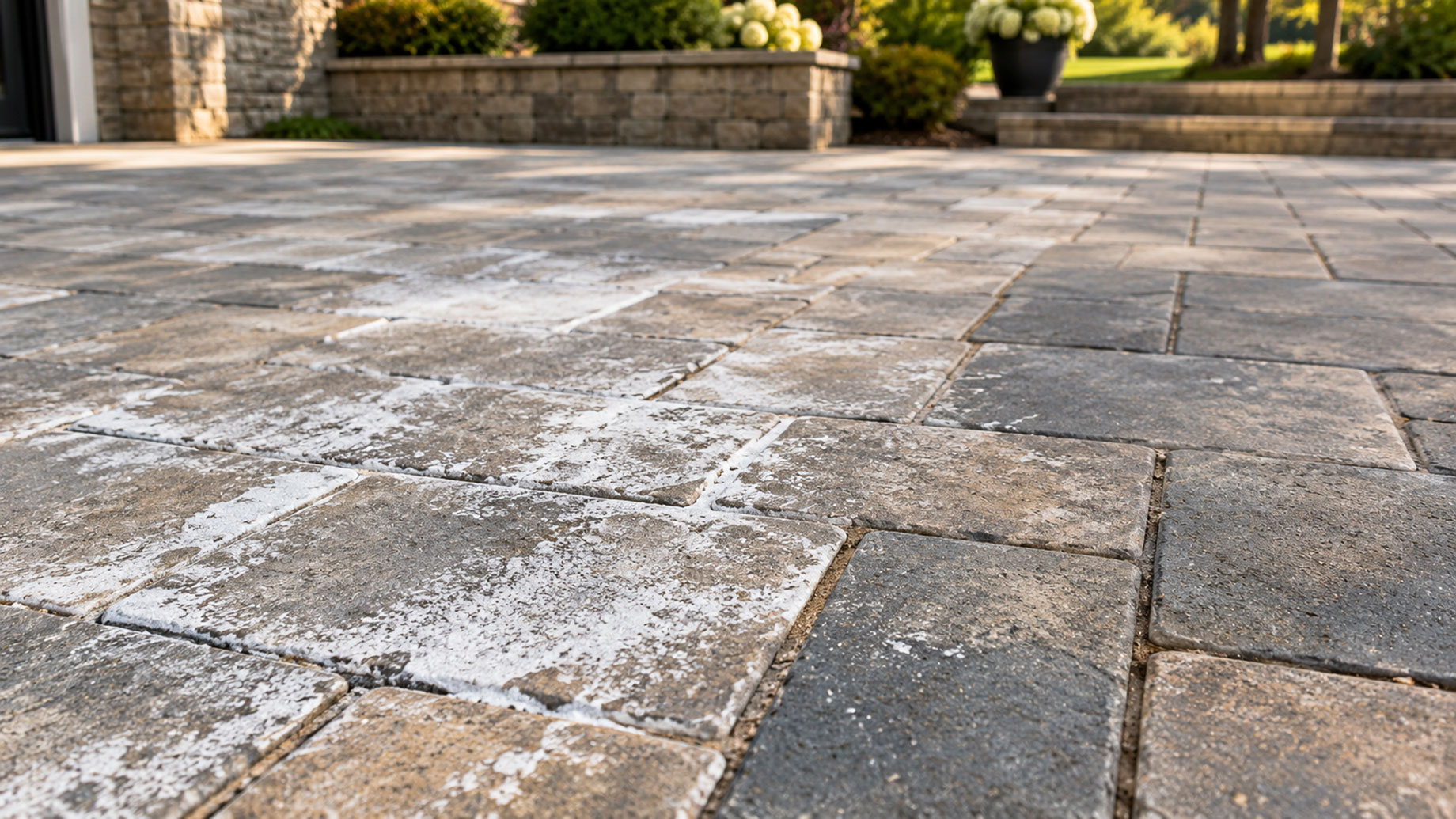
Efflorescence leaves a chalky white coating on the surface of a paver. This common issue affects driveways, patios, walkways, and many other paved outdoor surfaces. Moisture trapped inside the paver carries dissolved salts upward toward the exposed outer surface. Once that water evaporates, those salts crystallize and form a visible chalky white layer. Although mostly harmless to the paver itself, the marks can look quite unattractive. The sections below cover why efflorescence forms and how homeowners can prevent it.
What Causes Efflorescence on Pavers
Several different factors combine to create the exact conditions efflorescence needs to form. Excess groundwater beneath a paver installation often carries mineral salts toward the surface. TSS Pro Sealant Solutions creates a protective barrier on the paver surface. That barrier keeps moisture from causing rapid damage. Poor drainage around a newly paved area keeps the soil beneath saturated too long. Cement based materials naturally contain soluble salts that can migrate toward the surface. Efflorescence causes lasting damage to pavers over time. An efflorescence-resistant paver sealant keeps that moisture from reaching the surface.
How Efflorescence Forms Over Time
Efflorescence typically forms in gradual stages rather than appearing suddenly overnight on pavers. Water first seeps into the paver through tiny natural pores and small surface cracks. As that water travels through the material, it slowly dissolves any available soluble salts. Warm weather speeds up evaporation and quickly pulls that salty moisture toward the surface. Repeated wet and dry cycles cause the mineral deposits to build up over time. New paver installations often show more efflorescence since fresh materials contain higher salt content.
Signs of Efflorescence on Paver Surfaces
The most obvious sign is a white or grayish powder covering the paver surface. This chalky residue often appears after rainfall or right after a paver is cleaned. It tends to concentrate near joints, edges, and low lying areas of the pavement. Once efflorescence sets in, paver colors often look faded and washed out. The powder usually wipes away easily but tends to return again after future rainfall. Persistent efflorescence over several seasons often signals an underlying moisture drainage related problem.
Preventing Efflorescence Before It Starts
Proper drainage design remains the single most important defense against future efflorescence problems. Grading the soil away from paved areas keeps water from pooling underneath the surface. A quality base layer of compacted gravel helps water drain instead of soaking upward. Sealing pavers soon after installation blocks moisture before troublesome salts can even form. Choosing materials with lower salt content also reduces the overall risk of future buildup. If you clean pavers regularly, mineral deposits never get a chance to build up.
Long Term Care for Paver Surfaces
Long term paver care depends on consistent sealing and regular seasonal maintenance checks. Reapplying sealant every few years keeps that protective barrier strong and fully effective. Homeowners should inspect joints and edges closely after heavy rain or winter thaws end. Cleaning with mild solutions protects paver color while carefully removing early mineral deposits. Professional inspections every couple of years can catch drainage issues before they worsen further. When you clean and reseal pavers regularly, they stay attractive and structurally sound for years.
Water that pools near a patio or driveway pulls minerals up through the pavers. They dry into chalky white marks that most people call efflorescence. Rainfall and soil conditions change how quickly the buildup develops. A new drain channel or a regraded slope stops water from pooling near the pavers. A quality sealant applied after installation blocks moisture before it reaches the surface. When pavers get resealed every two or three years, buildup rarely returns. Driveways and patios with good drainage and a fresh sealant coat rarely develop heavy efflorescence.
