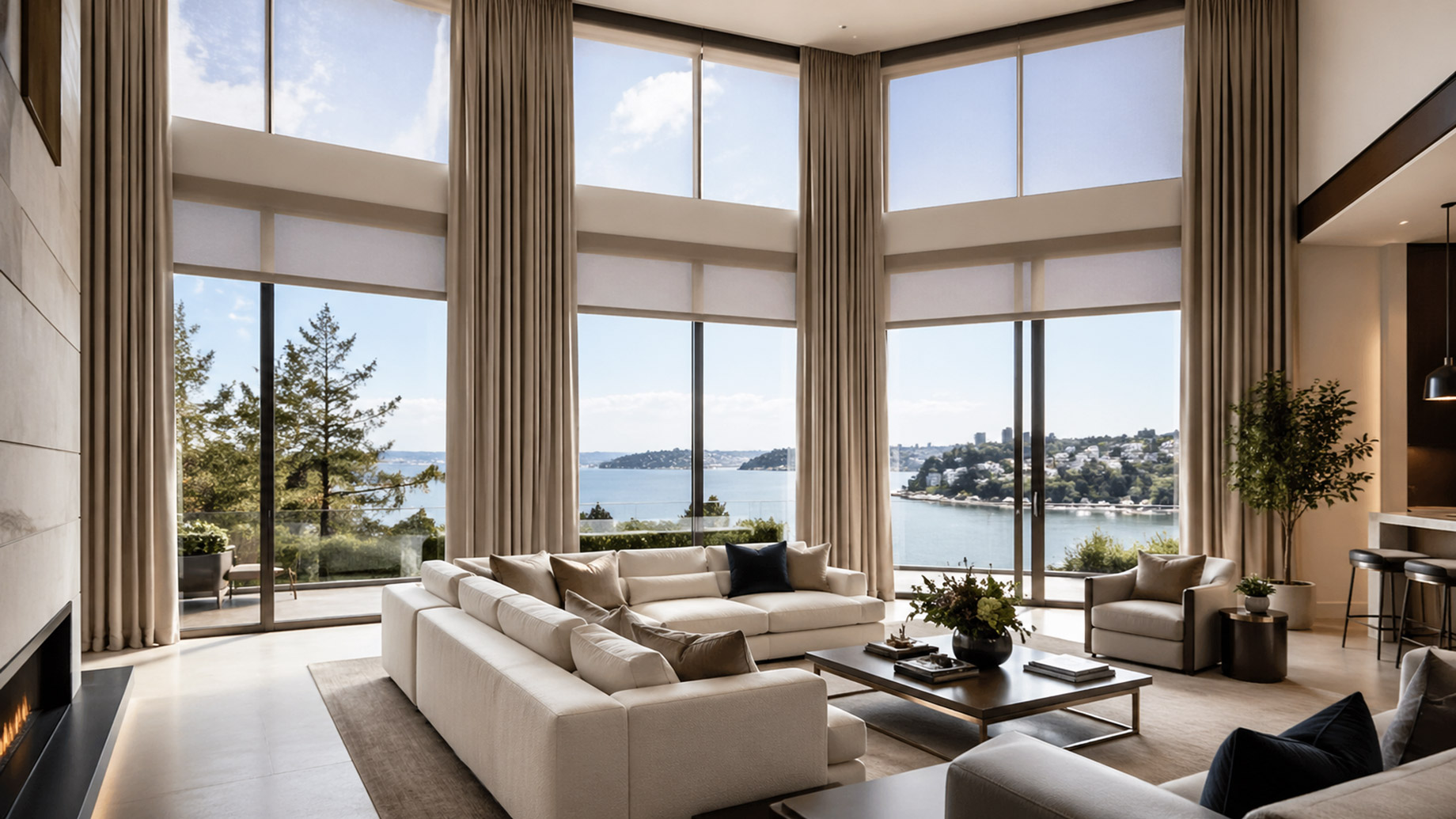
Floor-to-ceiling windows are one of the most stunning features a home can have. They flood your space with natural light, create a seamless connection to the outdoors, and instantly elevate the overall design. But as beautiful as they are, they also come with unique challenges. Privacy, light control, insulation, and sheer scale all need to be considered carefully when choosing the right solution.
That’s where selecting the right window treatments for floor-to-ceiling windows becomes essential. The goal is not just to cover the glass. It’s to enhance the architecture, maintain balance in the room, and ensure functionality without compromising the view. Whether you’re working with a modern living space or a more traditional design, the right treatments can make all the difference.
In this guide, we’ll walk through the best options available, what to consider structurally, and how to design a solution that feels both practical and visually cohesive.
What Window Treatments Work Best for Floor-to-Ceiling Windows?
When it comes to tall, expansive windows, not all window treatments are created equal. The size alone eliminates many standard options, and the wrong choice can feel overwhelming, heavy, or difficult to operate.
Top options to consider
- Motorized roller shades
- Panel track systems
- Floor-to-ceiling drapery
- Layered treatments combining shades and curtains
- Cellular or honeycomb shades for insulation
Each option brings its own advantages, and the best choice often depends on how you use the space.
Key factors to think about
- Light control throughout the day
- Privacy needs, especially at night
- Ease of operation for tall windows
- Overall design style of the room
- Energy efficiency and insulation
Balancing these elements ensures your window treatments work as well as they look.
Why scale matters
With floor-to-ceiling windows, proportion is everything. Smaller treatments can look out of place, while overly bulky ones can overpower the room. Choosing solutions designed specifically for large openings helps maintain visual harmony.
Structural and Weight Considerations
One of the biggest challenges with floor-to-ceiling windows is the physical demand placed on window treatments. The larger the window, the heavier the materials and the more support required.
What to consider structurally
- Weight of the material, especially for drapery
- Strength of mounting hardware
- Wall or ceiling support for installation
- Long-term durability of mechanisms
Why this matters
- Prevents sagging or damage over time
- Ensures smooth operation
- Improves safety and longevity
Practical tips for handling weight
- Use reinforced mounting brackets
- Consider ceiling-mounted tracks for better support
- Choose lighter fabrics for large drapery panels
- Opt for motorized systems to reduce strain on manual operation
Ignoring these factors can lead to frustration and costly repairs down the line.
Motorized roller shades for tall windows
Motorized roller shades are one of the most popular and practical choices for window treatments for floor-to-ceiling windows.
Why they work so well
- Easy to operate, even for very tall windows
- Clean, modern appearance
- Available in a wide range of fabrics and opacity levels
- Can be controlled with a remote, app, or smart home system
Best use cases
- Modern or minimalist interiors
- Hard-to-reach window installations
- Homes prioritizing convenience and automation
Additional benefits
- Smooth and consistent movement
- Reduced wear compared to manual systems
- Ability to program schedules for light control
For many homeowners, motorized roller shades strike the perfect balance between function and design.
Design Solutions for Tall Window Openings
Beyond functionality, the design of your window treatments plays a huge role in how your space feels. With tall windows, the goal is to enhance the architecture rather than compete with it.
Design strategies that work
- Emphasizing vertical lines to highlight height
- Using neutral tones to keep the focus on the view
- Layering treatments for flexibility
- Keeping hardware discreet and streamlined
Common design mistakes to avoid
- Choosing treatments that are too short
- Overcrowding the window with multiple heavy layers
- Ignoring how treatments look when fully open
Panel Systems vs. Continuous Shade Designs
When working with large spans of glass, you’ll often choose between panel systems and continuous shade designs.
Panel systems
Panel track systems use wide fabric panels that slide horizontally.
Advantages
- Ideal for very wide windows or sliding glass doors
- Easy to operate
- Modern, clean look
Considerations
- Panels stack to one side, which can partially block the view
- Best suited for contemporary spaces
Continuous shade designs
Continuous shades, like roller or cellular shades, cover the entire window evenly.
Advantages
- Clean, uniform appearance
- Better for light control across the entire window
- Can be split into multiple sections for flexibility
Considerations
- May require multiple shades for very wide windows
- Needs careful alignment for a seamless look
Which is better?
- Choose panel systems for wide, horizontal spaces
- Choose continuous shades for a sleek, vertical emphasis
The right choice depends on your layout and design goals.
Preventing light gaps on large window spans
Light gaps are one of the most common issues with large windows. Even small gaps can let in unwanted light and reduce privacy.
Why light gaps happen
- Misaligned shades or panels
- Gaps between multiple treatment sections
- Improper installation
How to prevent them
- Use overlapping panels or shades
- Install side channels for a tighter seal
- Choose blackout fabrics when needed
- Work with professionals for precise measurements
Why it matters
- Improves sleep quality in bedrooms
- Enhances privacy at night
- Creates a more polished appearance
Addressing light gaps early ensures your window treatments perform as expected.
Layering for Function and Style
Layering is one of the best ways to combine functionality with visual appeal.
Popular layering combinations
- Sheer curtains with blackout drapes
- Roller shades with decorative panels
- Cellular shades paired with light-filtering curtains
Benefits of layering
- Greater control over light and privacy
- Adds depth and texture to the room
- Allows flexibility throughout the day
When layering makes the most sense
- Bedrooms needing both light filtering and blackout options
- Living rooms where style and function are equally important
- Spaces with changing lighting needs
Layering allows you to adapt your space without sacrificing design.
Choosing the Right Fabric and Material
The material you choose plays a major role in both function and aesthetics.
Fabric considerations
- Lightweight fabrics for easier operation
- Blackout materials for bedrooms
- Solar fabrics to reduce glare while preserving views
Color and texture tips
- Neutral tones for a timeless look
- Subtle textures for added interest
- Avoid overly bold patterns that compete with the view
Why material matters
- Affects light control and privacy
- Influences the overall feel of the room
- Impacts durability and maintenance
Selecting the right material ensures your treatments perform well and look great.
Frequently Asked Questions
What are the best window treatments for floor-to-ceiling windows?
Motorized roller shades, panel track systems, and floor-to-ceiling drapery are among the most effective options.
Are motorized shades worth it for large windows?
Yes, they provide convenience, reduce wear, and make it much easier to control tall or hard-to-reach windows.
How do you maintain privacy with large windows?
Using layered treatments or adjustable shades allows you to control visibility without blocking natural light.
Can you use curtains on floor-to-ceiling windows?
Yes, but they should be properly scaled and supported to avoid looking heavy or overwhelming.
How do you prevent light gaps in large window treatments?
Overlapping panels, side channels, and precise installation all help minimize light gaps.
Creating Balance Between Function and Design
Floor-to-ceiling windows are meant to be a focal point, not something you feel the need to hide. The right window treatments should enhance their beauty while solving the practical challenges they present. By focusing on scale, structure, and thoughtful design, you can create a solution that feels both effortless and intentional.
When you choose window treatments for floor-to-ceiling windows that align with your lifestyle and your space, you gain more than just light control. You create a room that feels balanced, comfortable, and visually complete. With the right approach, your windows remain the star of the show, while your treatments quietly support everything around them.
