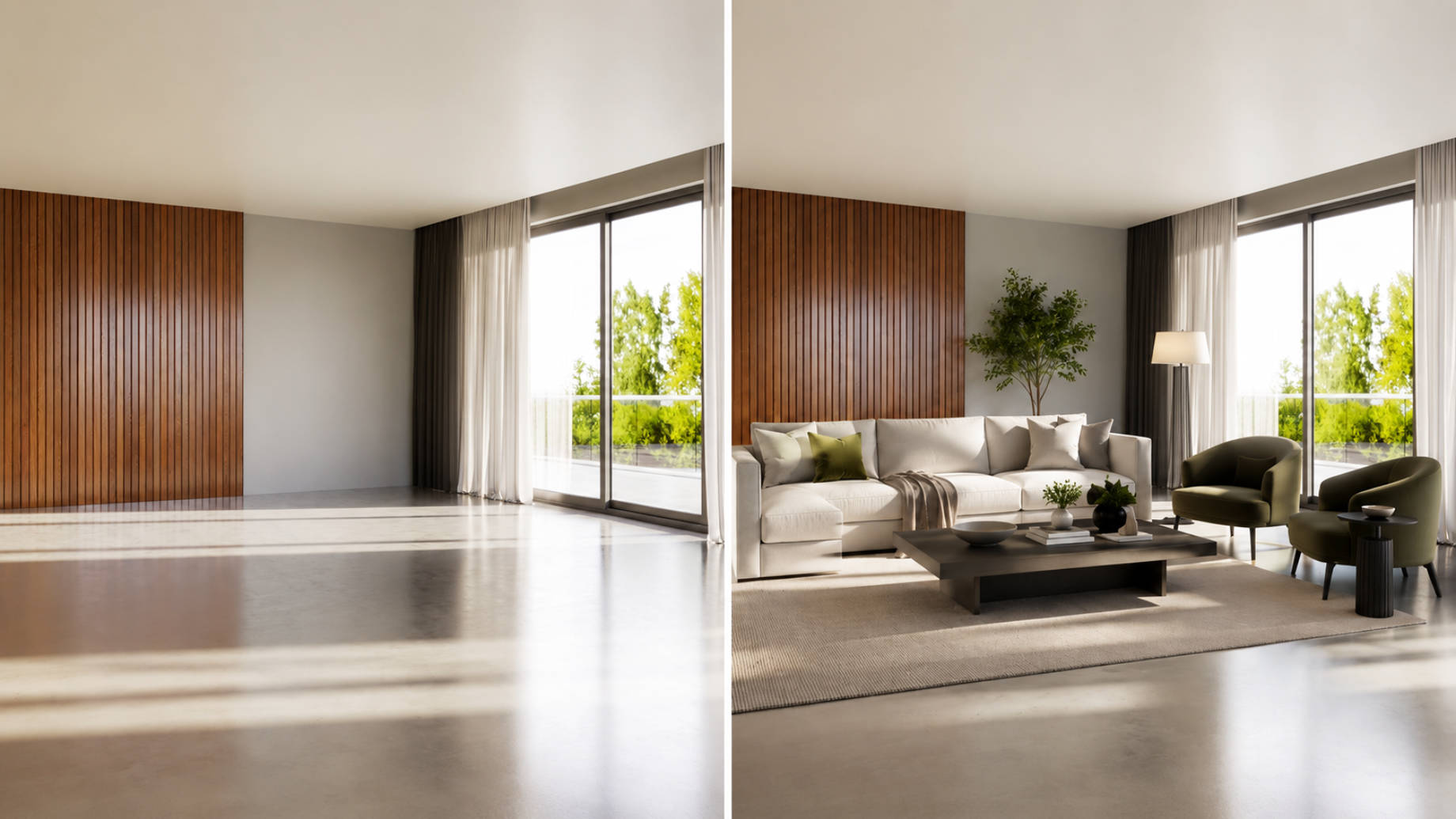
In luxury property sales, a photograph carries more than mood. It carries a claim. It tells a buyer how the home lives, how the rooms connect, what the view offers, and what level of condition the price implies. That is why real estate photo editing has become a question of standards, not a cosmetic afterthought.
Luxury real estate photography has always depended on careful choices: the right light, the right angle, the right moment. AI gives agents and marketing teams more control over those choices, but it also raises the risk of going too far. When luxury listing photos make a room look larger, hide a defect, or imply a view the property does not have, the issue is no longer presentation. It is trust.
Why Luxury Buyers Read Listing Photos Differently
Luxury buyers often bring a sharper visual filter to listing photos. Many have toured architect-designed homes, reviewed private listings, worked with buyer agents, or compared properties across several markets.
They are more likely to notice stretched rooms, uneven lighting, over-smoothed finishes, and views that feel too perfect for the site.
That changes the role of luxury real estate marketing. In any price segment, strong presentation helps a property earn attention. In the luxury segment, presentation also has to protect confidence.
The photos should make the home desirable while still giving the buyer a reliable sense of what the private viewing will feel like.
This is why luxury real estate photo editing needs restraint. A clean, polished image helps. An image that feels unrealistically glossy can become a warning sign. Keeping a photo editor to exposure, color, and clarity adjustments holds the result on the clean-and-polished side of that line, without pushing the image into territory that misrepresents the space.
Buyers are not only evaluating the home. They are also evaluating the agent, the brokerage, and the care behind the listing. If the images feel overworked, buyers may start to wonder what else has been hidden from view.
What AI Should Not Change in a Luxury Listing Photo
The first rule of real estate photo editing is simple: never remove information that helps a buyer judge the property fairly. That rule matters even more at the luxury level, where buyers expect precision.
AI should not erase signs of condition. Cracks, stains, damaged flooring, aged exterior materials, and water marks near a ceiling all affect how buyers understand the property. Removing those details does more than clean the image. It hides information the buyer has a right to evaluate.
AI should also avoid changing the apparent size or proportions of a room. Wide-angle photography already creates tension between what the camera captures and how the space feels in person. Digital edits that stretch walls, raise ceilings, widen openings, or make a compact room look grand add another layer of distortion. In luxury property, scale has value. The tape measure will tell the truth eventually.
Views need the same restraint. Ocean, skyline, mountain, garden, and water views often influence price. An edit that turns a partial view into a defining feature changes the buyer’s perception of value. That is not a presentation. It is a promise the property cannot keep.
Finally, AI staging should respect physical limits. A sectional that cannot fit the room, a dining table that blocks circulation, or furniture placed across doors and windows creates a false reading of the space. Luxury listing photos lose authority when the buyer sees a room that cannot function the way the image suggested.
What AI Should Improve in Real Estate Photo Editing
AI can be useful in luxury listing visuals when it improves clarity without changing the property’s truth. The safest edits are the ones that remove distractions, correct technical issues, or help buyers understand a space more clearly.
Virtual Staging for Vacant Rooms
Empty luxury spaces can feel cold and difficult to read, especially when the rooms are large. For vacant properties, a virtual staging ai app can furnish and style an empty room in a way that respects the property’s actual scale and architecture.
Good virtual staging should feel physically possible. Furniture should fit the room, circulation paths should remain clear, and the layout should respect ceiling height, window placement, doors, and the likely use of the space. The goal is not to invent a more impressive room. It is to help buyers understand the room that already exists.
Sky Replacement on Poor Shoot Days
Sky replacement can be appropriate when poor weather makes an otherwise accurate exterior image look flat. A gray shoot day does not always reflect the property’s real market appeal.
A natural-looking sky can help the exterior read better, as long as the edit does not change the setting, season, or environmental context. The sky should support the property, not make the site feel like somewhere else.
Day-to-Dusk Conversion for Evening Atmosphere
Many luxury homes reveal important features in evening light. Pool lighting, landscape lighting, outdoor entertaining areas, and interior glow can all help buyers understand the mood of the property.
A day-to-dusk edit is easier to defend when it reflects real lighting features the home actually has. It becomes risky when it adds drama, glow, or atmosphere the property cannot produce in reality.
Removal of Temporary Distractions
AI item removal can work well when the objects are temporary and unrelated to the property. Bins, cars, cords, tools, cleaning supplies, and small personal items can distract from architecture, finishes, and room flow.
The edit helps the buyer focus on the home rather than the conditions of the shoot. The standard changes when the object signals damage, condition, or a permanent limitation. Those details should remain visible.
Color Correction and Exposure Balancing
Color correction and exposure balancing support accuracy. Mixed lighting, shadows, and camera settings can make marble, timber, stone, paint, and metal finishes look different from how they appear in person.
Careful editing brings the image closer to the real material. It should not make the finish look richer, newer, or more expensive than it is. That distinction sits at the heart of professional real estate photo editing.
The Viewing Gap and Why It Hurts Serious Buyer Confidence
The danger of overediting goes beyond whether buyers notice the edit. The larger problem is the viewing gap: the distance between what the buyer expects from the images and what the property delivers in person.
Every exaggerated edit widens that gap. A buyer arrives expecting one experience and finds another. At that point, the issue is no longer the image itself. It is the loss of confidence before negotiation even begins.
In luxury real estate marketing, that loss carries a higher cost. Buyers may travel for viewings, arrange private appointments, involve advisors, and compare only a small number of serious options. A disappointing viewing wastes time for everyone involved and weakens the agent’s position in later conversations.
The viewing gap can also harm the seller. Overworked luxury listing photos may attract early attention, but poor alignment between image and reality slows serious momentum. The wrong buyer arrives with the wrong expectation, the right buyer becomes more skeptical, and the property can start to feel mispriced even when the asset itself is strong.
Disclosure, Standards, and Where the Market Is Heading
Luxury real estate marketing is moving toward clearer standards for digitally edited property photos. California’s AB 723, effective January 1, 2026, requires real estate brokers, salespeople, and people acting on their behalf to disclose digitally altered images in real estate advertising and provide access to the original, unaltered image through a public website, URL, or QR code.
That matters beyond California because it reflects a broader market concern: buyers should understand when an image has been materially changed. Some MLSs are also creating practical compliance guidance around altered images, including labels, original images, or side-by-side disclosure options.
For luxury listings, the safest standard is not just “label the edit.” It is to avoid edits that create a different expectation in the first place. If real estate photo editing improves exposure, color, clarity, or temporary distractions, disclosure is easier to handle. If an edit removes damage, invents a view, changes scale, or alters permanent features, no label fully repairs the trust problem.
Luxury real estate photography does not need perfect images. It needs accurate images that give buyers confidence before a private viewing. The standard is simple: improve what is there, and never invent what is not.
