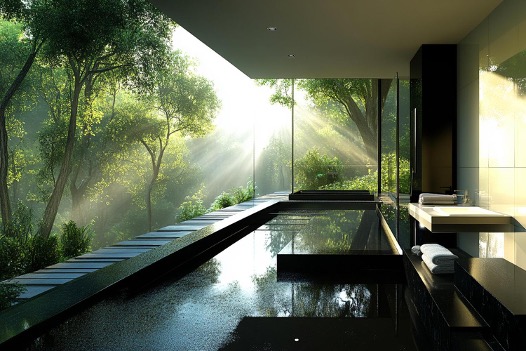
Luxury real estate has always reflected the values of its time. From expansive estates designed to showcase wealth to architecturally significant homes that emphasized innovation, each era has defined luxury in its own way. Today, that definition is undergoing a notable transformation.
The modern luxury home is no longer measured solely by size, location, or visual impact. Instead, it is increasingly defined by how it supports the well-being of those who live within it. This shift has given rise to what many architects and developers now refer to as wellness architecture, a design philosophy that places health, recovery, and balance at the center of residential living.
Beyond Aesthetics: Designing for How People Live
Traditionally, high-end properties focused on visual statements. Grand entrances, expansive glazing, and carefully curated materials created a sense of prestige. While these elements remain important, they are no longer enough on their own.
Today’s buyers are asking a different question: how does this space make me feel?
This shift has prompted architects to consider factors that extend beyond aesthetics. Air quality, natural light exposure, acoustics, and spatial flow are now integral to the design process. Homes are being shaped not just for visual impact, but for daily experience.
The result is a more immersive environment, one that supports both physical comfort and mental clarity.
The Emergence of Private Wellness Zones
One of the most significant developments within luxury residential design is the introduction of dedicated wellness zones. These spaces are no longer treated as secondary amenities. Instead, they are becoming central features within the home.
Private gyms, meditation rooms, and recovery areas are now expected in high-end properties. Among these, sauna spaces have emerged as one of the most sought-after additions.
Unlike larger recreational features, saunas offer a compact yet highly effective wellness experience. They provide a controlled environment that supports relaxation, recovery, and a temporary disconnection from external demands.
Sauna Integration as a Design Element
What distinguishes modern sauna design from traditional implementations is its level of integration. Rather than existing as standalone additions, sauna spaces are now incorporated into the architectural language of the home.
Materials are selected to complement surrounding finishes. Lighting is designed to enhance both atmosphere and functionality. Spatial placement is carefully considered to ensure accessibility without disrupting the overall flow.
This level of detail transforms the sauna from a functional feature into an experiential one.
For developers and homeowners looking to incorporate this element, platforms like SaunaKits.com provide flexible solutions that align with contemporary design expectations. Whether integrated into a larger wellness suite or designed as a standalone retreat, these systems allow for customization without compromising on quality or aesthetic cohesion.
Privacy as a Defining Luxury
In the current landscape, privacy has become one of the most valuable aspects of luxury living. As public spaces become more connected and accessible, the ability to retreat into a controlled, personal environment carries increasing significance.
Private wellness zones reflect this priority. They offer an experience that would traditionally require external travel, but without the constraints of scheduling, shared use, or limited access.
This autonomy allows residents to engage with wellness on their own terms. It transforms recovery from a planned activity into an intuitive part of daily life.
The Influence on Property Value
The integration of wellness features is not only shaping how homes are experienced, but also how they are valued.
Buyers are placing greater emphasis on properties that offer long-term livability. Features that support health and recovery are seen as investments in quality of life, rather than optional upgrades.
This has led to a measurable shift in market expectations. Properties that incorporate wellness-focused design elements are increasingly positioned at the top end of the market, reflecting both demand and perceived value.
In this context, wellness architecture is not a trend, it is a response to evolving priorities.
Scientific Support for Wellness Design
The emphasis on wellness within residential design is supported by a growing body of research. Environmental factors such as light, air, and temperature have been shown to influence both physical health and mental well-being.
According to the World Health Organization, living environments play a significant role in overall health outcomes, with factors such as indoor air quality and thermal comfort contributing to long-term well-being. While the WHO’s research focuses broadly on health, its implications extend directly into residential design.
By aligning architecture with these principles, developers are creating homes that do more than provide shelter, they actively support the people who inhabit them.
A New Standard for Luxury Living
As wellness continues to shape the future of real estate, it is becoming clear that luxury is no longer defined by excess alone. Instead, it is characterized by intention.
Every element within a home is being evaluated not just for how it looks, but for how it contributes to daily life. Spaces are designed to support both activity and recovery, allowing residents to move seamlessly between the two.
This balance reflects a broader cultural shift. People are seeking environments that align with their values, spaces that offer not only comfort, but also sustainability and longevity.
The evolution of luxury real estate suggests that wellness architecture will continue to gain prominence. As technology advances and design approaches become more refined, the integration of health-focused features will become even more seamless.
Future homes are likely to place even greater emphasis on personalization, allowing residents to tailor their environments to their specific needs. In this context, features like saunas will remain central, not as standalone luxuries, but as essential components of a well-designed living space.
Ultimately, the modern luxury home is no longer defined by what it displays, but by what it delivers.
And increasingly, what it delivers is not just comfort or prestige, but a consistent, elevated sense of well-being.