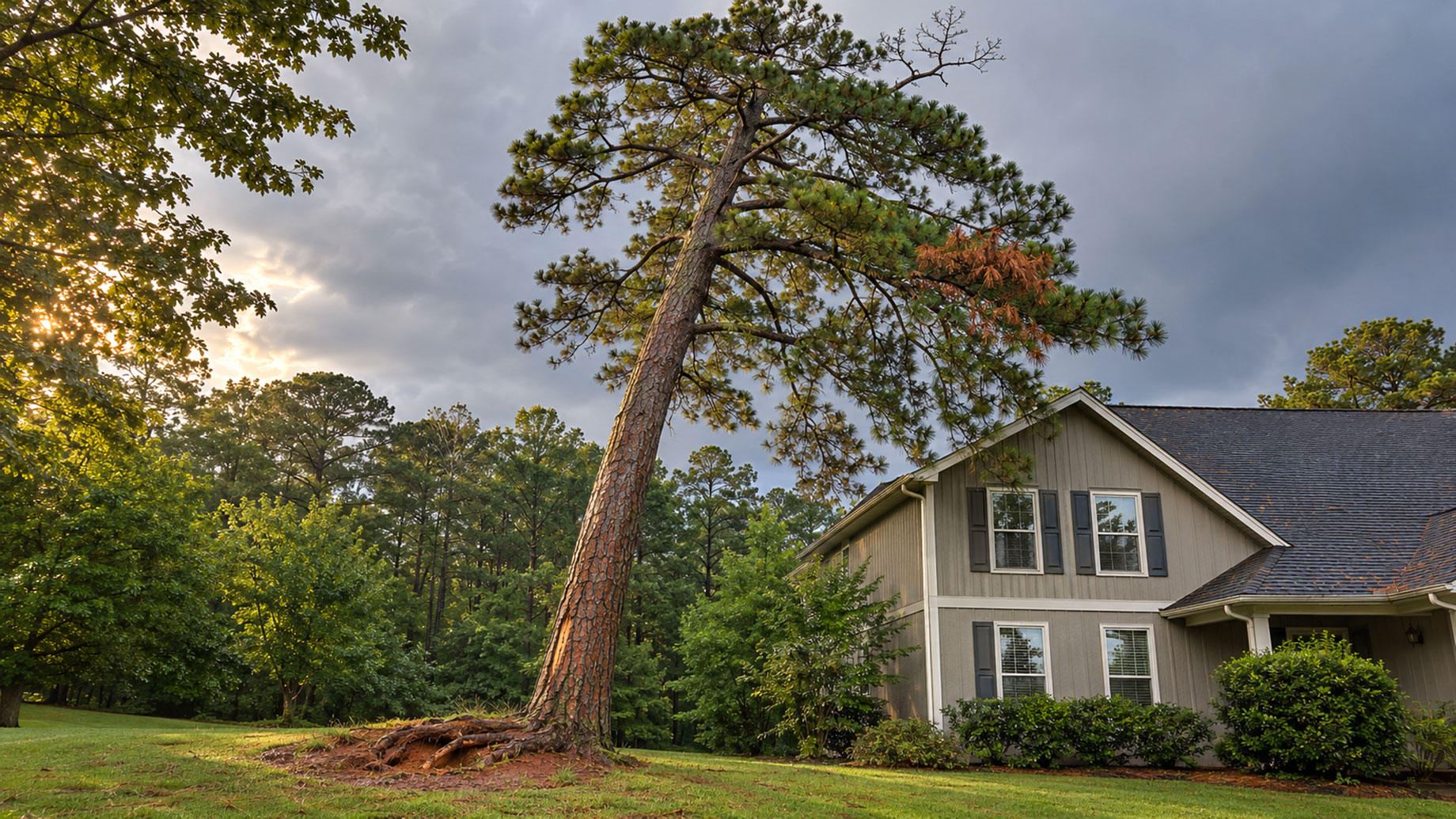
Tall pine trees add beauty, shade, and value to any yard. They stand proud against the sky and give birds and squirrels a safe place to live. Yet, when a giant pine grows sick, weak, or old, it turns from a peaceful giant into a real danger. A falling pine can crush a roof, snap power lines, or hurt someone you love.
Spotting trouble early keeps your home and family safe. You do not need to be a tree expert to notice when a pine is asking for help. By looking closely at the trunk, branches, needles, and roots, you can catch big problems before a storm knocks the tree down.
Sudden Leaning Or Tilting Of The Trunk
A healthy pine tree grows straight up toward the sun. Some pines develop a gentle curve over many years as they reach for light. That kind of slow bend is normal and safe. However, if a tall pine suddenly starts leaning to one side, you have a major emergency on your hands.
A fresh tilt means the roots are losing their grip in the dirt. Heavy rain, strong wind, or root rot often cause the soil to give way. Look at the ground on the side opposite the lean. If you see cracked dirt, raised earth, or exposed roots pulling upward, the tree is actively tipping over. Even a small shift of a few degrees requires fast action. Do not wait for the next windy day to see what happens.
Deep Cracks And Splits In The Bark
Tree bark acts like skin, protecting the soft wood inside from bugs, rot, and weather. Normal pine bark has rough plates and shallow grooves. Trouble starts when you spot deep vertical cracks or wide splits running up and down the trunk. These gaps show that the wood inside is under too much stress or starting to decay. Sometimes lightning strikes a tall pine and blasts a long strip of bark right off the trunk. Other times, extreme cold or fast growth splits the wood open.
Once a deep crack forms, the tree loses its structural strength. High winds can twist the trunk and snap it right along the split line. Look closely for missing chunks of bark as well. Large bare patches often mean the wood underneath is dead.
Hollow Cavities And Soft Rotting Wood
A solid trunk holds up the heavy weight of a tall pine tree. When rot gets inside, it eats away the heartwood and leaves the tree hollow. You might notice dark holes, missing knots, or sunken spots along the lower trunk. Take a screwdriver or a sturdy stick and gently poke the wood inside these openings.
Healthy wood feels rock hard. Rotting wood feels soft, spongy, or crumbly like wet cardboard. Carpenter ants and termites love to build nests inside soft, decaying wood. Seeing sawdust piles at the base of the tree is another clear clue that bugs are tunneling inside. A tree with a hollow core cannot support its own top-heavy crown during a gust of wind.
Mushrooms And Fungi Growing On The Trunk
Fungi do not grow on healthy, living wood. If you spot mushrooms, shelf fungi, or bracket conks sprouting from the bark or around the base of your pine, decay is already well underway inside. Mushrooms are just the visible fruit of a much larger root network eating the tree from the inside out.
Conks look like hard, woody shelves sticking out from the side of the trunk. Soft mushrooms often pop up in clusters right where the roots meet the dirt. Both types tell the same story. The wood fibers are breaking down and losing their ability to hold weight. You cannot simply scrape the mushrooms off to fix the problem. The rot lives deep inside the trunk and roots, making the tree unsafe.
Brown Or Red Needles Across The Crown
Pine trees are evergreens, which means they stay green all year long. They do shed old inner needles every autumn, so seeing a few yellow or brown needles near the trunk in the fall is completely normal. What you should worry about is when the outer tips of the branches turn dull green, yellow, red, or rusty brown.
When needles change color from the top down or across an entire side of the tree, the pine is in severe distress. Drought, root damage, or deadly bark beetles often cause this rapid color shift. Once a pine tree turns completely brown, it is dead. Dead pines dry out fast, become brittle, and drop heavy limbs without warning.
Dead Or Hanging Branches In The Upper Canopy
Look up into the high branches of your tall pine tree on a calm, clear day. Healthy branches hold bright green needles and bend easily in the breeze. Dead branches look gray, bare, and brittle. Arborists call large dead limbs “widow makers” because they can snap off and fall at any time, even when there is no wind at all.
Sometimes a dead branch breaks loose from the trunk and gets caught on lower limbs on its way down. These hanging branches can drop onto your roof, car, or patio without a sound. Check for these common canopy hazards:
- Bare gray upper limbs
- Cracked branches hanging down
- Missing needles at branch tips
- Peeling bark on high limbs
- Broken stubs from past storms
Sawdust And Tiny Holes From Bark Beetles
Tiny insects can take down a giant pine tree in just a few months. Southern pine beetles and ips engraver beetles bore right through the outer bark to lay their eggs. As they chew into the wood, they cut off the tree’s flow of water and nutrients. Walk up to your pine and inspect the trunk at eye level. Look for dozens of tiny, round holes that look like someone shot the tree with birdshot.
You will also see fine reddish-brown or white sawdust collecting in the bark crevices and on the ground around the base. Another classic sign is pitch tubes. These look like small blobs of white or yellow popcorn made of sticky sap pushing out of the bark. When you see pitch tubes and sawdust together, the tree is losing its battle against beetles.
Why Cutting Down A Tall Pine Yourself Is Dangerous
Spotting a dangerous pine tree is only half the battle. Taking it down safely requires heavy gear, deep training, and careful planning. Many homeowners think they can grab a chainsaw and drop a tall pine on a weekend afternoon. That mistake leads to thousands of severe injuries and ruined homes every year. Tall pines are notoriously tricky to cut down for several reasons:
- Trunks are very heavy
- Brittle wood snaps unexpectedly
- Branches get tangled easily
- Trees twist while falling
- Power lines sit nearby
A single eighty-foot pine tree can weigh several tons. If your cut is off by just an inch, the tree can spin off the stump and crash right through your living room roof. Sawing while standing on a ladder is even worse, as falling limbs can knock the ladder right out from under you.
How Professionals Handle Hazardous Pine Removal
Hiring trained tree experts keeps your property safe and takes the stress off your shoulders. Professional arborists start by walking your yard to check the tree’s lean, root health, and surrounding obstacles like fences, sheds, and power lines. They bring specialized equipment that no homeowner keeps in a garage. Using climbing ropes, harnesses, or tall bucket trucks, workers dismantle the tree piece by piece from the top down.
They tie heavy ropes to each branch before cutting it, gently lowering big limbs to the ground without harming your lawn or flower beds. For giant trunks in tight spaces, a skilled Milton tree service crew or crew in your area can even use cranes to lift heavy wood sections straight over your house. Once the trunk is down, they chip the branches, haul away the logs, and grind the stump flat so your yard looks clean again.
What To Do While Waiting For Tree Experts
Once you call a tree company to inspect a risky pine, take a few simple steps to protect your family until they arrive. Keep everyone out of the danger zone. Measure the height of the tree in your head, and stay further away from the trunk than the tree is tall. Move your cars out of the driveway if they sit under the pine’s branches.
Bring patio furniture, grills, and kids’ toys inside so they do not get crushed if a limb drops. If the pine is leaning toward a bedroom or living area, ask your family to sleep on the opposite side of the house during windy nights. Never try to tie a rope to a leaning tree to pull it back up, and stay far away from any branches touching power lines.
Exposed Or Damaged Roots Near The Surface
A tall pine tree relies on a wide, shallow network of roots to anchor itself against wind and gravity. Most pine roots live in the top twelve to eighteen inches of soil. Over time, heavy rain can wash away dirt and leave thick anchor roots exposed to the air.
Lawn mowers and string trimmers often chew up these exposed roots, creating open wounds where rot enters the tree. Construction work, digging trenches for pipes, or pouring a new concrete driveway nearby can also slice right through vital support roots. If more than a third of the root zone is damaged or cut, the tree loses its anchor. Without strong roots holding it down, a tall pine acts like a giant sail that can topple over easily.
Heaving Soil Around The Base Of The Tree
Take a close look at the ground within ten feet of your pine tree’s trunk. The yard should look flat, smooth, and settled. If the earth looks pushed up, mounded, or cracked on one side of the trunk, the root plate is lifting out of the ground. Soil heaving is one of the clearest signs that a tree is in the process of falling over.
Often, this happens after days of heavy rain turn the dirt into soft mud. Strong wind pushes against the tall canopy, and the roots begin to tear loose from the wet earth. When the wind stops, the tree might stand back up slightly, leaving a gap between the trunk and the dirt. A tree with heaving soil can collapse at any moment.
Pine Trees Growing Too Close To Your House
Sometimes a pine tree looks perfectly healthy, yet its location makes it too risky to keep. A young pine planted fifteen feet from your porch seems harmless at first. Thirty years later, that small sapling is eighty feet tall, and its roots are pressing against your foundation. Thick pine roots can crack concrete slabs, lift sidewalks, and clog underground sewer pipes.
Meanwhile, heavy upper branches hang right over your roof, dropping piles of needles that clog gutters and trap moisture against shingles. Squirrels also use overhanging pine limbs as a bridge to chew their way into your attic. When a giant pine grows within striking distance of your home, removing it prevents costly property damage.
Severe Storm Damage And Lightning Strikes
A single violent thunderstorm can ruin a healthy pine tree in seconds. Lightning loves tall pines because they often stand higher than anything else in the yard. When lightning hits a pine, the intense heat boils the sap inside the trunk, blowing off long strips of bark and shattering the wood. Even if the tree stays standing after a strike, its internal water system is often destroyed.
The tree may stay green for a few weeks before suddenly turning brown and dying. High winds can also twist the trunk, causing hidden internal fractures that weaken the wood forever.
Keep Your Yard Safe With Regular Tree Checks
Taking a few minutes each season to walk around your yard and inspect your tall pine trees is one of the smartest habits a homeowner can build. Look up at the needles, check the trunk for cracks or sawdust, and inspect the soil around the roots after big rainstorms.
Catching a leaning trunk, beetle attack, or rotting base early gives you plenty of time to act before an emergency happens. By staying alert and calling trained professionals when warning signs appear, you protect your home, your family, and the beauty of your property for years to come.
Looking for more tips and ideas? We’ve got you covered. Check out some of our other posts now.