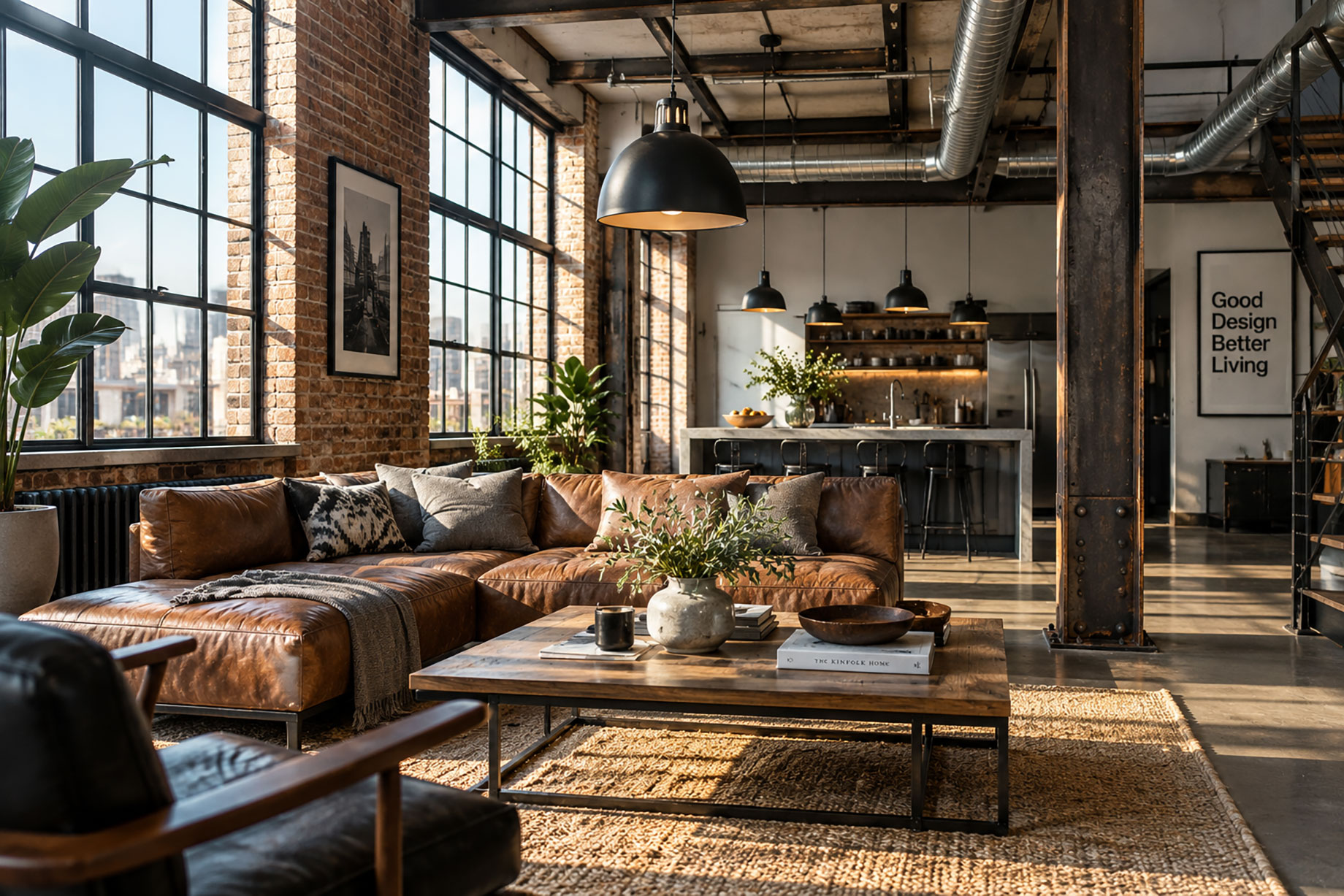
The conversion of industrial warehouses into living spaces has been a practice for many years. 19th and 20th century industrial sites have a unique architectural style, often defined by high ceilings, large grid windows and exposed bones (pipework, girders, etc.) That doesn’t mean that all loft interiors really capture the vibe that homeowners want when they move into such a space. Similarly, some try to elicit the sense of loft interior, from a different type of property.
This article will touch on how to utilise furniture, decor and installable architectural elements to create loft-style interiors, whatever your house or flat looks like from the outside.
Highlighting the raw architectural facets of the home
Arguably the most classic facet of a loft space is showcasing raw architectural elements, rather than hiding them behind the walls or furniture.
- Exposed brickwork is perfect for that classic “New York” aesthetic.
- Steel beams, concrete pillars and pipework can all look great for a loft home.
- Painting exposed ductwork, electric conduit pipes or copper plumbing can accentuate the loft-friendly design of utility installations.
- Distressed timber, poured resin floors and polished concrete all make for great surfaces in loft homes. They work best when layered with large, neutral rugs to define seating zones and add warmth.
- Loft doors are reminiscent of the industrial windows, allowing for an increase in natural light while still maintaining that trademark functional feel in the home.
The nature of the loft home is that it should feel a little rough around the edges, maybe even slightly unfinished. Highlighting the raw architectural parts of the home will help to make that feeling profoundly effective.
Balancing the space with warm textures
The nature of highlighting architectural elements and materials means that you put the spotlight on the hard and cold parts of the property. This is the point, but it can feel a little antiseptic and uninviting if you don’t balance it out with warmer textures and tactile elements.
- Loft furniture can be made from materials like reclaimed wood with live edges. Things like weathered butcher-block kitchen counters can introduce a more natural grain and warmth.
- Worn upholstery, such as tan leather loft sofas and velvet armchairs are great for anchoring the industrial look down to something more homely.
- Black iron is the king of the loft, but brushed brass, copper and aged steel can feel a little less severe in one of these interiors.
Integrate some warmth, especially if you’re putting together an interior design loft bedroom, where you need to maximise your comfort alongside the aesthetic of the interior.
Statement pieces of lighting, hardware & decor
The focus shouldn’t entirely be on the big ticket furniture items. You can also enhance the sense of industrial appeal by incorporating more decorative elements in layers.
- Hanging, table and standing lighting fixtures are a godsend when it comes to establishing the industrial chic. Edison bulbs and woven wire cages are ideal aspects to seek out when shopping.
- Cast-iron door handles, black metal cabinet pulls and exposed conduit toggle switches are all loft classics.
- Industrial bar stools and reclaimed wood benches are great for breakfast bars and nooks. These can be further decorated with heavy industrial wall clocks.
These kinds of decor elements show a commitment to the theme, allowing the moveable objects of the property to feel like more of an extension of the building itself.
By balancing exposed architecture, softer tactile choices and more personality-driven pieces, you can create a stunning loft interior in your home. Remember, it doesn’t have to be all or nothing. If you want a touch of loft or go all the way, take these principles and apply them how best makes sense for your home.
