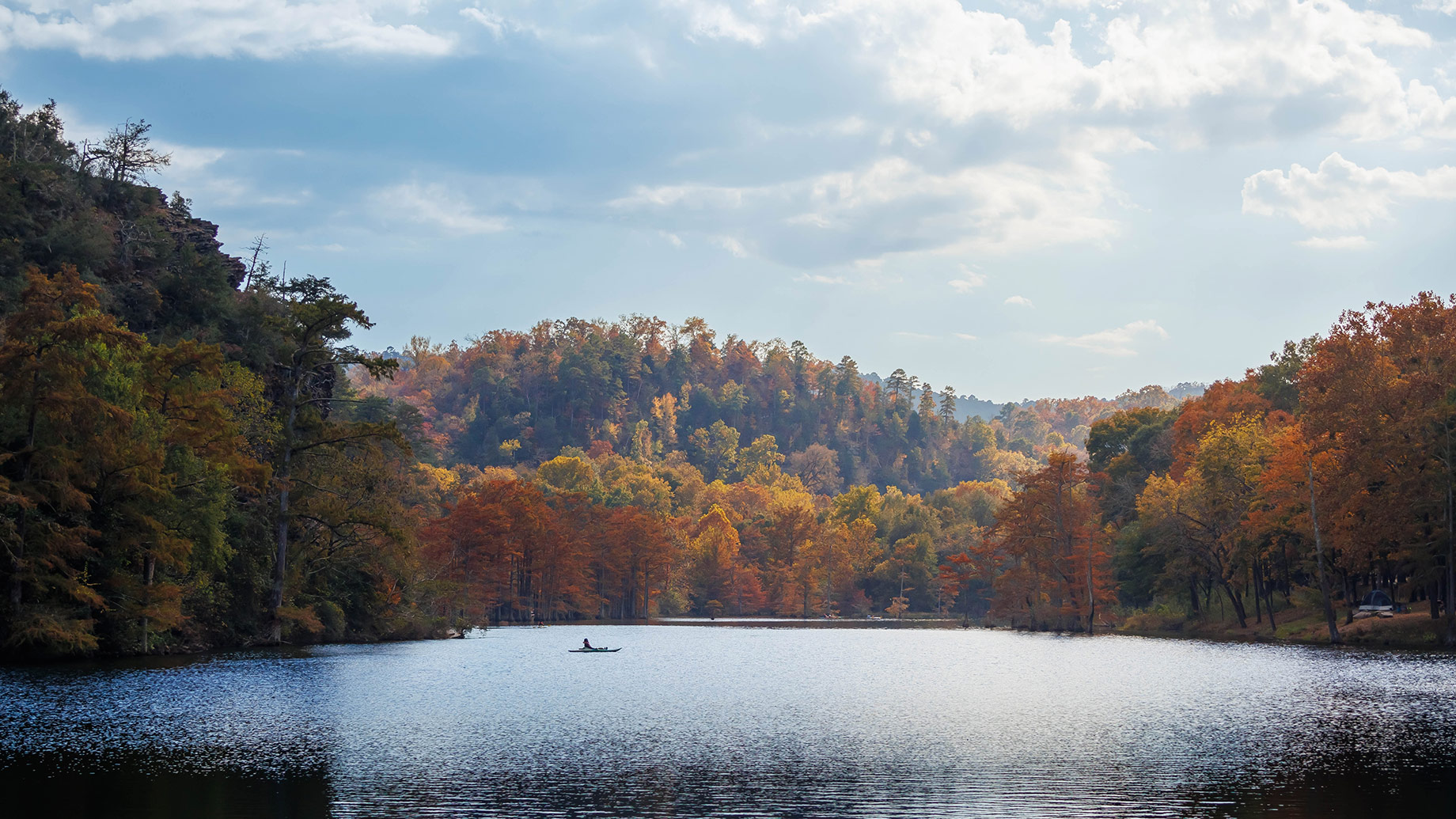
Broken Bow sits at the southern edge of the Ouachita National Forest, where pine ridges give way to spring-fed rivers and a large mountain lake. It is a quieter alternative to the Ozarks and the Hill Country, close enough to Dallas and Little Rock for a long weekend and remote enough to feel like a step out of the region’s busier lake destinations.
A three-day itinerary here works well: one day on the water, one day in the forest, and a final day exploring the small towns and back roads that connect the two.
Day One: Broken Bow Lake and the Mountain Fork River
The lake covers about fourteen thousand acres, formed by the Broken Bow Dam and flanked by wooded hillsides. Its clear water and irregular shoreline make it one of the more scenic reservoirs in the state.
Kayaks, paddleboards, and pontoon boats are the standard rental options at the marinas near the state park entrance. Morning outings are the calmest; wind picks up through the afternoon and can chop the surface by late day.
The Lower Mountain Fork River, running below the dam, carries a year-round trout fishery. A guided half-day float is a practical introduction for first-time visitors, with outfitters based in Hochatown handling the logistics.
Where to Base
The Hochatown corridor holds most of the visitor lodging, and travelers looking for a mix of privacy and quick lake access often stay at resort-style cabin properties in Southeast Oklahoma, which shorten the drive to both the marina and the state park entrance.
Day Two: Beavers Bend State Park and the Forest
Beavers Bend State Park anchors the western shore of the lake and covers more than three thousand acres of wooded terrain, riverfront, and hiking trails. It is the entry point for most of the region’s outdoor activity.
The Cedar Bluff and Beaver Lodge Nature Trails are short loops that fit comfortably into a morning. The David Boren Trail runs longer, at roughly twenty-four miles, and is broken into segments that suit half-day walks.
Wildlife sightings include white-tailed deer, wild turkey, and a healthy population of songbirds through spring and summer. The forest holds one of the higher densities of black bear in the state, though sightings for casual hikers remain uncommon.
Rest of the Day
Afternoons work well for a slower pace: a picnic on the river, a canoe launch from the boat ramp, or a walk through the Forest Heritage Center Museum on the park grounds. The museum covers the region’s timber history through dioramas and carved wood exhibits.
Day Three: Back Roads and Small Towns
The third day is a good chance to slow the pace and cover the small towns and highways that shape the region’s character. Highway 259 north of Broken Bow climbs into the Kiamichi Mountains and passes through Smithville and Big Cedar, both worth short stops.
The Talimena National Scenic Byway begins just north of the region and runs east into Arkansas. Only its western stretch is drivable as a half-day, but the ridge-top views make it worth the detour for anyone who enjoys mountain routes.
Farther south, the town of Idabel holds the Museum of the Red River, which houses an unexpectedly deep collection of pre-Columbian pottery and Native American art. It is one of the region’s quieter cultural stops.
Food Along the Way
Restaurants across the region lean toward barbecue, catfish, and Tex-Mex. Hochatown’s restaurant strip has grown quickly and holds a mix of casual and mid-scale kitchens. Reservations are worth booking a day ahead through the high summer season.
When to Plan the Trip
Spring brings blooming dogwoods and the most reliable river flows. Summer draws the largest crowds and warmest lake water, with weekends the busiest window. Fall foliage in late October and early November is the visual standout, with color layering across oaks, hickories, and sweetgums against the evergreen pine.
Winter is the quietest season. Temperatures dip near freezing at night, though daytime highs often reach the fifties. It is a good window for hiking without crowds, provided rain is not in the forecast.
The Short Version
Three days is the sweet spot for a first visit: one on the water, one in the forest, one on the back roads. Longer trips leave room for a slower pace, more river time, and quiet mornings at the cabin. The region rewards travelers who resist packing the itinerary too tightly.
