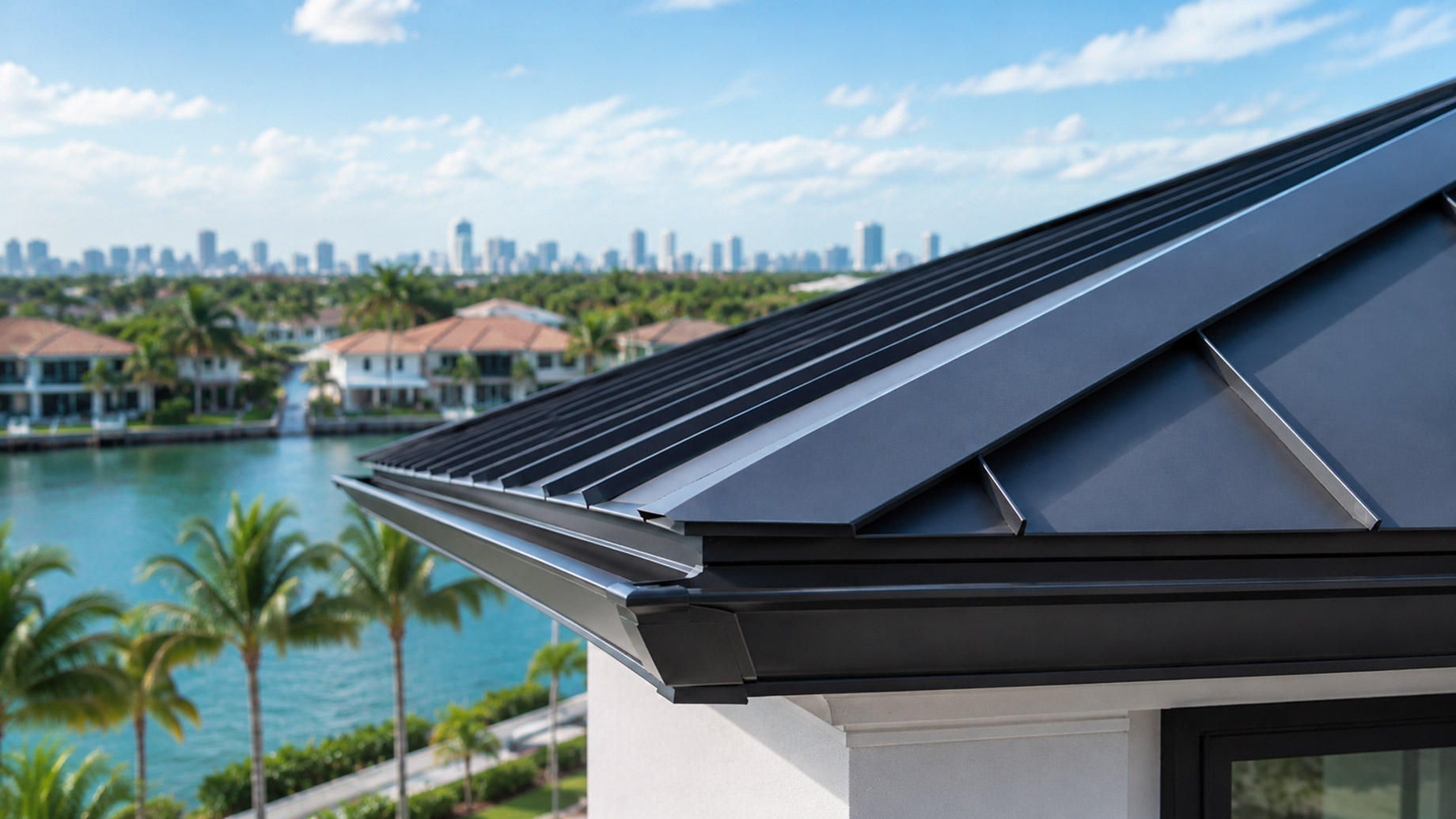
Miami homeowners need roofing systems designed for one of the most demanding climates in the United States. Intense sun, high humidity, salt air, tropical rain, wind-driven storms, and hurricane-season risks can all affect how a roof performs over time. Whether a home has a tile, metal, shingle, flat, or low-slope roofing system, proper installation and maintenance are essential.
A well-maintained roof helps prevent water intrusion, protects insulation and framing, supports energy efficiency, improves curb appeal, and helps preserve long-term property value. In South Florida, roof condition is especially important because storm exposure and building-code requirements make roofing more than a routine maintenance issue.
Why Roofing Matters in Miami
Miami’s climate places constant pressure on residential roofing systems. Heat and ultraviolet exposure can age materials. Humidity and salt air can affect flashing, fasteners, sealants, and roof edges. Heavy rain can expose drainage problems, while wind-driven storms can test the roof’s waterproofing and attachment details.
The National Weather Service Miami office tracks regional hazards that include tropical systems, thunderstorms, heavy rain, wind, and hurricane-related risks across South Florida. The Saffir-Simpson Hurricane Wind Scale also identifies hurricanes by sustained wind speed and notes that Category 3 and higher storms are considered major hurricanes because of their potential for significant damage.
For homeowners, this means roof care should be proactive. Waiting until an interior leak appears can allow moisture to damage decking, insulation, ceilings, walls, and finishes.
Common Roofing Services in Miami
Roofing needs vary depending on the property’s location, roof type, age, storm exposure, and maintenance history. Some homes may need minor repairs, while others may require full replacement because of age, storm damage, or code-driven upgrade needs.
Common roofing services include:
- Roof inspections before and after hurricane season
- Leak detection and repair
- Tile, shingle, metal, flat, or low-slope roof repair
- Flashing repair around vents, chimneys, skylights, and roof edges
- Underlayment and waterproofing review
- Drainage and gutter assessment
- Storm damage documentation
- Full roof replacement
A professional inspection is especially useful after major rain or wind events. Roof damage may not always be visible from the ground, and small vulnerabilities can become more serious during the next storm.
Roof Repair vs. Roof Replacement
Not every roofing problem requires full replacement. If the issue is isolated, repair may be enough. Examples include a small leak, a few damaged tiles, minor flashing issues, or localized storm damage.
Replacement may be more practical when the roof is older, has recurring leaks, failing underlayment, widespread material wear, or damage across multiple sections. In Miami, the visible roof covering is only one part of the system. Waterproofing, attachment methods, ventilation, drainage, and code-compliant materials all affect long-term performance.
Working with Miami Roofing Contractors can help homeowners evaluate roof condition, understand repair and replacement options, and choose a solution appropriate for South Florida conditions.
Permits, Product Approval, and Hurricane Mitigation
Miami roofing work is closely tied to permitting and product approval. The City of Miami states that roofing materials must have a Miami-Dade County Notice of Acceptance or Florida Product Approval when applying for a roofing permit. Miami-Dade County also provides roofing permit resources covering hurricane mitigation forms, retrofit requirements, secondary waterproofing, roof sheathing, roof systems requiring secondary water barrier protection, and roof-to-wall connections.
Florida also regulates roofing contractors through the Department of Business and Professional Regulation. DBPR provides application and licensing resources for certified roofing contractors, and applicants seeking certified contractor licensure must complete the required application process after passing the state certification examination.
Before approving work, homeowners should ask for license information, insurance documentation, permit handling, product approvals, warranty details, material specifications, project timeline, and cleanup procedures.
Protecting Long-Term Home Value
A roof has a direct effect on Miami property value. A clean, properly installed, and well-maintained roof improves curb appeal and gives buyers greater confidence in the home. For luxury homes, waterfront properties, and high-value residences, roof condition is especially important because exterior maintenance strongly affects the overall impression of care.
Homeowners can protect long-term value by scheduling regular inspections, clearing drains and gutters, trimming nearby branches, documenting storm damage, addressing leaks quickly, and keeping records of permits, warranties, inspections, and completed roofing work.
Final Thoughts
Roofing services in Miami, FL are essential because South Florida weather places continuous pressure on residential roofing systems. Sun, humidity, salt air, tropical rain, wind, and hurricanes all affect roof performance.
By scheduling inspections, confirming permit requirements, choosing code-compliant materials, and working with properly qualified professionals, homeowners can reduce risk and protect one of the most important parts of the property. A strong roof supports safety, comfort, appearance, and long-term home value from the top down.
