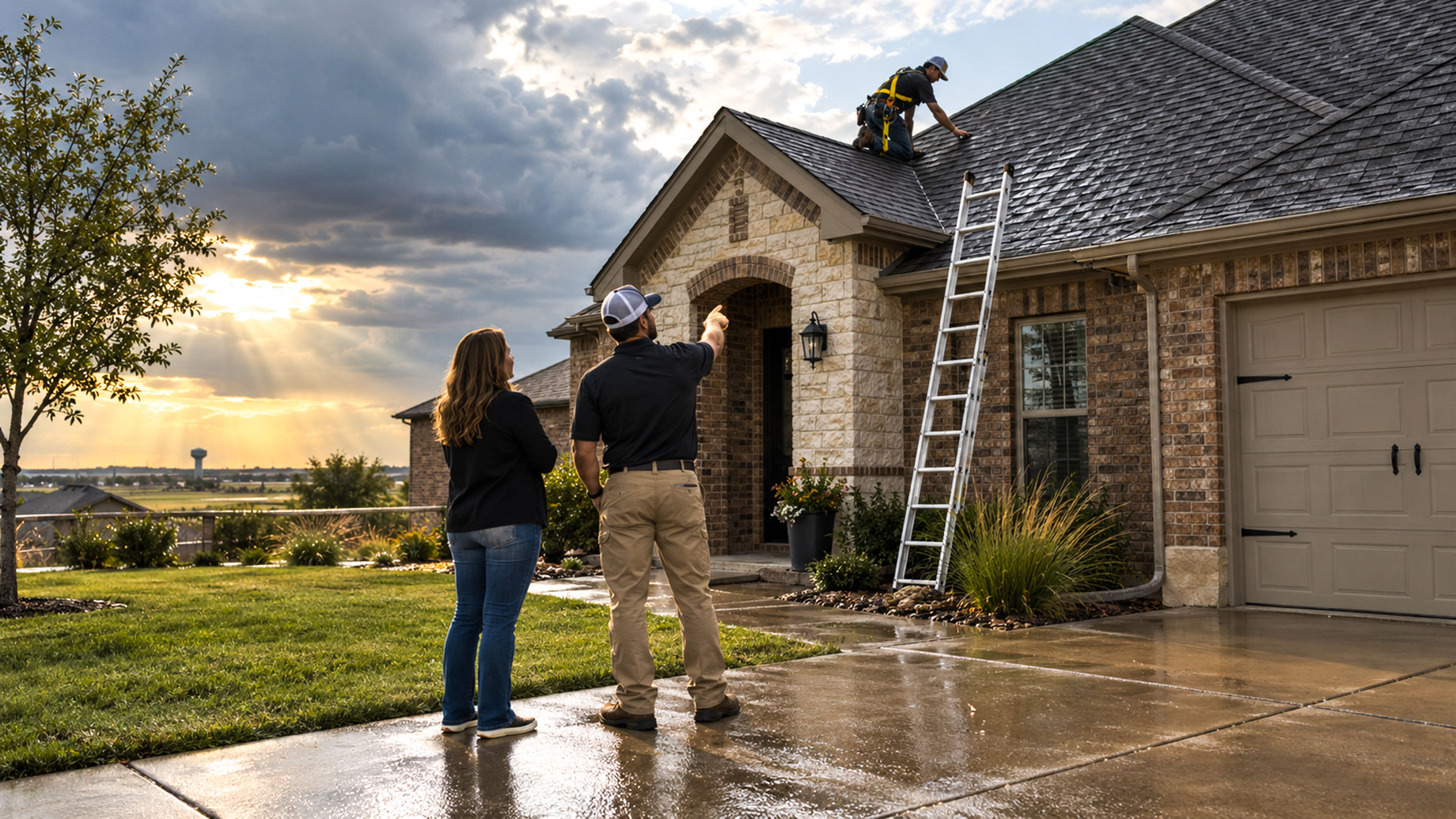
As a homeowner, everything tends to look perfect immediately the crew pulls their tent down. Probably your only attention is on how the new roof gives your house a completely different appearance. The real test comes later. A hard storm rolls through. Heavy rain returns. Something that was repaired gets tested again. That is when workmanship stops being something you were promised and becomes something you experience.
1. The Roof Should Be Chosen for the Weather It Actually Faces
Picture two homeowners replacing their roofs at the same time. One chooses mainly by appearance and price. The other asks what the roof will need to withstand over the coming years.
That second conversation matters in Amarillo.
Impact-resistant roofing deserves consideration where hail exposure is a concern. Class 4 is the highest impact-resistance classification under the UL 2218 system, and Texas insurers may offer premium credits for qualifying impact-resistant materials. The actual credit depends on the insurer, policy, and required documentation, so it should be confirmed before the homeowner counts it as a saving.
Metal roofing solutions may offer significant warranty and durability benefits, but not every building or location is suitable for this type of roof.
That is where hail damage roofing Amarillo specialists earn their value with recommendation that begins with professional evaluation that considers the entire building system, environment, and financial goals of the homeowner.
2. The Morning After a Storm Can Be Deceptively Quiet
After a storm, seeing the damage can change the conversation. The hail has stopped. You walk outside the next morning, look up from the driveway, and see what appears to be a perfectly normal roof. That is where homeowners can easily get the wrong impression.
Storm damage does not always announce itself from ground level. A proper assessment needs to establish what actually happened before anyone starts talking about repairs or replacement.
The inspection may need to consider:
- Shingles and exposed roofing surfaces
- Flashing and roof penetrations
- Gutters and drainage components
- Siding, windows, and other exterior areas
- The roof deck or sheathing where moisture or impact damage warrants further investigation.
For the homeowner, transparency matters as much as the inspection itself. Being shown what was found- and having it explained in ordinary language, makes it easier to distinguish necessary work from assumptions.
Good service leaves the homeowner understanding the condition of the roof before deciding what to spend.
3. When Water Gets Inside, Speed Matters—but So Does Diagnosis
A ceiling stain after a storm creates a natural reaction: fix it immediately. Yes, speed matters when water is actively entering the house. Emergency attention can help limit additional moisture exposure while the permanent repair is being determined. But there is a difference between stopping the water and finding out why it got in.
The entry point might be a damaged shingle. It could be flashing around a penetration. The actual source may even be farther upslope from the place where the stain appears. And if under the sheathing is affected, that underlying material needs to be assessed, not just covering.
The best response combines urgency with patience:
Stop the immediate water entry trace the source assess the underlying condition and then complete the repair properly.
That approach is especially important for homeowners who want the same problem solved rather than simply hidden until the next heavy rain.
4. Satisfaction Often Comes Down to What Happens After the Truck Leaves
Before hiring a roofing company, there is one question worth asking that has nothing to do with shingles: “Who do I call if I have a problem later?” That question separates a completed transaction from an ongoing service relationship.
A local presence matters because roofing problems do not always appear during convenient business hours. A storm may damage the roof overnight. A flashing issue may become apparent during the next heavy rain. Having a company that remains accessible after the original work is finished provides a different level of confidence.
The same applies to workmanship warranties and insurance-related documentation. A contractor who remains accountable after installation is providing something homeowners notice long after the shingles are out of sight or when insurance issues come knocking.
For a homeowner, that matters. A roof should not become “someone else’s problem” the moment the final invoice is paid.
In essence, a satisfying roofing experience is not really about how impressive the roof looks on completion day. It is about what happens when real conditions test the work. The right material, an honest storm assessment, accurate leak diagnosis, careful workmanship, and dependable follow-through all contribute to a roof that homeowners can live with confidently. In Amarillo, that kind of long-term thinking matters more than a polished sales pitch.
