For many families, the journey to parenthood turns into an exhausting, years-long marathon, with every stage marked by hope and anxiety. When the sterile rooms of fertility clinics, countless IVF cycles and exhausting years of waiting are finally behind you, preparing your home for the arrival of your baby takes on a profound, almost sacred meaning. If in vitro fertilisation (IVF) was your path to parenthood, then setting up the nursery is not just a matter of home improvements. It is the long-awaited realisation of a dream, physical confirmation that the miracle is finally becoming a reality.
1. The psychological atmosphere and the transition to a new reality
Years of struggling with infertility leave their mark on the home environment, often turning the home into a space steeped in a medical context. ‘Artefacts’ of the past can be found everywhere – cycle calendars, medication schedules, bulky folders containing test results and medical reports.
- A ritual of emotional renewal: Begin your preparations by symbolically cleansing the space of its medical past. This is an important psychological step. Put away the old folders documenting each of your IVF cycles in sealed archive boxes and remove them from plain sight. This will free up not only space on the shelves, but also your mind. Let your home fill with new meanings – let the scent of antiseptics and pharmacy packaging be replaced by the gentle aromas of clean cotton, cedar or baby cream.
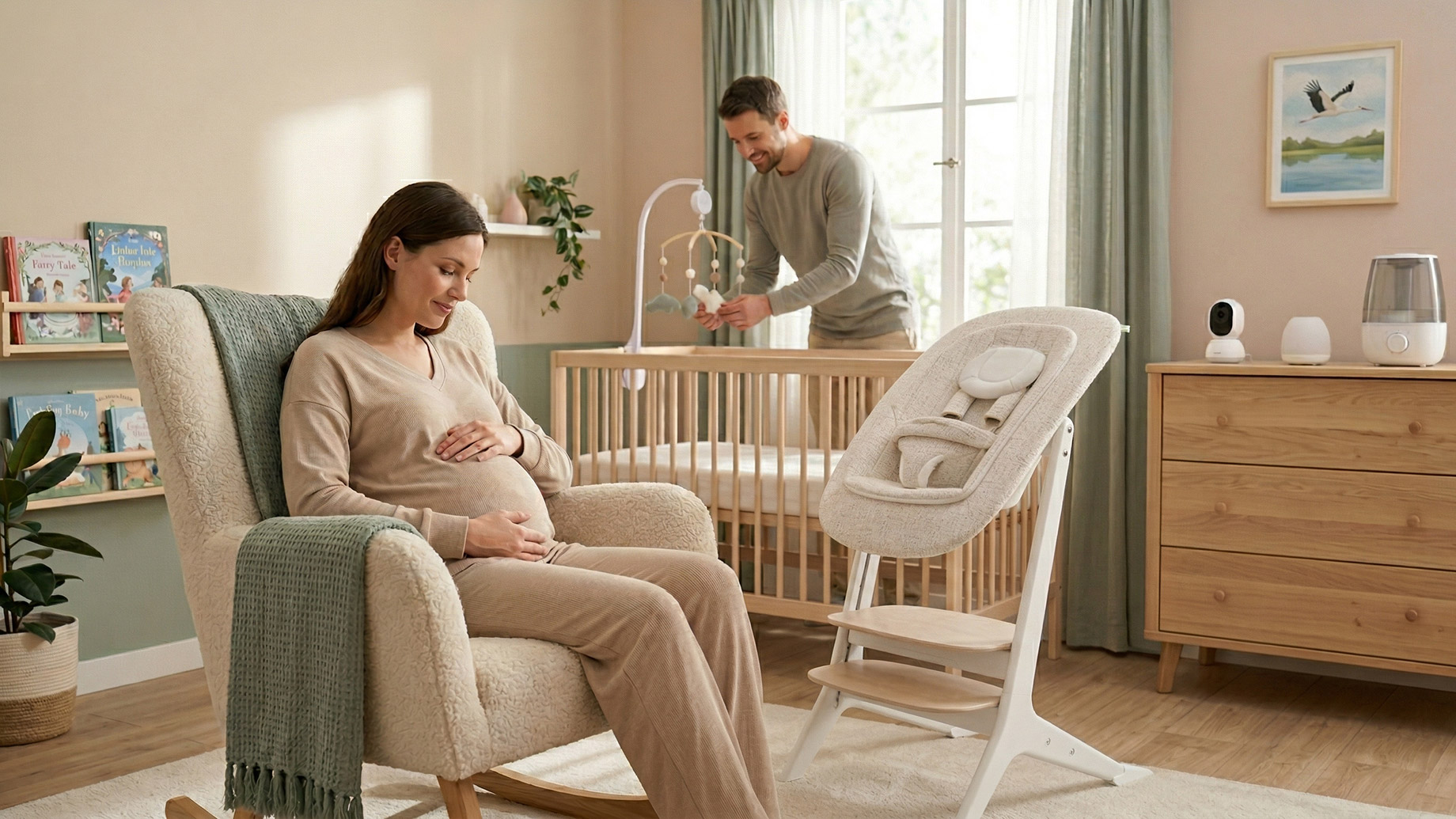
- Visualising joy as a mental anchor: Create a focal point or a ‘corner of wonder’ in the room. Let it be a cosy armchair with a soft blanket for feeding, or a bookshelf where the first book of fairy tales is already waiting. In moments when fear (natural for a long-awaited pregnancy) returns, simply look at this corner. It serves as a daily reminder that this is really happening. We are no longer waiting in line for happiness; we are already in it.
2. Safety and creating a healthy environment
For parents whose journey has been difficult, the natural desire to protect their little one often turns into overprotectiveness. Creating a perfectly safe environment is an effective way to channel accumulated anxiety into positive action.
- Creating a healing microclimate: Your peace of mind depends directly on your child’s comfort. Invest in high-quality air control systems. The optimal parameters are a temperature of $20–22 ^\circ C$ and humidity of $40–60\%$. Install a humidifier with a built-in hygrometer and air purification sensor. This will not only ensure your baby sleeps soundly, but also spare you unnecessary worries about their well-being.
- Eco-friendly space detox: After many years during which the expectant mother’s body was subjected to significant medication during hormonal stimulation, the home must become a zone of absolute purity. Choose solid wood furniture, use hypoallergenic water-based paints and textiles exclusively with the international Oeko-Tex certificate. By surrounding your child with natural materials, you create the most natural and safe living environment for them.
3. The aesthetics of healing and unconditional acceptance
When a long-awaited pregnancy becomes a reality, decorating the room becomes a quiet act of love. This space should heal the parents’ souls and envelop the baby in tenderness. This takes on special significance for families who have undergone complex programmes such as IVF with egg donation or IVF with double donation. In these cases, the home becomes a sacred place where genetic biology gives way to a higher kinship of souls and boundless love.
- Colour therapy for the soul: Avoid loud colours in favour of a soft, pastel palette. Use grounding and soothing shades – dusty sage, soft sand, powder pink or the colour of warmed milk. These tones help to stabilise the emotional state of parents worn down by years of stress.
- Symbols of the journey: Don’t be afraid to add details to the interior that only you understand. It could be a small talisman figurine that lay hidden in your bag during the embryo transfer, or a painting depicting a stork over a tranquil lake. Such symbols transform the nursery from a ‘catalogue room’ into a living story of your triumph.
- Lighting schemes: Set up multi-level lighting. The soft, adjustable light of a nightlight isn’t just practical. It creates an atmosphere of intimacy and mystery during night-time feeds, when the whole world falls silent and it’s just you and your long-awaited miracle.
4. Technology for stress-free parenting
The technology that helped you conceive your child can continue to serve you in your daily life, making everyday tasks easier.
- A baby monitor as a tool for peace of mind: Parents who have undergone in vitro fertilisation often feel the urge to check on their sleeping baby’s breathing every five minutes. A modern baby monitor with a motion sensor allows you to keep an eye on your child remotely, gradually reducing the need for constant monitoring and giving you a chance to relax a little.
- Automating daily routines: Sterilisers with a drying function and bottle warmers are not a luxury, but a way to reclaim precious time. After years of striving to become parents, every minute spent on cuddles and skin-to-skin contact, rather than boiling pots, is priceless.
- Ergonomics and safety: Carefully check the lower level of your home. Furniture corners, door locks, socket covers – prepare everything in advance. The feeling that the home is fully protected gives parents a fundamental sense of confidence in their abilities.
5. Looking after the keepers of the miracle
It is important to remember that even the most beautiful cot cannot replace calm parents for a child. After the difficult journey to this point, there is a high risk of burning out in the very first month due to the desire to be perfect.
- Lightening the load: Don’t be shy about accepting help. Freeze home-cooked meals for a month in advance or delegate the cleaning to professionals. Your main task now is to recover and bond with your little one.
- Maintaining your connection as a couple: Don’t let baby things take over every inch of space. Keep your bedroom a sanctuary for adults. It’s a place where you can simply be husband and wife, hold hands and reflect on the incredible journey you’ve been on together. You deserve this space of peace and intimacy.
Preparing your home after fertility treatment is the triumphant conclusion to a long wait and the joyful beginning of a new life. It doesn’t matter at all whether a standard protocol helped you or whether your journey involved IVF with double donation – the result is the same. Soon, the sound of a child’s laughter will fill your home. May every item you choose, every detail of the interior, become a brick in the foundation of your family’s happiness. Now your home is not just a fortress; it is a quiet harbour where your long-awaited ship has finally dropped anchor.
FAQ
When is the best time to start preparing the nursery during a long-awaited pregnancy?
Psychologists recommend starting active preparations in the second trimester, when the expectant mother’s physical condition stabilises and the risks decrease. However, don’t feel pressured to stick to a strict schedule – if you feel more comfortable shopping gradually from the very first weeks, then do so. The main thing is your emotional peace of mind.
How can you cope with the fear of ‘jumping the gun’ when buying baby things?
This fear is very common among those who have gone through IVF. Try to view shopping not as ‘overconfidence’, but as hospitality. You are preparing your home for a guest’s arrival. Buying things is a way of telling your little one: ‘We’re waiting for you, everything’s ready for you’.
Are any special living conditions required for a child born via ART?
From a medical point of view, such children are no different from those conceived naturally. They need the same cleanliness, fresh air and love. Special conditions (such as increased sterility) may only be required in the case of prematurity, which is discussed individually with the paediatrician.
How can you stop seeing your home as a ‘branch of the clinic’ after years of treatment?
Have a thorough clear-out and get rid of anything that reminds you of hospital wards. Change the curtains, add some houseplants, and use aroma lamps with pleasant scents. It’s important to shift your focus from ‘treatment’ to ‘life’.
Should you tell those around you about the details of your preparations if the pregnancy came about through donation?
This is entirely your family’s decision. Your home is your personal space. Set it up as you see fit, without being guided by social expectations. Your confidence and peace of mind within your home’s walls are the best foundation for your child’s development.
