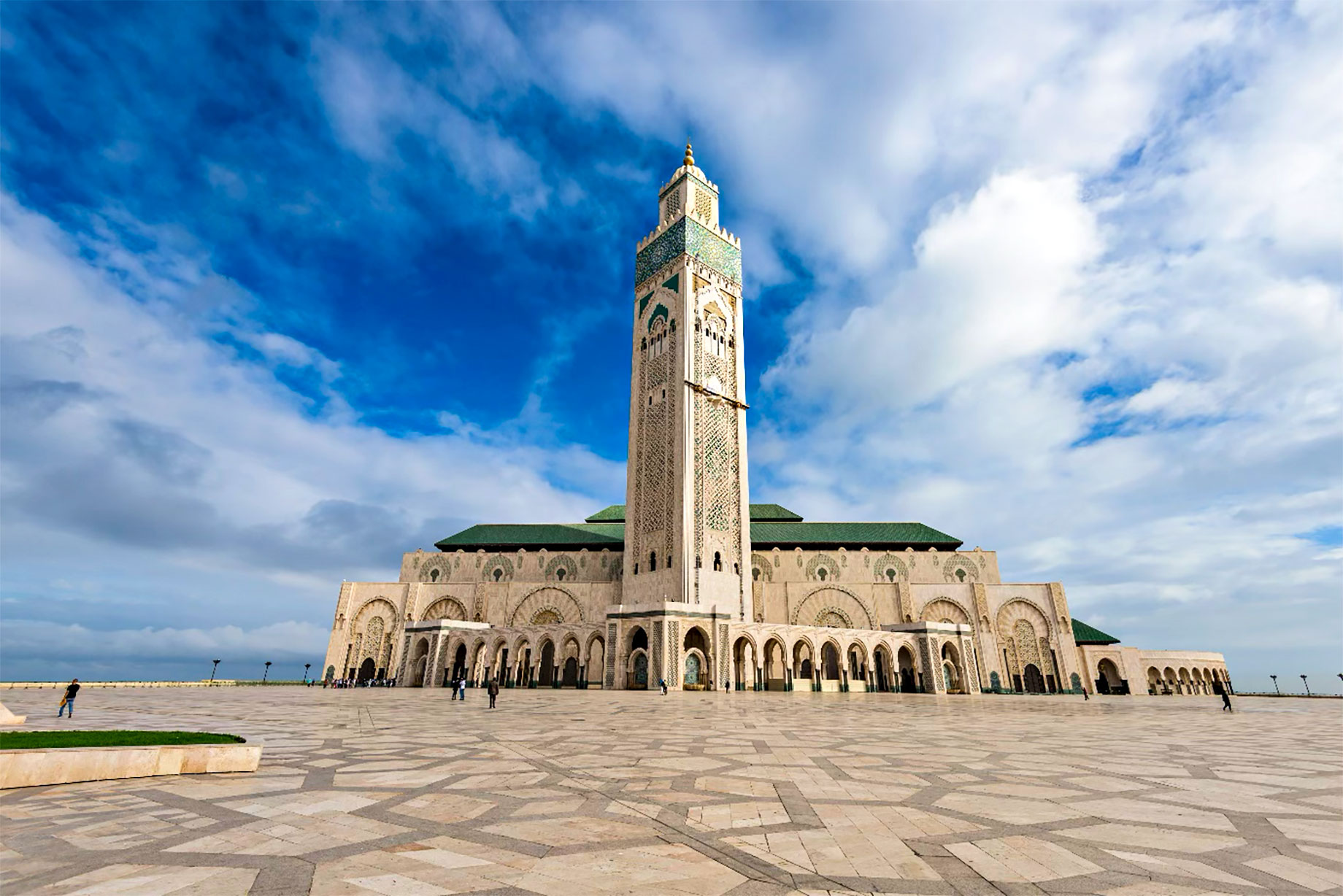
Ask an experienced traveller what luxury means in Morocco and, a decade ago, you would have heard a list: the palace hotel, the riad with a rooftop terrace, the sunset camel ride. Ask the same question today and the answer is shorter and harder to write down. Time. Access. The sense that the country is being shown to you rather than performed for you.
That shift is evident in Marrakech, where the team at Morocco Luxury Highlights designs each Morocco luxury tour for one party at a time. What follows explores what affluent travellers are now looking for in Morocco, and how the best journeys are designed to deliver it.
From checklist to rhythm
Morocco rewards slowness and punishes ambition. On a map, it is easy to fit Marrakech, Fès, the Atlas Mountains, the Sahara and the Atlantic coast into ten days. On the ground, the roads are long, the landscapes change without warning, and the moments people remember are rarely the ones on the schedule: a glass of mint tea that becomes an afternoon, a workshop glimpsed through an open door, a village lunch that no one planned.
Experienced travellers have begun to ask a different question: not what they should see, but how they want to move. Some want three cities in ten days. Many now want one, properly. Both make a good trip, but they are not the same trip, and the strongest itineraries begin by working out which of the two is being taken.
In practice this means fewer hotel changes, longer stays in fewer places, and drive days treated as part of the experience rather than time lost between experiences. It also means building slack into every day, so that a late start, a longer lunch or an unplanned detour costs nothing.
Privacy is the real luxury
The word “private” is used generously in travel. On a Moroccan journey that is private in more than name, four things are true. The itinerary is written for you rather than selected from a list. The vehicle carries your party and no one else. The guide answers to you for the day, not to a schedule agreed months earlier with a wholesaler. And the plan can change on the morning of day four, because nothing in it depends on another traveller’s arrangements.
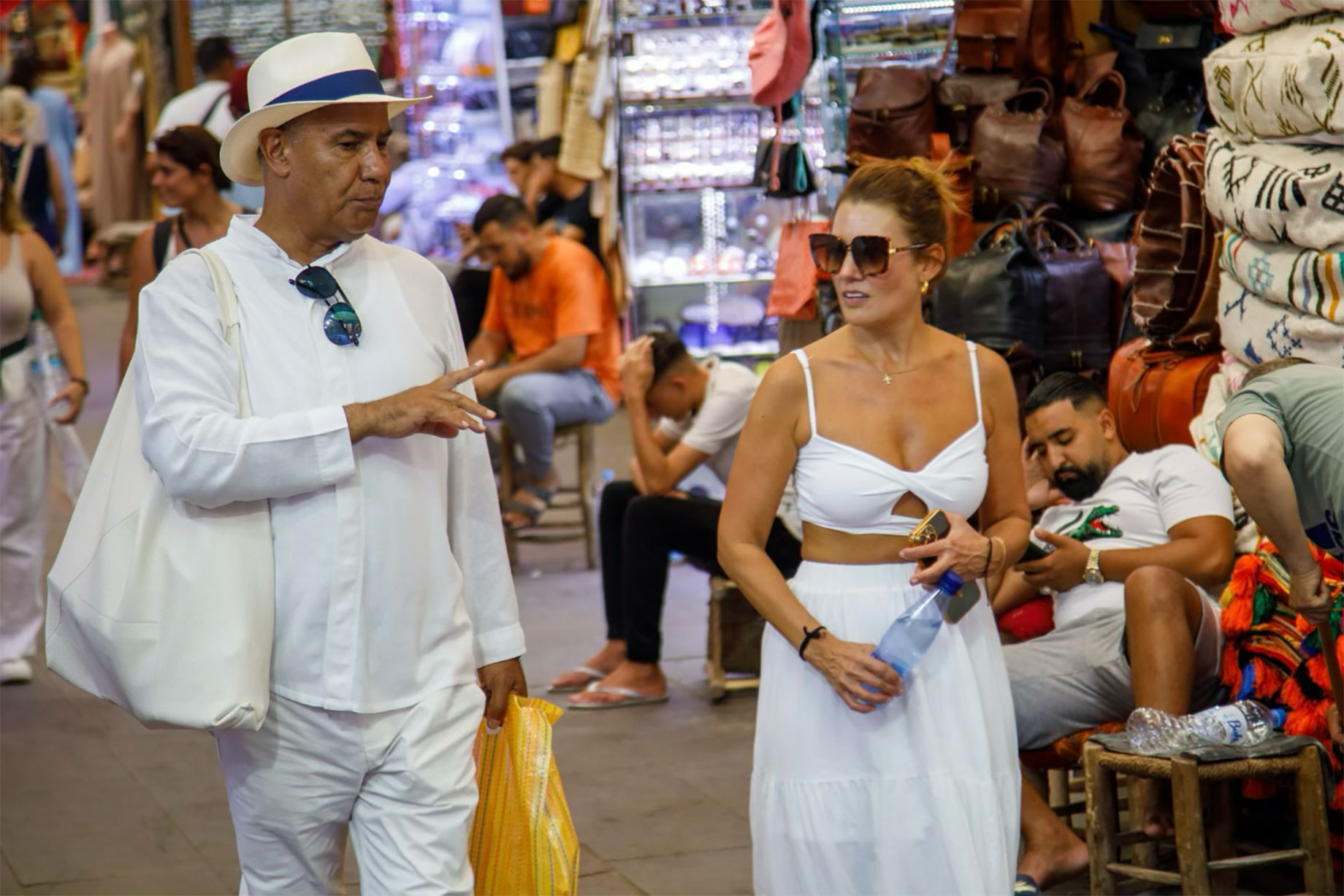
That last point is the one guests mention most. If the medina feels overwhelming on the first afternoon, you leave. If a conversation with a craftsman turns out to be the best hour of the trip, you stay. It is why so many discerning travellers now choose tailor-made private tours of Morocco, designed around a single party and adjusted as the journey unfolds.
The people matter as much as the plan. Guiding inside the medinas requires a Moroccan state licence, which is a meaningful filter on competence, but the best guides are more than a source of facts. They interpret: the etiquette of the souk, the meaning of a zellige pattern, the reason one family has run the same workshop for four generations. A driver who stays with you for the whole journey, who learns that you take coffee before nine and would rather avoid the motorway, is worth more than any upgrade.
Access that cannot be booked online
The second shift is towards access. The experiences that linger tend to be those a booking platform cannot sell: a private artisan workshop in Fès, a cooking session in a family dar rather than a school, a dawn balloon flight over the Palmeraie, or a quiet half hour inside a monument before it opens to the public. They come from relationships built over years, not from a search engine, and they are what separates seeing Morocco from understanding it.
The same principle applies to where you sleep. Morocco’s finest houses are often small, and in a riad of eight rooms the difference between two of them can define a stay. An operator worth trusting books the named room, not the category. From the great palace hotels of Marrakech to mountain kasbahs and remote desert retreats, that attention to detail is the quiet mark of a journey done well.
The desert, reconsidered
Nowhere is the change clearer than in the Sahara. A night in the dunes once meant a shared tent and an early start. Today the most sought-after nights are spent in a small number of luxury desert camps, with proper beds, private tents, lantern-lit dinners and a table set for two on the sand.
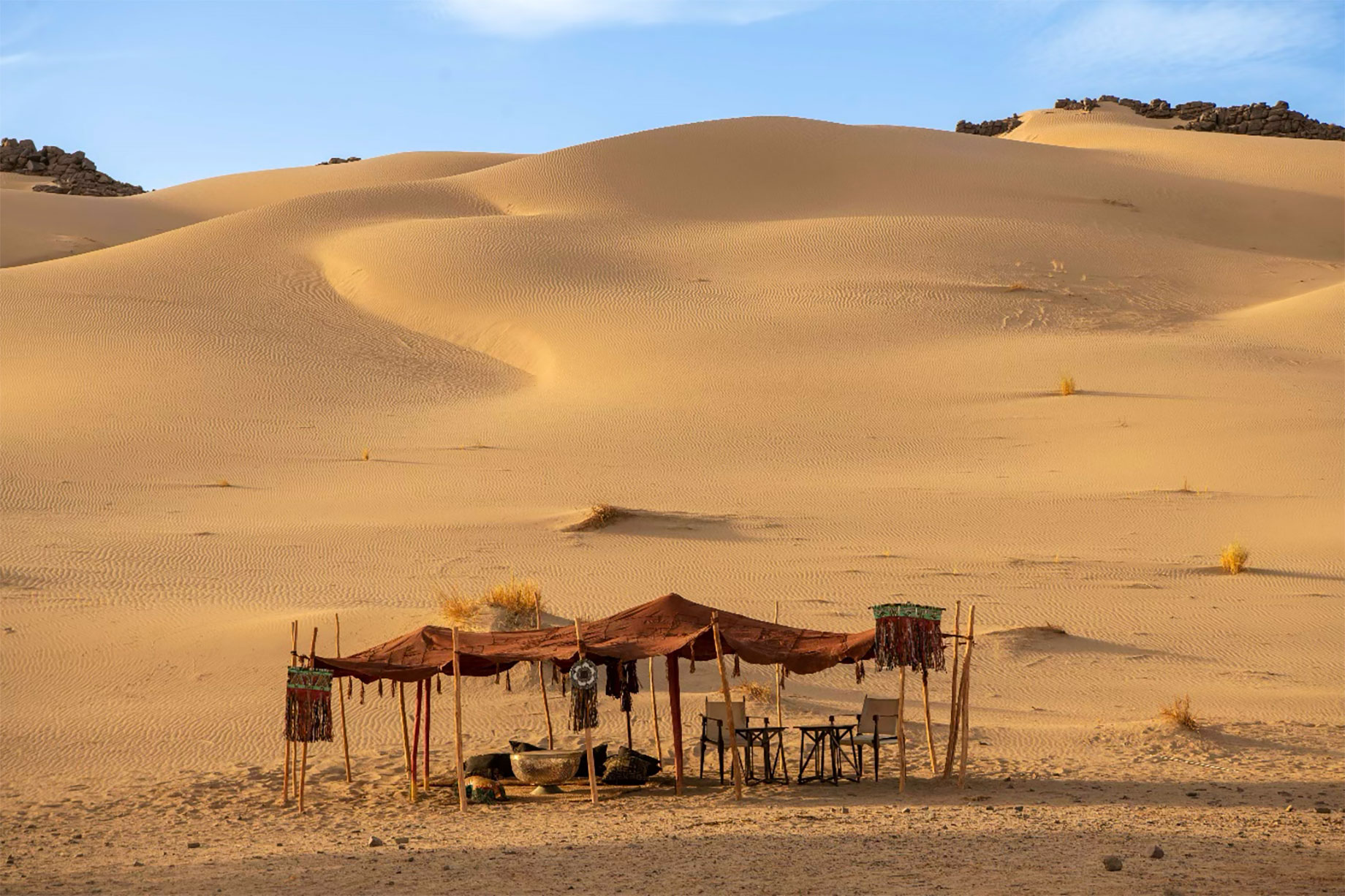
Yet the best of them do not try to imitate a hotel. What makes a night at Erg Chebbi memorable is not the thread count. It is the light turning the dunes from gold to rose to grey, the cold that arrives with dark, the silence, and a sky with more stars than most people have ever seen. Comfort simply removes the obstacles between you and all of that.
Practicalities matter, because the good camps are small and fill early. The journey from Marrakech is long and is usually broken by a night around Aït Benhaddou or the Dadès Gorges, and it is worth treating the road as part of the trip. Some travellers choose to shorten it with a helicopter transfer, which changes the pace entirely. Either way, a desert night is best planned as the centrepiece of a route, not squeezed in at the end of one.
The table as a way in
Ask guests what they remember most and food comes up almost as often as landscape. Not the grand hotel dining room, though the best of those are excellent, but the meals that carry a sense of place: a lunch of slow-cooked tagine in a courtyard in the Ourika valley, grilled sardines eaten at the port in Essaouira, a dinner cooked by the women of a Berber household after a day of walking in the High Atlas.
Good itineraries treat meals as part of the story rather than a pause in it. They alternate the formal with the informal, the refined with the rustic, and they leave room for the market stall that no one planned to visit. A cooking session in a private home, starting with a walk through the market to choose the ingredients, teaches more about Moroccan hospitality in three hours than a week of sightseeing.
It is also here that local knowledge shows most clearly. Knowing which café in the medina roasts its own coffee, which family has baked the same bread for generations, or which restaurant is worth the detour on the road to the coast is not something that can be researched from abroad. It has to be lived, and it has to be shared by someone who cares that you enjoy it.
Marrakech, and what lies beyond it
Most journeys begin in Marrakech, and rightly so. The city rewards a slow first day: a walk through the medina with a licensed guide before the heat builds, a long lunch, a rest, and an evening on a rooftop as the call to prayer drifts over the terracotta walls. What it does not reward is trying to see everything at once.
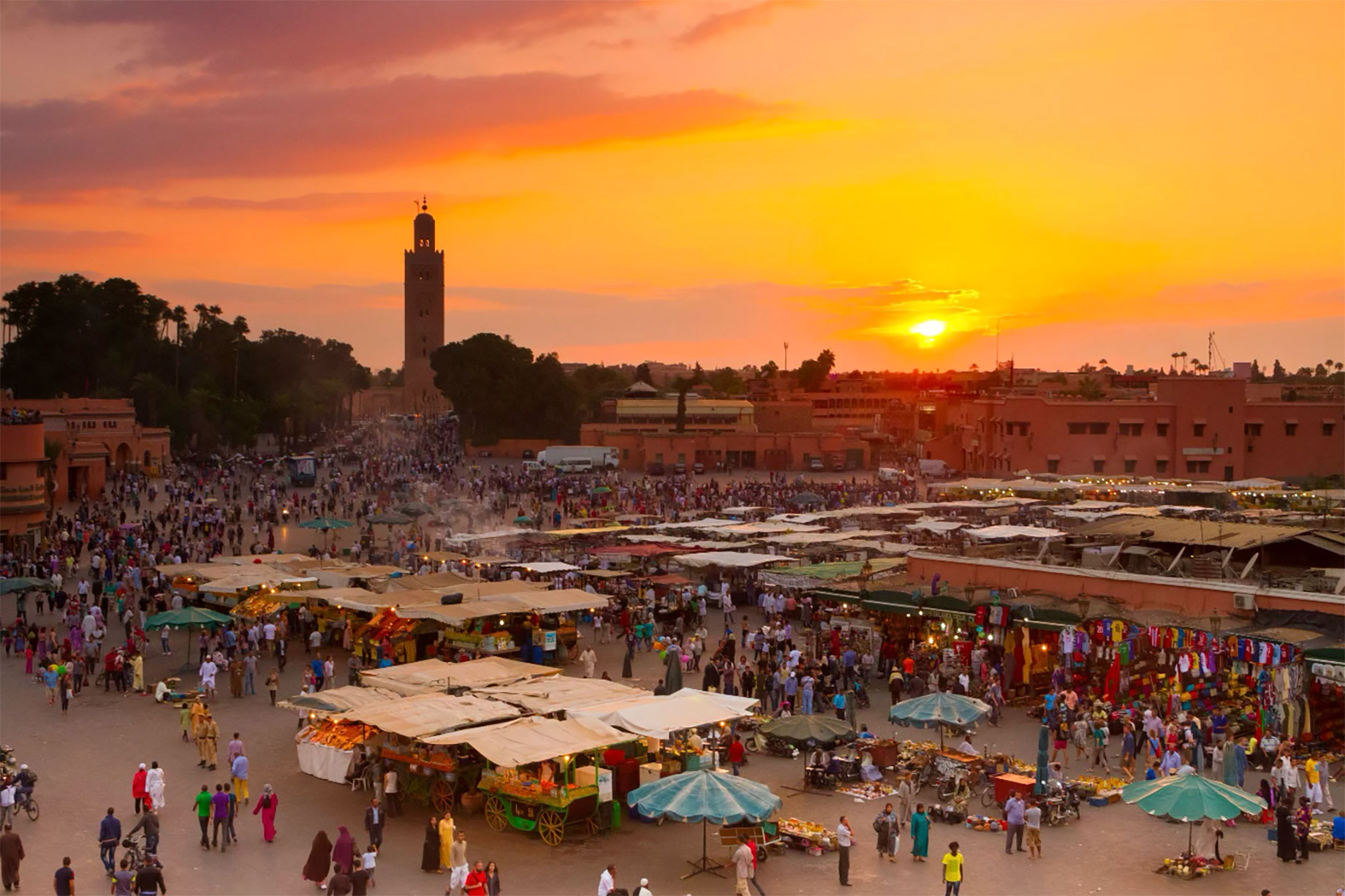
From there, the country opens in several directions. North lies Fès, the great craft capital, where the medina is the largest living car-free urban area in the world. South and east are the Atlas Mountains, the kasbahs of the Draa and the Dadès, and finally the dunes. West lies the Atlantic, with the whitewashed calm of Essaouira and the surf villages of Taghazout. Each region has its own character, its own food and its own pace, and the art of a good itinerary is choosing the two or three that fit together naturally.
Choosing your season
Spring, from March to May, and autumn, from September to November, offer the most comfortable conditions across the country, and they are also when the best riads and camps are booked first. Three to six months’ notice is sensible for those periods. Shorter notice is workable, but the choice of houses narrows and the best rooms go early.
That said, Morocco works all year. The Atlantic coast, from Essaouira to Taghazout, is at its most pleasant in summer, when the interior is hot. Winter brings snow to the High Atlas, visible from the terraces of Marrakech, and clear, cold nights in the desert that some travellers consider the most beautiful of all.
Less, done properly
Morocco does not need embellishing. Its cities are dense with history, its landscapes shift from ochre to green to white within a day’s drive, and its hospitality is genuine. The traveller who leaves happiest is rarely the one who saw the most. It is the one whose journey was paced to their own rhythm, guided by people who know the country from the inside, and free enough to change on the morning it needed to.
In a country this varied, the greatest luxury is having someone who can say, with confidence, what to leave out.
