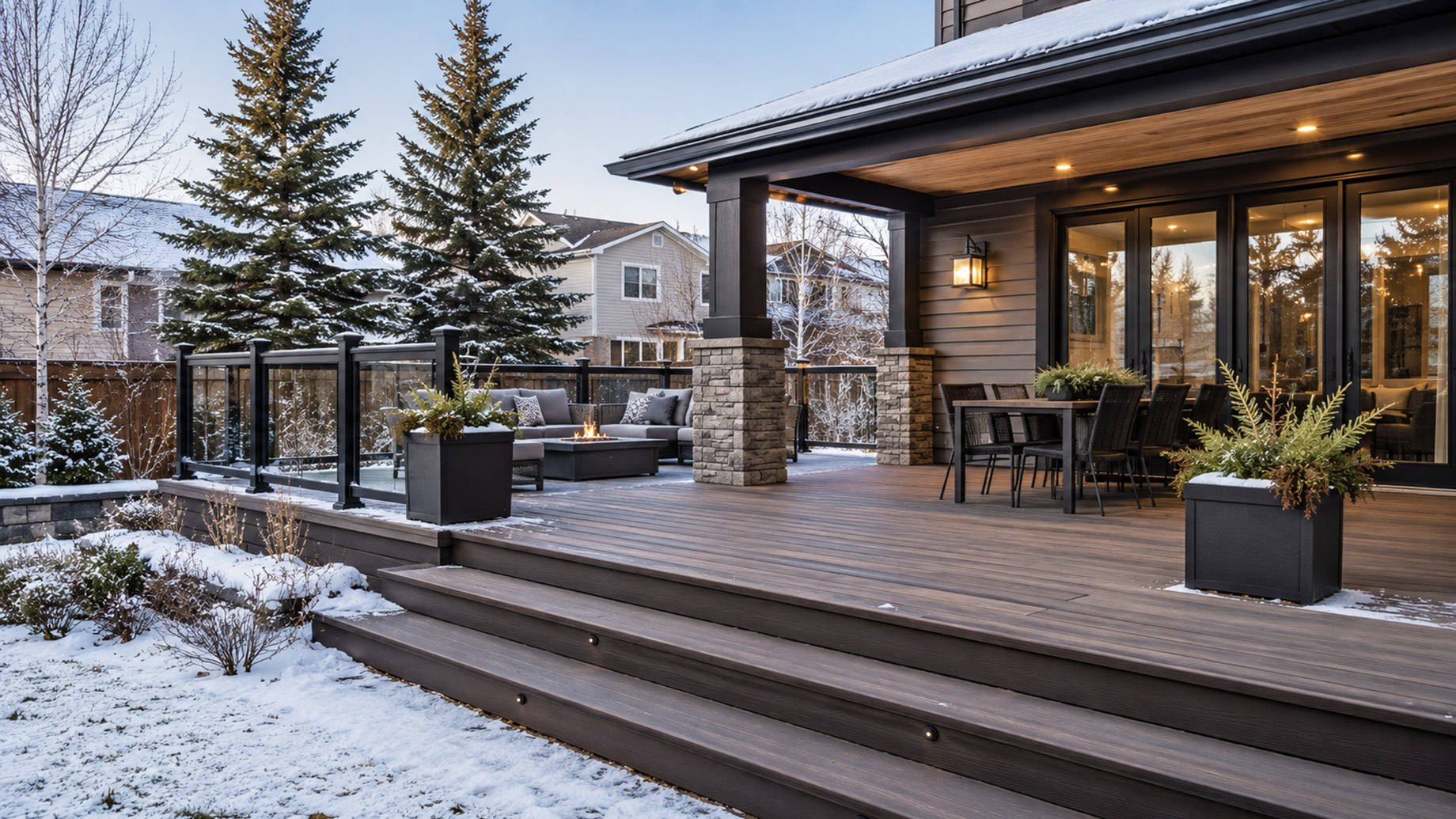
Upgrading your home with a beautiful outdoor space requires careful planning, especially when facing extreme weather conditions. Selecting the proper outdoor construction materials ensures your investment remains safe, attractive, and structurally sound for years to come.
Consulting with experienced deck builders Edmonton residents trust is a great way to navigate these choices. The right material selection directly impacts deck durability, overall aesthetics, and climate suitability, preventing costly repairs after harsh winters. By understanding your options, you can create a stunning extension of your home.
Understanding Canadian Climate Considerations
The extreme temperature fluctuations in Alberta present unique challenges for outdoor construction. During the winter, deep freezes and heavy snowfall test the structural durability of your deck. In the summer, intense sunlight requires materials with adequate UV protection to prevent fading and cracking.
Moisture resistance is another critical factor. When snow melts during the spring thaw, water can seep into unprotected wood, causing rot, mold, or warping. Choosing weather-resistant decking ensures your outdoor living spaces survive these rapid freeze-thaw cycles.
To combat the elements, homeowners must weigh the pros and cons of wood versus synthetic options. Each material reacts differently to the local environment, and understanding these differences will guide your backyard deck design.
Pressure-Treated Wood: Budget-Friendly and Accessible
Pressure-treated wood remains one of the most popular Edmonton deck materials due to its affordability and accessibility. This lumber is chemically treated to resist rot, fungal decay, and insect damage, making it a reliable choice for budget-conscious homeowners.
- Cost-effective: It offers the lowest upfront cost compared to other materials.
- Structural strength: It provides an incredibly sturdy base for framing and substructures.
- Customization: You can easily stain or paint it to match your home’s exterior.
However, pressure-treated lumber requires consistent deck maintenance. It is prone to shrinking, warping, and splintering if not properly sealed and stained every couple of years. If you are willing to put in the seasonal work, it remains a highly viable and economical option.
Cedar and Hardwood: Natural Beauty for Backyard Deck Design
For those seeking an authentic, rich aesthetic, cedar decking is a spectacular choice. Cedar naturally resists moisture, decay, and insect infestations without the need for harsh chemicals. Its distinct aroma and beautiful grain patterns elevate the look of luxury homes.
Hardwoods, like Ipe or Tigerwood, offer even greater longevity and density. These premium woods are incredibly durable and highly resistant to scratches and fire. They create a sophisticated, high-end finish that synthetic options often try to emulate.
Despite their natural resilience, cedar and hardwoods still demand regular upkeep. To maintain their rich color and prevent them from weathering to a silvery-gray, you must apply penetrating oils and UV-protective sealants annually.
Composite Decking: Low Maintenance for Outdoor Living Spaces
If you prefer to spend your weekends enjoying your backyard rather than maintaining it, composite decking Edmonton suppliers offer might be your ideal solution. Made from a blend of wood fibers and recycled plastics, composite boards provide the look of real wood without the tedious upkeep.
Leading brands like Trex and TimberTech have revolutionized this category. These modern composites feature advanced capping technology, offering superior stain, scratch, and fade resistance. You never have to sand, stain, or paint a composite deck.
- Eco-friendly: Most composite materials use recycled content, reducing environmental impact.
- Safety first: They do not splinter, making them barefoot-friendly and safe for children and pets.
- Longevity: Most manufacturers offer warranties ranging from 25 to 50 years.
While the initial investment is higher than traditional lumber, the long-term savings on maintenance make composite materials highly cost-effective over their lifespan.
PVC Decking: Ultimate Weather-Resistant Decking
For the absolute highest level of moisture resistance, PVC decking is the premium choice. Unlike composite materials, PVC boards contain no organic wood fibers whatsoever. This means they are completely impervious to mold, mildew, and rot.
Because it is entirely synthetic, PVC is incredibly lightweight and easy to work with. It also dissipates heat better than dense composites, keeping your deck cooler under the hot summer sun. The material is engineered for extreme durability, making it perfectly suited for the harsh Canadian climate.
The primary drawback of PVC is the cost, as it sits at the top tier of deck construction materials pricing. Additionally, some homeowners feel that while the textures are highly realistic, they still lack the exact warmth of natural wood.
Balancing Budget, Design Compatibility, and Resale Value
When selecting your materials, it is crucial to balance your initial budget with long-term goals. A highly durable deck enhances your home’s curb appeal and significantly boosts its resale value. Buyers in the luxury market often look for low-maintenance, high-quality outdoor living spaces.
Consider the architectural style of your home during the design phase. A sleek, modern build might pair beautifully with a monochromatic gray PVC deck and glass railings. Conversely, a traditional home may benefit from the rustic charm of natural cedar.
Always factor in the hidden costs of ownership. While wood is cheaper upfront, the cumulative cost of stains, sealants, and labor can surpass the price of composite over a ten-year period. Choose a material that aligns with both your aesthetic vision and your lifestyle.
Deck Maintenance and Long-Term Structural Durability
The longevity of your deck relies heavily on how well you commit to its maintenance requirements. Even the most robust weather-resistant decking needs basic care to remain safe and structurally sound over the decades.
- Wood decks: Require sweeping, deep cleaning, sanding, and resealing every one to three years.
- Composite and PVC: Simply need a seasonal wash with mild soap and water to remove dirt and pollen.
- Substructure: Regardless of the surface material, ensure your joists and beams (often pressure-treated lumber) are properly flashed to prevent water damage.
Regular inspections are vital for safety. Check for loose fasteners, wobbly railings, and signs of rot around the posts each spring. Addressing minor issues early prevents catastrophic structural failures down the line.
Selecting the right deck construction materials is the foundation of a beautiful, long-lasting outdoor living space. By evaluating climate considerations, maintenance limits, and aesthetic desires, you can confidently invest in your property.
Professional guidance ensures your project meets all local building codes and quality standards. Partnering with skilled deck builders Edmonton provides ensures your chosen materials are installed flawlessly for maximum durability.
Whether you opt for the natural elegance of cedar or the high-tech resilience of composite decking, your new deck will serve as the perfect backdrop for years of cherished outdoor memories. Plan carefully, choose wisely, and enjoy your stunning new backyard retreat.
