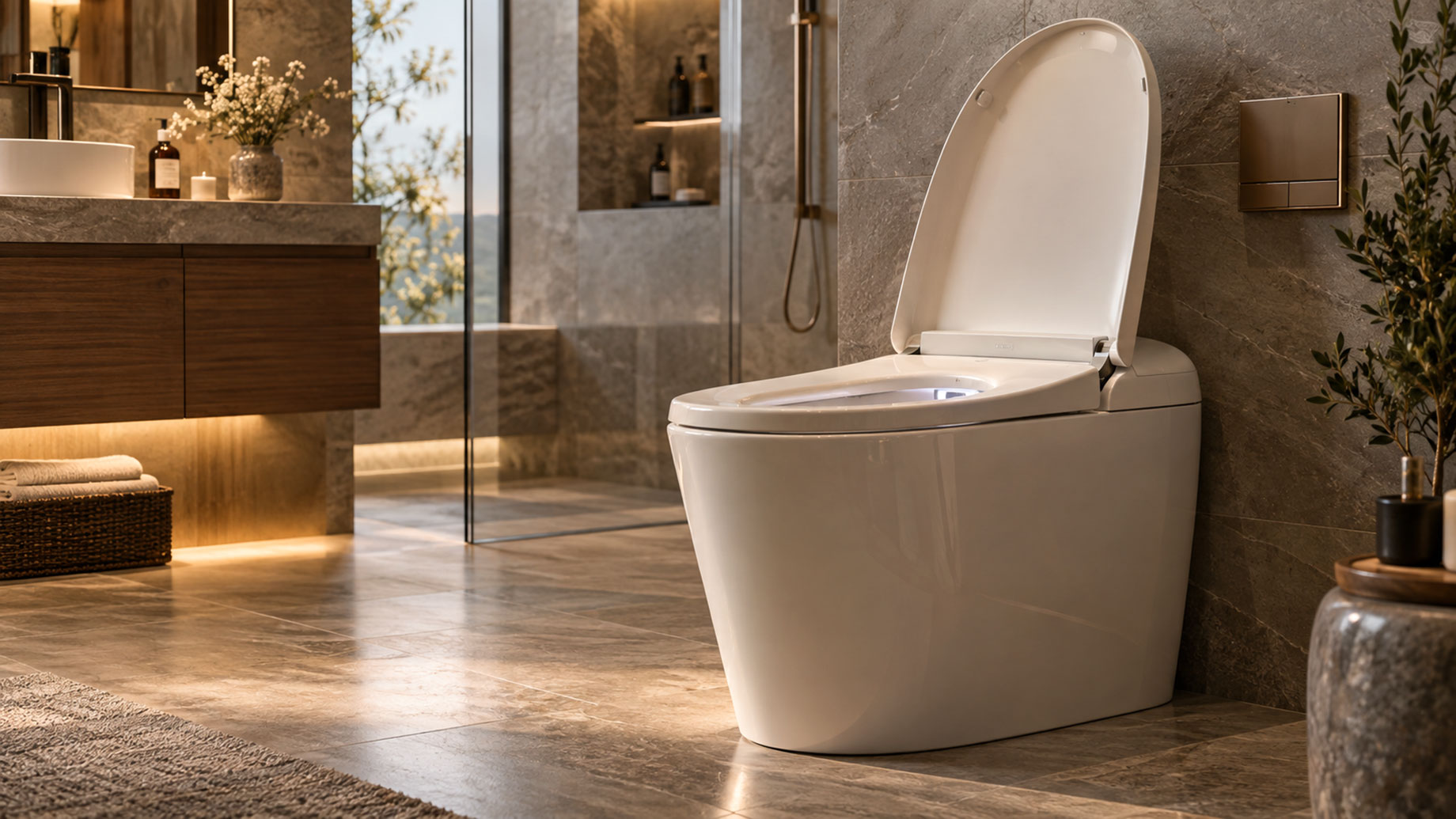
A luxury bathroom is easy to recognize at first glance. Natural stone, custom cabinetry, frameless glass, warm lighting, and thoughtfully chosen fixtures can make a space feel polished before anyone has even used it.
But the details that make a bathroom look expensive are not always the ones that make it feel luxurious every day. Increasingly, homeowners are looking beyond finishes and thinking about how the room actually works. Is it comfortable on a cold morning? Are everyday routines simple? Does the space feel clean and uncluttered? Can technology improve the experience without becoming the center of attention?
That shift is changing the role of one of the bathroom’s most familiar fixtures: the toilet.
Luxury Is Becoming More About Everyday Comfort
For years, luxury interiors were associated with visible statements. Larger tubs, rare stone, decorative hardware, and dramatic finishes were all ways to show that more had been invested in a space. Today, some of the most refined bathrooms take a quieter approach.
Heated floors disappear beneath tile. Lighting is integrated into mirrors and cabinetry. Showers hold a comfortable temperature without constant adjustment, while ventilation works in the background without disturbing the calm of the room. The common thread is not simply technology, but comfort that feels natural.
A well-designed bathroom removes small inconveniences instead of adding more controls, accessories, and things to think about. The result may look simple, but it feels noticeably better to use. That is why comfort-focused fixtures are becoming just as important as beautiful materials.
Why Smart Toilets Are Getting More Attention
While kitchens, lighting, climate control, and entertainment systems have evolved rapidly, the traditional toilet remained relatively unchanged for decades. That is beginning to change.
Modern smart toilets can bring several everyday functions into a single fixture, including warm-water cleansing, heated seating, warm-air drying, automatic flushing, sensor-operated lids, and adjustable settings.
The appeal is not simply having more features. In a thoughtfully designed bathroom, integration can actually make the room feel simpler. Instead of adding separate bidet attachments, controls, and accessories around a conventional toilet, several functions can be built directly into one fixture. That approach fits naturally with contemporary bathrooms, where clean lines and fewer visible components often create a stronger sense of space and order.
The Features That Make the Biggest Difference
The best bathroom technology tends to be the kind people quickly stop thinking about. Warm-water cleansing is a good example. Adjustable temperature, pressure, and spray position allow the experience to feel more personal rather than one-size-fits-all.
A heated seat offers another small but noticeable improvement, particularly in bathrooms filled with materials that naturally feel cool to the touch, such as porcelain, stone, tile, and glass. Warm-air drying can make the cleansing routine more complete, while hands-free features such as automatic lids, foot controls, and sensor-based flushing reduce unnecessary touching and movement.
Individually, none of these features needs to feel dramatic. Their value comes from repetition. A fixture used several times a day has many opportunities to make a routine slightly warmer, cleaner, easier, or more comfortable. Over time, those small improvements can matter more than a feature designed mainly to impress at first glance.
Why Integration Matters in a Modern Bathroom
Bathrooms are particularly sensitive to clutter. Mirrors, faucets, showers, storage, lighting, plumbing connections, towels, and personal items are already competing for limited visual space. Adding more accessories does not necessarily make the room feel more advanced.
Integrated fixtures take a different approach. Designs from Sanyipace Smart Toilet, for example, combine cleansing, heating, drying, and sensor-based controls within a streamlined fixture, reducing the need for multiple separate bathroom accessories.
That does not mean every luxury bathroom needs the longest possible list of features. Good design is still about choosing functions that genuinely improve the way the room is used. What matters is that technology can now be incorporated without overwhelming the space.
This works particularly well in bathrooms built around large-format tile, floating cabinetry, warm wood, simple stone surfaces, and restrained hardware. The technology adds capability while the room can remain visually calm. In that sense, smart bathroom design follows the same principle as many other high-end interiors: the more advanced the space becomes, the less visible its complexity often needs to be.
A Smart Upgrade Still Needs Thoughtful Planning
Even the most advanced fixture has to work with the bathroom around it. Before choosing an electric smart toilet, homeowners should check practical details such as the existing rough-in, water supply location, electrical access, and available space around the fixture.
These considerations are especially important during a renovation. It is much easier to plan an outlet or make plumbing adjustments while walls, flooring, and finishes are already being worked on than after a completed bathroom has to be opened again.
For a simple replacement, accurate measurements are just as important. Toilets can vary in footprint, shape, and installation requirements, so an existing setup should not automatically be assumed to fit every new model. Planning these details early may not be the glamorous side of bathroom design, but it is part of what helps a finished space work comfortably for years.
Everyday Luxury Is About Less Friction
A modern luxury bathroom does not need to feel futuristic. In many cases, the opposite is more appealing. The best technology becomes part of the room quietly. You notice the warm seat on a cold morning, the lid that opens without being touched, or the cleansing settings adjusted to your preference, but you do not spend much time thinking about the technology behind them.
That is where smart toilets fit naturally into modern bathroom design. They are not a substitute for good materials, thoughtful layouts, or quality craftsmanship. But when those fundamentals are already in place, an integrated smart fixture can add something that expensive surfaces alone cannot provide: a more comfortable daily routine.
And increasingly, that may be one of the most meaningful forms of luxury.
