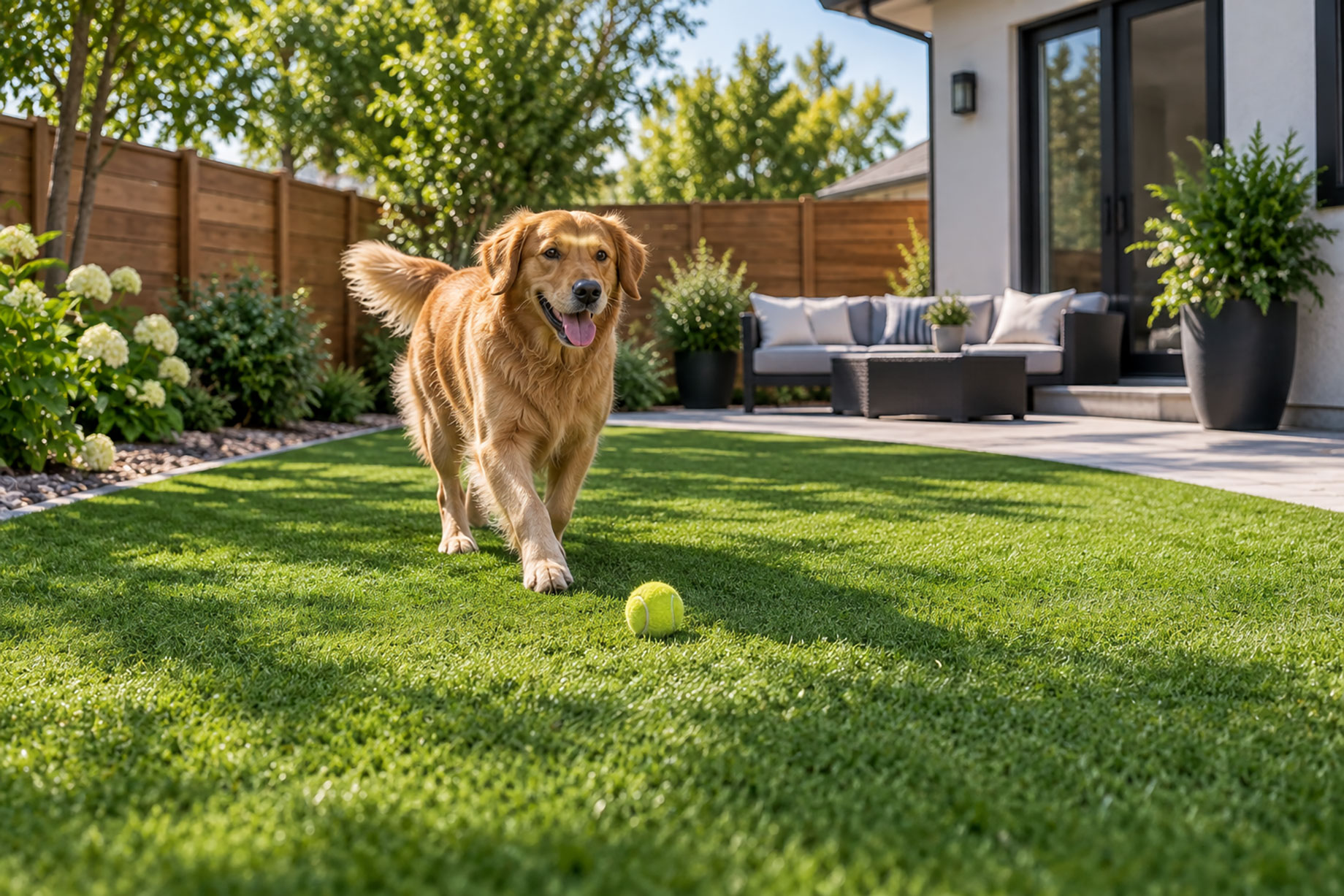
Dogs can leave mud, urine stains, and loose soil across a lawn within a few weeks. Repeated running also compresses the ground, weakens roots, and creates bare paths near doors or fences. Rain then turns damaged areas into puddles that cling to paws. Pet-friendly artificial turf creates a cleaner surface while allowing water to move below it. Proper placement, adequate drainage, and routine cleaning help maintain a healthier outdoor area throughout the seasons.
Purpose of a Backyard Turf
A carefully selected backyard turf for dogs can protect high-traffic sections without replacing every blade of grass. A strip beside the back entrance catches repeated trips, while a narrow fence route often receives concentrated running. Covering those areas separates paws from loose earth, reduces indoor tracking, and preserves stronger lawn sections for lounging, play, and scent exploration.
Protecting Soil Daily
Natural grass loses structure under repeated impact. Exposed soil then sheds particles during rain, leaving ruts and muddy patches. A pet-safe covering shields vulnerable ground while its open backing allows air and water to move. That separation reduces splashing around the surface. Less soil adheres to fur, and the underlying lawn gets recovery time between activity periods.
Improving Drainage After Rain
Permeable backing allows rainwater to drain downward rather than form shallow pools. Liquid waste can also move into the soil, reducing moisture around frequently used bathroom areas. Standing water creates unpleasant odors and keeps paws damp. Solid waste still requires prompt removal, but a draining surface makes rinsing simpler after storms and limits residue near play zones.
Keeping Entry Routes Cleaner
The narrow path between a door and a gate often receives more traffic than the rest of the garden. Grass along that corridor commonly disappears first. Covering the route keeps paws clean of loose particles before pets enter the house. Floors, rugs, and furniture receive less debris. A focused installation can therefore address a persistent maintenance issue without covering the entire property.
Supporting Grass Growth
Hybrid turf contains openings that allow living blades to grow through its surface. Sunlight, air, and rainfall can still reach the roots. Young shoots gain protection from direct trampling while retaining a natural appearance. Roots receive time to establish between play sessions. This approach can improve coverage in locations where ordinary reseeding repeatedly fails.
Making Installation Manageable
Installation usually involves leveling the ground, removing stones, unrolling material, trimming edges, and securing each section with anchors. It does not require a complicated structure when the soil is reasonably even. Supplier guidance states that more than 300 square feet may be installed per hour. Actual progress depends on slopes, corners, cuts, access, and the quality of preparation.
Matching Roll Size to Yard Damage
Measurements should reflect actual wear rather than an approximate estimate. A small roll covers 22 square feet, a larger option reaches 75 square feet, and a professional size covers 135 square feet. Calculating the damage in each section helps limit waste. It also shows whether one gate path needs treatment or several connected areas require protection.
Creating a Better Space for Dogs
Dogs investigate their surroundings through scent, texture, and repeated movement. Open turf keeps contact with soil available, allowing familiar outdoor behaviors to continue. A sealed covering may reduce that sensory variety. Protected play areas also give animals room to run without generating too much dust.
Reducing Seasonal Mud Problems
Autumn rain exposes weak patches, while winter thaw loosens compacted soil. Spring growth then faces damaged roots, and summer heat increases water stress. Turf placed over recurring trouble spots limits this repeated cycle. Families spend less time reseeding, filling ruts, and waiting for new blades to establish. Outdoor access becomes more predictable across changing weather conditions.
Following a Simple Cleaning Routine
Pet waste should be removed promptly with a scoop or bag. A light rinse clears residue and carries diluted liquid through the backing. A soft brush can lift flattened blades beside entrances. Strong chemicals are unnecessary for ordinary maintenance. Periodic cleanings and checks around seams, anchors, and edges identify movement before a minor repair becomes a larger problem.
Conclusion
Pet-friendly artificial turf helps control mud by separating paws from exposed soil, guiding water below the surface, and shielding grass from repeated impact. Its open construction supports drainage and continued root access when placed correctly. Measured coverage, secure installation, and regular rinsing keep maintenance manageable. Protecting one worn route or a larger play area can support cleaner floors, healthier lawn sections, and more comfortable outdoor activity year-round.
