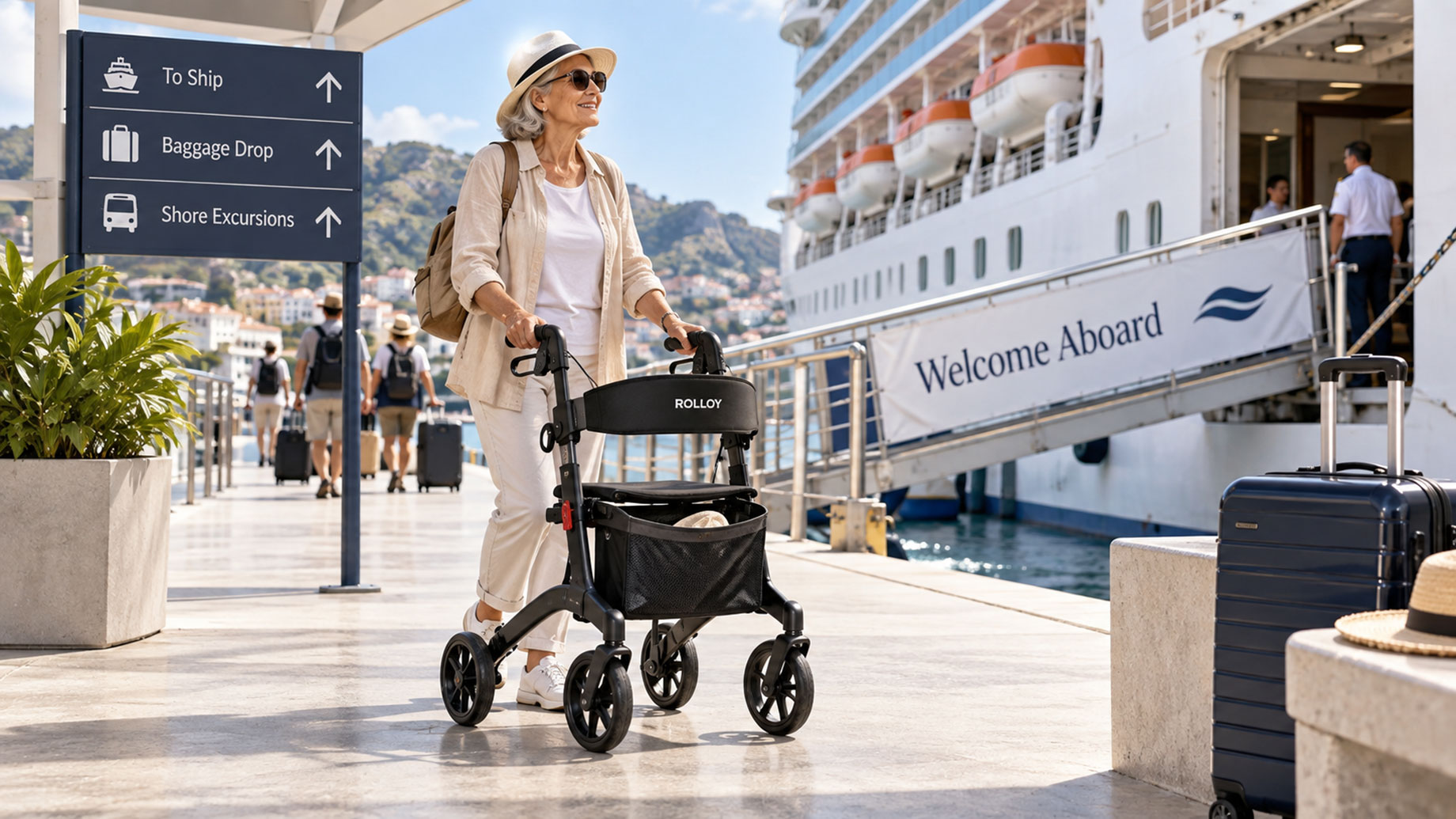
A cruise can involve more walking, waiting, folding, storing, and route changes than a normal day at home. The right rollator walker should match your travel needs, including airport transfers, cruise cabins, dining areas, and shore excursions.
Why Cruise Travel Needs a Different Kind of Rollator
A rollator that works well at home may not always feel practical during cruise travel. Cruise trips can include long ship corridors, elevators, dining rooms, theater seating, port transfers, and shore activities. The right choice depends on both the user’s mobility needs and the spaces the rollator needs to handle.
Longer Walking Distances Than Daily Home Use
Cruise travel often involves repeated walking throughout the day, from the cabin to dining areas, elevators, entertainment spaces, and excursion meeting points. Even if each walk feels manageable, the total distance can become tiring by the end of the day. A rollator with a seat can help users rest during lines, port stops, or longer walking periods, but the user still needs to feel comfortable steering, stopping, and turning in crowded areas.
Tight Spaces in Cabins, Elevators, and Dining Areas
Cruise ships often have tighter spaces than a typical home, so width and storage matter. A rollator should be narrow enough for likely indoor spaces and compact enough to store safely when not in use. Carnival states that certain staterooms require mobility devices to fit through a 22-inch entry doorway and fold or collapse for safe storage. Royal Caribbean also recommends storing assistive devices inside the stateroom and asks guests with devices wider than 32 inches to contact their Access Department.
Unpredictable Surfaces During Shore Excursions
Shore excursions may involve ramps, uneven sidewalks, gravel, cobblestones, dock edges, or long walking routes. These conditions can make a rollator harder to control if the wheels are too small, the brakes are difficult to use, or the user becomes tired. Before booking, consider the route length, transportation method, walking surface, and rest opportunities, especially when gangways, tenders, weather, or shore facilities may create additional challenges.
Start With Your Cruise Route and Cabin Setup
Before choosing a rollator, review the actual trip. A short cruise with mostly onboard activities may require a different mobility aid than a longer trip with multiple shore excursions. The goal is to match the rollator to the full travel environment, not just to one product feature.
Check Your Cabin Layout and Storage Space
Start with the cabin. Consider the doorway width, bathroom access, available storage area, and whether the folded rollator can be stored without blocking movement. A compact folding design can make daily use easier, but a standard cabin, balcony cabin, suite, and accessible cabin may all have different space around the bed, bathroom, and door. If space is a concern, confirm the stateroom details with the cruise line before traveling.
Review Port Stops and Transfer Plans
The cruise route matters because every port creates different mobility challenges. Some destinations may involve longer walks, shuttle transportation, uneven paths, or limited seating, while others may be easier because shops and transport are close to the pier. Review excursion descriptions before booking, and if the plan includes buses, vans, tenders, or guided walks, ask whether the rollator can be folded and stored during transport.
Think About Flights, Boarding, and Daily Walking Distance
Many cruise trips also involve airports, hotels, taxis, and transfers. A practical travel rollator should be easy for the user or caregiver to fold, move, and store through each part of the trip. The U.S. Department of Transportation states that assistive devices do not count toward carry-on limits, but storage still depends on available space and safety requirements.
Key Features to Look for in a Cruise Rollator
A good cruise rollator should balance portability, comfort, and stability. The lightest model is not always the best option if it does not provide enough support for the user’s travel needs. Compare the features that affect real travel use: folded size, weight, width, seat comfort, wheels, and brakes.
Folded Size for Easier Storage and Transport
Folded size affects how easily a rollator can be moved between vehicles, airports, cabins, and storage areas. For travelers comparing a lightweight folding travel walker with seat, the Compact Master II Rollator Walker with Seat is one compact 4-wheel rollator option to review. Its product information lists a compact folded design, 16 lb weight, 8-inch wheels, seat, backrest, and storage features. A smaller folded size can make transportation easier, but users should still confirm airline and cruise storage requirements before traveling.
Frame Weight You Can Lift Safely
Weight is important when a rollator needs to be lifted into a vehicle, stored in a cabin, or handled during transfers. A lighter frame may help, but the right weight depends on who will handle the device and how often it needs to be lifted. Do not choose by weight alone, because a very light model may not provide the seat, wheel size, brake control, or stability needed for long travel days. The better question is whether the user or caregiver can handle the rollator safely while still getting enough support.
Width for Cruise Cabins and Crowded Spaces
Width affects how easily a rollator moves through cabins, restaurants, elevators, and crowded public areas. Open width matters when the rollator is being used, while folded size matters when it is stored. This is especially important in cruise cabins, where the user may need to move around beds, bathroom doors, furniture, and luggage. A rollator that works well outdoors may still feel frustrating if it is too wide indoors.
Seat and Backrest for Rest Breaks
A seat can be valuable during long travel days, waiting periods, and shore activities. It gives users a place to pause when standing becomes tiring or when rest areas are limited. A backrest can improve comfort during short breaks, but the seat should only be used when the rollator is stable and the brakes are locked. Users should also confirm seat width, seat height, and weight capacity before choosing a model.
Wheels and Brakes for Outdoor Conditions
Wheels influence how smoothly a rollator moves over ship corridors, port ramps, sidewalks, and excursion routes. Larger wheels may help on some outdoor surfaces, while smaller wheels may work better for compact indoor use. Brakes are equally important because the user must be able to stop, slow down, and lock the rollator comfortably. A rollator should not be used for sitting on slopes, uneven ground, or unstable surfaces unless the brakes hold the device steady.
Rollator Walker vs Lightweight Travel Walker With Seat
Different mobility aids work better for different travel situations. A full rollator may be better for longer routes and outdoor movement, while a lighter walker with a seat may be easier in tighter indoor spaces. A standard walker can still be useful for some users, but it may require more effort during long travel days.
| Mobility Aid | Best For | Travel Consideration |
|---|---|---|
| Rollator walker | Longer routes, outdoor movement, frequent rest breaks | Requires confident wheel and brake control |
| Lightweight walker with seat | Shorter routes, tighter spaces, easier lifting | May provide less outdoor convenience than a rollator |
| Standard walker | Slower, more controlled support | May require more effort during long travel days |
When a Rollator Walker Works Better
A rollator works well for travelers who expect longer walking routes, outdoor activities, and frequent rest breaks. It can help users move more smoothly through airports, cruise terminals, open ship areas, and some port routes. The Compact Master II Rollator Walker with Seat is designed around this type of use, combining mobility support with seating and storage features for longer outings. It is most relevant for users who can safely control wheels and brakes.
When a Lightweight Folding Travel Walker With Seat May Be Easier
A lightweight walker with seat may be a better match for users who mainly need indoor support, shorter distances, and easier lifting. This option can work well for cruise cabins, hotel rooms, and situations where compact handling is more important than outdoor performance. It should not be confused with a full rollator, because a 2-wheel walker with a seat may be lighter and simpler but may not roll as smoothly outdoors as a 4-wheel rollator.
Choosing a Mobility Aid for Shore Excursions
Shore excursions require more planning because routes and environments vary. The same rollator that works well on the ship may feel different on a ramp, sidewalk, shuttle bus, or uneven port path. Review the excursion details before booking and match the mobility aid to the actual activity level.
Cobblestone, Gravel, Ramps, and Uneven Ground
Consider the expected surfaces before booking. Uneven roads, ramps, wet areas, gravel, and cobblestones may require more stable wheels and better brake control. A rollator can help on many routes, but it cannot make every surface safe. If the route includes steps, steep slopes, beach areas, or narrow paths, an accessible excursion or a different transportation plan may be safer.
Long Walking Tours and Limited Rest Areas
Long tours can become tiring even for experienced walkers. A seat allows users to take short breaks when the group is waiting for a guide, standing in line, or moving between stops. Still, the rollator should match the user’s ability and travel pace. For long walking tours, choose routes with manageable distance, reasonable speed, and clear opportunities to rest.
When to Choose an Accessible Excursion
Accessible excursions may be a better choice when a traveler needs shorter walking distances, easier transportation, or more predictable surfaces. They may also be more practical for users who need mobility support throughout most of the outing. Ask about walking distance, vehicle storage, steps, slopes, and available rest stops before booking. If the answers are unclear, choose the safer and more accessible option.
Check Airline and Cruise Line Rules Before Travel
Travel requirements vary between airlines, cruise lines, ships, and destinations. Do not rely only on product size or general travel advice. Confirm the rules directly before departure, especially if the user depends on the rollator throughout the trip.
Flying With a Rollator or Walker
Mobility devices may be allowed onboard aircraft, but storage depends on available space and safety rules. DOT states that assistive devices do not count toward baggage limits, and devices that cannot be stored in the cabin may be transported in the cargo area without an additional checked-bag fee. A compact folded size can make handling easier, but it does not guarantee overhead-bin storage.
Bringing a Rollator Onto the Cruise Ship
Most cruise lines allow mobility devices, but storage requirements still matter. The device should fit the cabin space and be stored safely without blocking walkways or emergency routes. Before departure, confirm the cruise line’s requirements for device width, stateroom storage, and accessible cabin options. If the rollator is wider than average or difficult to fold, contact the cruise line in advance.
When to Ask About Accessible Cabins or Assistance
Travelers who need more space, easier bathroom access, or additional boarding support should contact the cruise line before booking. An accessible cabin may provide better turning room, bathroom access, and support features than a standard cabin. Also ask about embarkation, debarkation, and port assistance if long lines or gangways may be difficult. Confirming these details early helps the traveler choose a more realistic route and cabin setup.
Safety Checks Before Boarding and Shore Trips
A few simple checks before travel can prevent unexpected problems. Cruise trips involve folding, lifting, storing, and moving the rollator through many different environments. Checking the device before boarding and before shore trips reduces the chance of problems during busy travel moments.
Test Brakes Before Sitting or Walking on Slopes
Check that the brakes engage properly before sitting or stopping on uneven ground. If the rollator moves after the brakes are locked, the device should be inspected before use. This is especially important on ramps, dock areas, and outdoor paths. Users should practice braking before the trip because a brake system that feels simple at home may feel harder when the user is tired or moving through crowds.
Check Wheels, Folding Locks, and Handle Height
Before leaving, confirm that the wheels move smoothly, the frame locks securely, and the handles are adjusted correctly. Wheels should not wobble, scrape, or stick, and folding locks should hold the frame open during use. Handle height also affects comfort and control because poor height can cause leaning or shoulder strain. Users can also review safe walker use habits before traveling in a new environment.
Avoid Overloading the Storage Bag
Storage areas are designed for personal items, not heavy luggage. Overloading a bag can affect balance, steering, comfort, and folding. Use the storage area for light essentials such as a phone, wallet, sunscreen, or small personal items. Keep heavy bags, shopping items, and cruise luggage separate.
Common Mistakes When Choosing a Cruise Rollator
Many travel problems come from choosing a rollator based on one attractive feature. A device may be light, compact, or affordable but still fail to match the real cruise environment. Avoid these common mistakes before buying or packing a mobility aid.
Ignoring Cabin and Doorway Space
A rollator that works well outdoors may feel inconvenient if it does not fit comfortably inside the cabin or dining areas. Cabin storage is especially important because mobility devices should not block walkways or emergency access. Before travel, check the rollator’s open width, folded size, and expected storage area. If the cabin is small or the device is wide, confirm the fit with the cruise line before departure.
Assuming Every Shore Excursion Is Rollator-Friendly
Not every shore excursion is suitable for a rollator. Some tours include steps, steep ramps, uneven streets, sand, gravel, tenders, or long standing periods. A tour may sound easy but still include surfaces that are difficult for mobility devices. Always review the route, walking distance, transportation, and terrain before booking.
Final Cruise Rollator Checklist
Use this checklist before choosing or packing a rollator for cruise travel.
| Feature | What to Check | Why It Matters |
|---|---|---|
| Folded size | Fits expected storage spaces | Easier transport |
| Open width | Matches cabin and indoor spaces | Better maneuverability |
| Frame weight | User or caregiver can handle it | Easier transfers |
| Seat | Comfortable and stable | Supports rest breaks |
| Brakes | Easy to operate and lock | Better control |
| Wheels | Suitable for planned routes | Improves mobility |
| Storage | Holds light personal items | Maintains balance |
| Travel rules | Confirmed before departure | Prevents surprises |
Final Thoughts
A cruise rollator should match the real travel environment, including cabins, airports, transfers, dining areas, and shore excursions. The best choice is not always the lightest model or the smallest folded size. Choose a rollator walker that the user can lift, store, control, and use comfortably throughout the trip.
