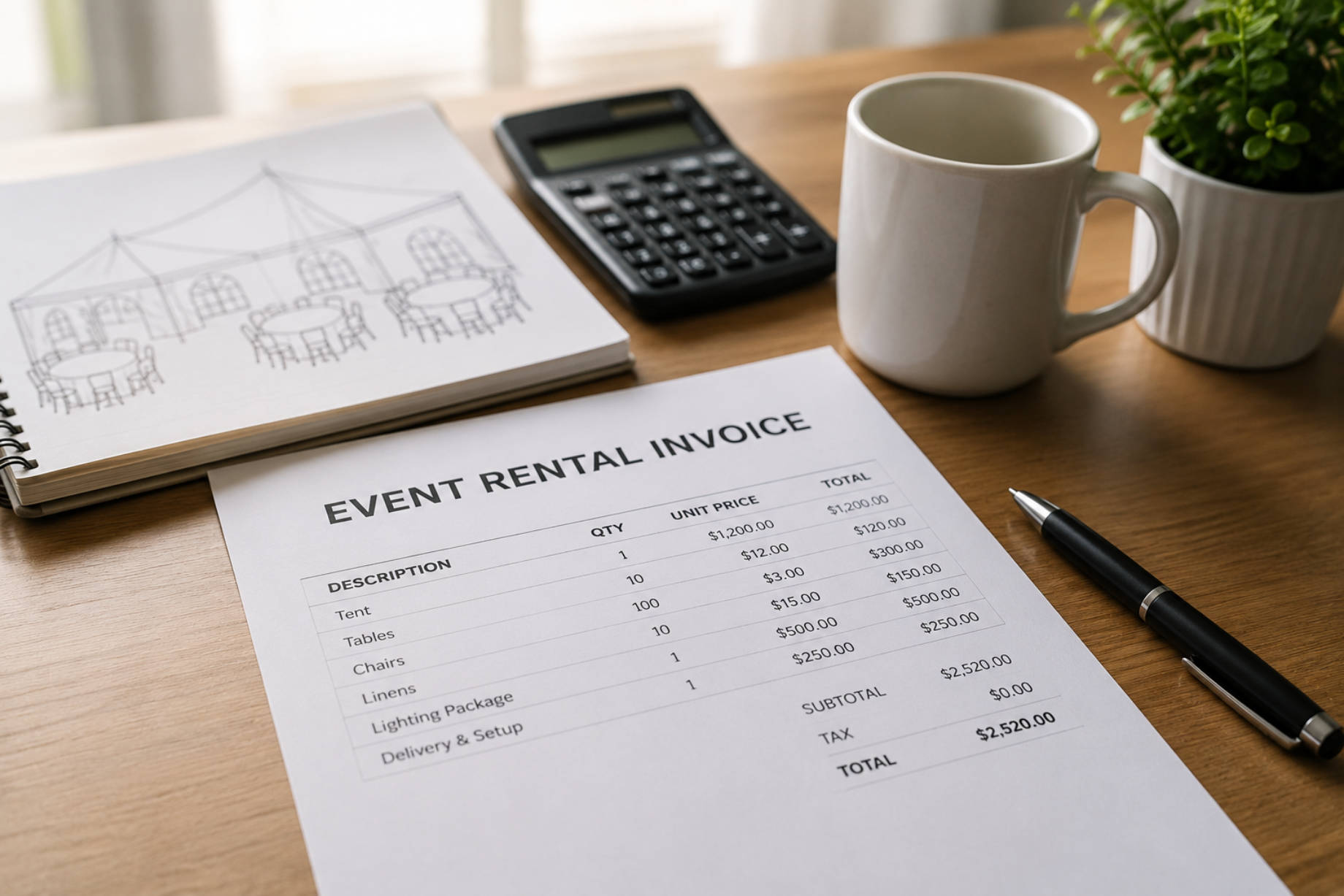
Event rental quotes look comprehensive until you’re on-site the day before the event and discover something that wasn’t on the list. The chairs that were specified don’t have the seat pad option that was assumed. The linens are the right color but the wrong length for the table dimensions that were confirmed. The lighting package that looked complete in the quote doesn’t include the power distribution equipment needed to run it at the property’s available outlet locations.
These aren’t unusual situations. They’re the predictable result of a rental process where the quote was built against stated requirements rather than against a full understanding of the event, the venue, and how all the elements interact with each other in the actual space. The gap between what was quoted and what was needed only becomes visible once setup begins — at which point options are limited and whatever solution exists is more expensive and more stressful than it would have been with better upfront planning.
Event rentals that work without these gaps are almost always the result of a rental provider who asked the right questions before generating the quote — about the event program, the property layout, the power situation, the other vendors involved, and what the space needs to look and function like when guests arrive. greenwichtent.com is where events in Fairfield County access Greenwich Tent Company’s full rental inventory alongside exactly this kind of planning depth — the questions that surface what’s actually needed before it becomes a problem.
What Event Rental Planning Should Actually Cover
The furniture conversation is more nuanced than most hosts realize before they’ve been through a tented event. Round tables seat guests differently from farm tables, which seat guests differently from rectangular banquet tables — and each configuration produces different circulation patterns through the tent, different linen requirements, and different relationships between the dining area and the dance floor or bar. Deciding on table type without mapping the full floor plan produces a furniture spec that may not work the way the event program requires.
Chair selection connects to both aesthetics and logistics. Chairs that look appropriate for the event’s visual register, that stack and transport efficiently for the rental company, and that hold up through an evening of outdoor event use are narrower criteria than they initially seem. The chair that’s right for a formal fundraiser gala is different from the one that’s right for a casual garden party, and both are different from the chair that works best for a corporate awards dinner. Selecting without this context produces furniture that’s technically chairs at the cost of appropriateness.
Linen specifications depend on table dimensions, which depend on the furniture selection, which depends on the floor plan, which depends on the tent footprint — a chain of dependencies that means linen decisions made early in the planning process without the downstream information tend to require revision. Getting them right the first time requires working through the full chain before committing to any individual element.
Why the Delivery and Setup Sequence Matters
Event rental logistics involve a specific sequence that affects every other vendor working in the same space. Flooring goes in before furniture. Furniture is set before linens are dressed. Lighting is rigged before the tent is closed for an evening event. When the rental company controls this sequence in coordination with the other vendors — rather than managing its own delivery timeline independently — setup proceeds without the conflicts that occur when vendors arrive out of sequence and work around each other.
Greenwich Tent Company handles event rentals across Fairfield County as a coordinated service rather than a delivery operation — with the planning depth to build a rental spec that reflects the actual event, and the installation process to execute it without the gaps that show up when the quote and the reality don’t match.
