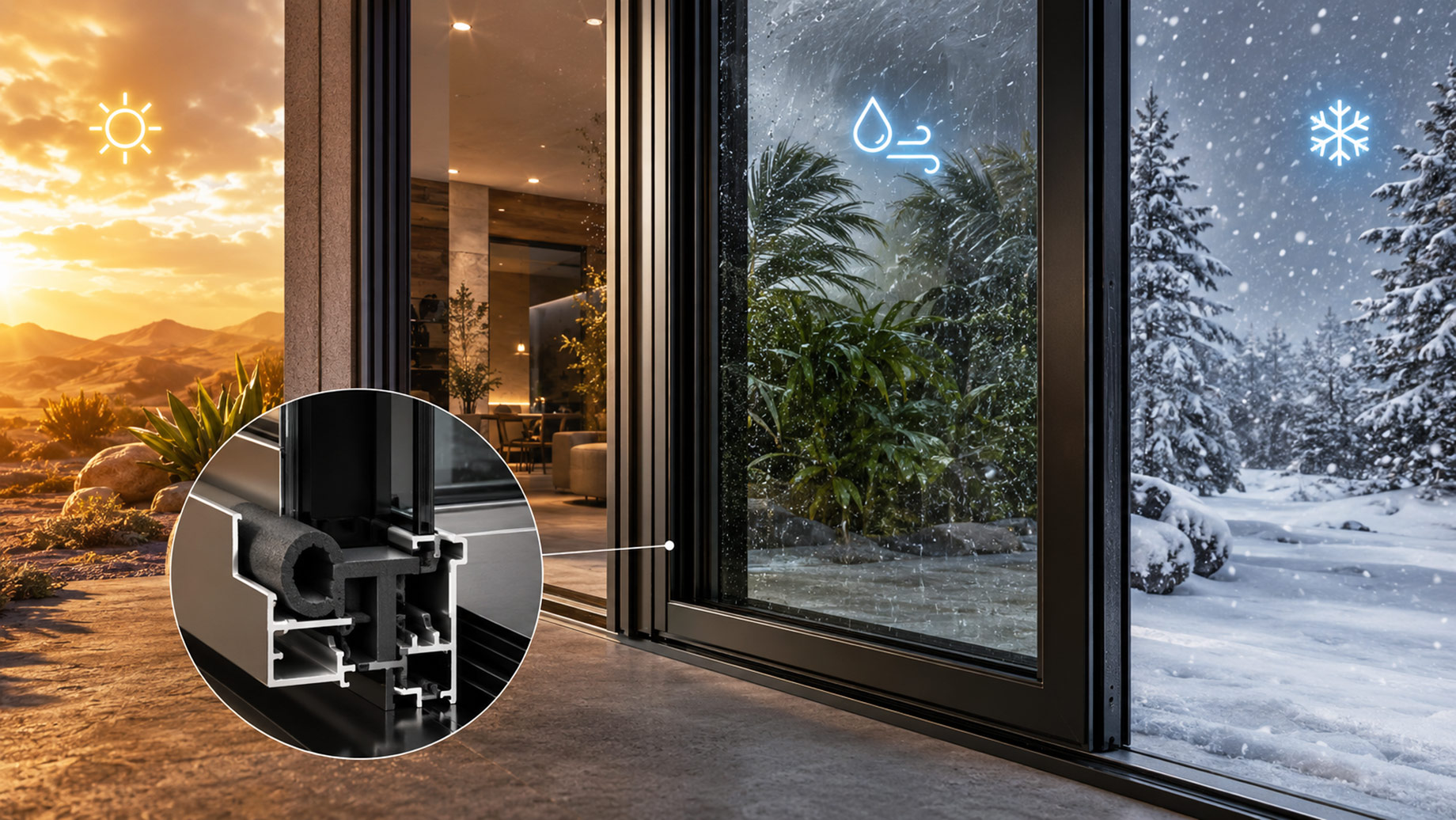
Window and door seals face very different conditions depending on climate. Strong sunlight can harden some materials, cold weather can reduce flexibility, coastal air can affect nearby metal parts, and humid conditions can encourage dirt or mold.
Choosing a seal by shape alone may produce early failure. Material, compression, movement, and maintenance must all fit the environment.
Start with the Exposure
Record:
- Minimum and maximum temperature
- Direct sunlight
- Wind-driven rain
- Humidity
- Salt or industrial pollution
- Cleaning chemicals
- Opening frequency
- Hinged or sliding movement
An indoor seal in a controlled office has a much easier job than a west-facing exterior door near the coast.
Understand Common Materials
EPDM is widely used for exterior weather resistance and can perform across a broad temperature range. Silicone remains flexible in demanding heat and cold. PVC may offer an economical choice for many applications. TPE combines rubber-like behavior with thermoplastic processing. Foam compresses easily, while brush seals suit sliding contact.
Suppliers of door and window sealing strips may provide several materials because no single one is best everywhere.
Always check supplier data for the exact compound. Two seals described with the same general material name can have different hardness, additives, and service limits.
Hot and Sunny Climates
Ultraviolet light and high surface temperature can cause fading, hardening, cracking, or loss of recovery.
Choose exterior-grade material with suitable UV and heat resistance. Dark frames can become much hotter than the surrounding air, so ambient temperature alone is not enough.
Avoid stretching during installation. Heat can accelerate retraction and open gaps at corners.
Inspect sun-exposed elevations more often than shaded sides of the building.
Cold Climates
A seal that becomes stiff in cold weather may not follow frame movement or uneven gaps. Closing force can increase, and brittle profiles may crack.
Review low-temperature flexibility and compression recovery. Ensure drainage paths remain clear because trapped water can freeze and distort the opening.
Hardware alignment also matters. Thermal movement can change the gap between the panel and frame.
Wet and Humid Climates
The seal should resist water, but the frame must also drain. Do not expect one strip to block every possible water path.
Use layered weather design where appropriate: an outer barrier, drainage channel, and inner air seal. Keep weep holes open.
Choose cleaning methods that remove dirt and biological growth without attacking the material or adhesive.
Coastal and Polluted Areas
Salt and industrial contamination can collect around seals and accelerate corrosion of fasteners, tracks, and retainers.
Select compatible metal finishes and clean deposits regularly. Check whether the seal compound tolerates oils or pollutants present at the site.
Corroded hardware can move the panel out of alignment even when the seal remains healthy.
Match Hardness and Compression
Hardness affects closing force, recovery, and support. A very soft seal may accommodate an uneven gap but may not provide enough resistance. A hard profile may be durable but difficult to compress.
Measure the gap at several points and use the recommended compression range. Too little leaves leakage; too much can permanently flatten the material.
Request a short sample and test it through temperature and repeated operation where the project risk is high.
Match the Seal to Movement
Hinged doors often compress a bulb or fin directly. Sliding panels move across the seal and create friction.
Brush or low-friction profiles may suit sliding applications. Glazing seals must support glass while avoiding harmful point pressure.
Do not use a profile designed for static compression where constant sliding will tear the surface.
Check Material Compatibility
Paint, adhesive, sealant, cleaner, and lubricant can interact with the seal. Some chemicals cause swelling, discoloration, softening, or loss of adhesion.
Confirm compatibility with the frame finish and maintenance products. Do not apply general-purpose solvent or glue without approval.
For adhesive-backed seals, surface preparation and installation temperature affect bond strength.
Plan Corners and Joints
Climate-related movement often exposes weak corners first. Avoid stretched seals and poorly joined ends.
Follow the recommended method for cutting, bonding, notching, or molded corners. Check transitions between vertical, head, and threshold profiles.
After installation, operate the opening several times and inspect contact.
Create a Replacement Record
Record profile dimensions, material, hardness, color, supplier, product code, and installation date.
When consulting a weather-seal profile manufacturer, share climate exposure, gap range, frame material, and movement type instead of providing only a photograph.
Store a labeled sample with building maintenance records. This helps future teams identify the correct part.
Inspect by Climate Risk
Set inspection frequency according to exposure. Sun-facing seals, high-use entrances, coastal openings, and wet façades need more attention.
Look for cracks, flattening, shrinkage, loose ends, dirt, and uneven contact. Repair hardware or drainage before replacing a seal that is not the root cause.
Approve a Representative Mock-Up
Before ordering the full quantity, install a short section in a representative opening. Check insertion effort, corner quality, closing force, surface contact, and appearance. If possible, expose the mock-up to water and a realistic temperature cycle. A small trial can reveal an incorrect groove size or compression level before the same error reaches every window or door.
Record the approved profile, material, color, supplier code, and installation method. That record makes future purchasing and replacement more reliable.
Conclusion
Climate affects seal flexibility, recovery, adhesion, and service life. Good selection begins with real temperature, sunlight, moisture, pollution, and movement.
Compare exact material data, measure the gap, test compression, and protect corners and drainage. A climate-appropriate seal performs longer and helps the complete opening remain comfortable and weather-resistant.
