Luxury renovation is often associated with demolition, long schedules and the removal of perfectly functional surfaces. Yet many interiors do not need to be rebuilt from the ground up. They need a carefully considered visual transformation.
Architectural interior film offers a practical alternative. Applied over suitable existing substrates, it can renew walls, doors, cabinetry, furniture and built-in features without the disruption of conventional replacement. For homeowners, designers and property developers, this creates a faster route to a refined interior while preserving much of what is already in place.
A Different Approach to Interior Renovation
Traditional renovation commonly involves removing finishes, disposing of old materials, ordering replacements and completing several installation stages. Even a focused upgrade can affect access to kitchens, bedrooms, offices or common areas for an extended period.
Interior film treats existing surfaces as a foundation rather than waste. Once the substrate has been assessed, repaired where necessary and made smooth, the selected film is measured, cut and professionally applied. This makes it particularly useful for occupied homes, rental properties, hotels, retail spaces and offices where controlling noise, dust and downtime matters.
The approach still depends on careful preparation. Damaged or unstable surfaces may require repair, while professional installation is important around corners, joints and complex forms. However, when the underlying surface remains structurally sound, wrapping can avoid unnecessary removal.
Luxury Finishes Without Heavy Materials
Modern architectural films can reproduce the visual character of wood, stone, concrete, metal, leather, textiles and sophisticated solid colours. This gives designers freedom to introduce material contrast without the weight, thickness or installation complexity of many traditional finishes.
A dark walnut appearance can transform fitted wardrobes. Stone-inspired surfaces can update reception counters or feature walls. Brushed metallic finishes can add depth to doors, shelving and decorative panels.
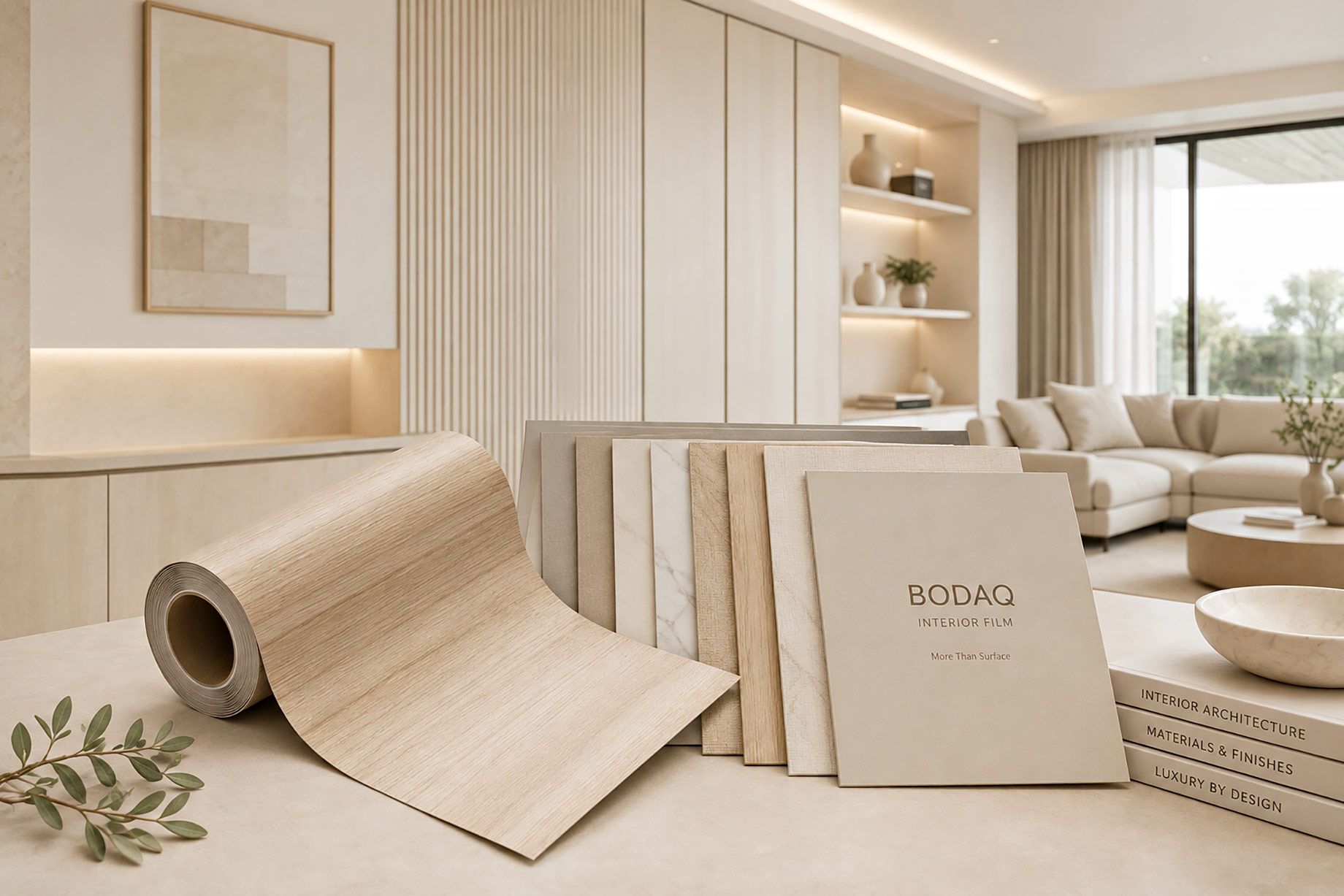
BODAQ Interior Film, developed by Hyundai L&C, is available in more than 400 curated patterns for walls, furniture, doors, ceilings and commercial interiors. Its collections include wood, marble, stone, concrete, metal, fabric, leather, painted wood, solid colours and super-matte finishes.
Less Disruption, More Design Flexibility
Speed is valuable in any renovation, especially in luxury properties where disruption affects daily life and carefully managed spaces. Architectural interior film can shorten the surface-finishing stage because there is less demolition, debris removal and material handling.
It also supports targeted design changes. Instead of replacing an entire kitchen, a project may focus on cabinet fronts, panels and selected surfaces. Rather than ordering new built-in furniture, existing joinery can be coordinated with an updated design scheme. Hotels, offices and retail spaces can refresh high-visibility areas while reducing operational interruption.
The material can also follow flat surfaces and certain curved or detailed forms that are difficult to recreate using rigid panels. BODAQ uses a self-adhesive system with an air-channeled liner designed to simplify positioning and application during professional installation.
A More Resource-Conscious Decision
Sustainable renovation is not only about choosing new products. It is also about questioning whether usable components need to be discarded.
Retaining existing doors, cabinetry, counters and furniture can reduce demolition waste and limit the need to manufacture, transport and install complete replacement elements. Surface renewal can therefore help projects balance visual improvement with more thoughtful material use.
BODAQ states that its films are developed with reduced VOC emissions and tested against international performance and safety standards. Specific products include documented durability, maintenance and fire-performance information, allowing architects and project teams to assess suitability for each application.
Renovate What Already Exists
Architectural interior film is not suitable for every situation. Structural problems, severe water damage and failing substrates still require proper repair or replacement. But where existing surfaces remain sound, demolition may be an unnecessary first step.
For luxury interiors, the value lies in combining efficiency with design control. Architectural film can preserve existing elements, reduce disruption and introduce convincing premium finishes across multiple surfaces. By renovating what already exists, homeowners and designers can achieve a substantial transformation without turning every update into a major construction project.
