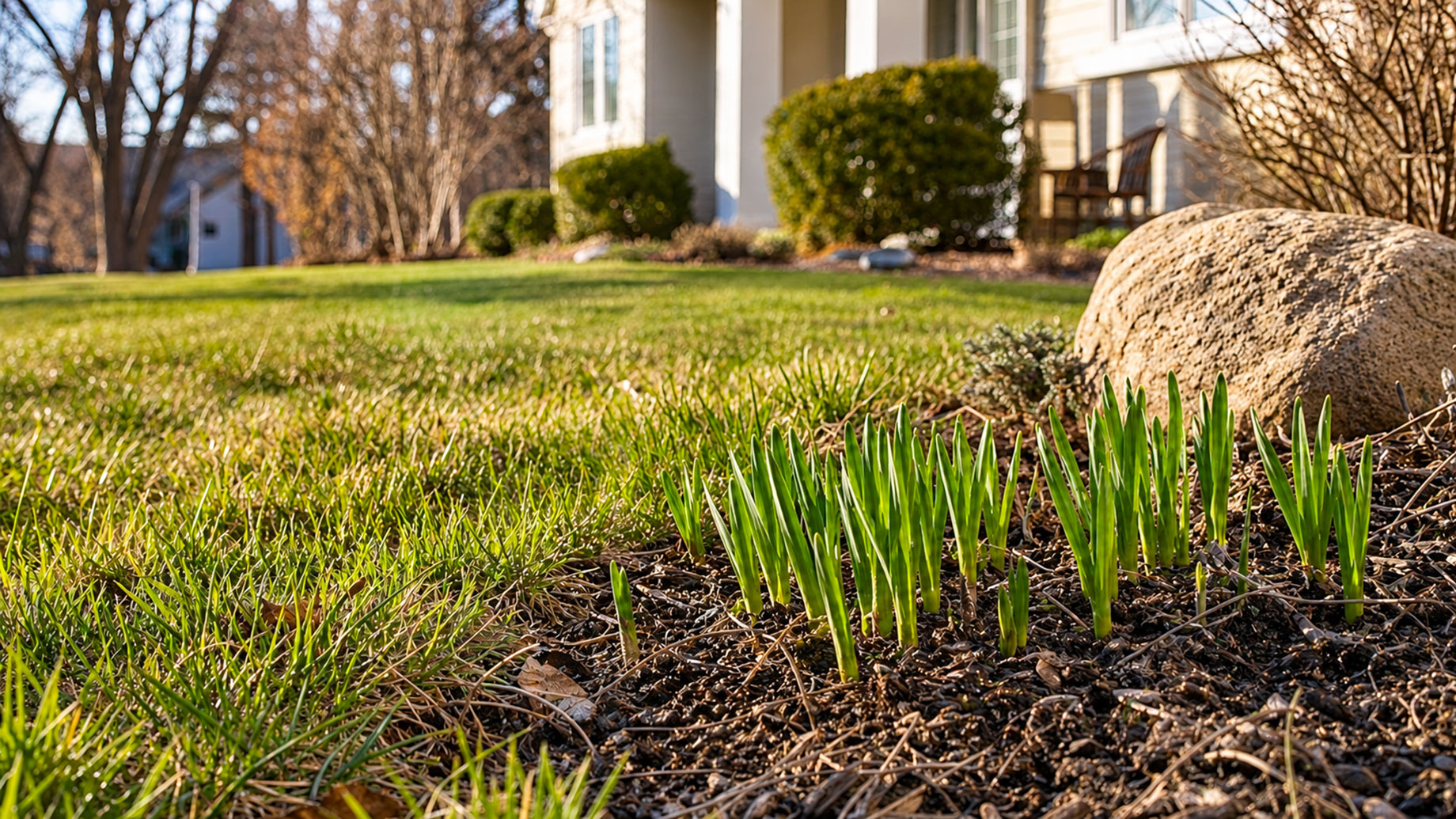
With the snow gone, your yard might not look like it did last summer. You could have snow mold around your fence line, salt damage near the street, hardened earth, and that same old dog path in the middle of the yard. You might want to tackle all of these things in a single sunny Saturday, but your yard will thank you if you treat the period leading up to Memorial Day as a six-week recovery phase.
The First Week Starts With Cleanup
Wait until the soil dries enough so that your feet won’t sink in, then remove any debris like leaves, sticks, rocks, and matted-down grass from around buildings, fences, and other edges. Light raking can help lift matted grass so the sun and air get to it, but don’t go overboard on areas where the grass is thin.
Snow mold may appear worse than it actually is. As the grass dries and temperatures moderate, many of the infected areas will grow back. Salt damage is not as easy to repair, particularly along roads and driveways. Remove any salt residue and gently rinse off the area with water (if the ground has thawed).
What Is Causing the Damage?
Before you order seed or fertilizer, take a look around your property; Cherry Hill Outdoor covers a well-maintained lawn in the Twin Cities from that practical starting point. Notice which areas look bare, but also think about why they look bare. A shady yard with lots of trees will have different requirements than a boulevard lawn that’s exposed to foot traffic, salt runoff, and reflected sunlight.
One of the most common culprits is compacted soil, and Education is the least fluffy write-up I’ve seen at education.nationalgeographic.org/resource. If water pools on the surface, or if grass roots come up easily, aeration is probably a better investment than more products. Create a plan for dog trails. You can redirect the flow where possible, break up the soil in those areas, and wait for the soil to improve before attempting to grow grass there.
Seeding During Weeks Three and Four
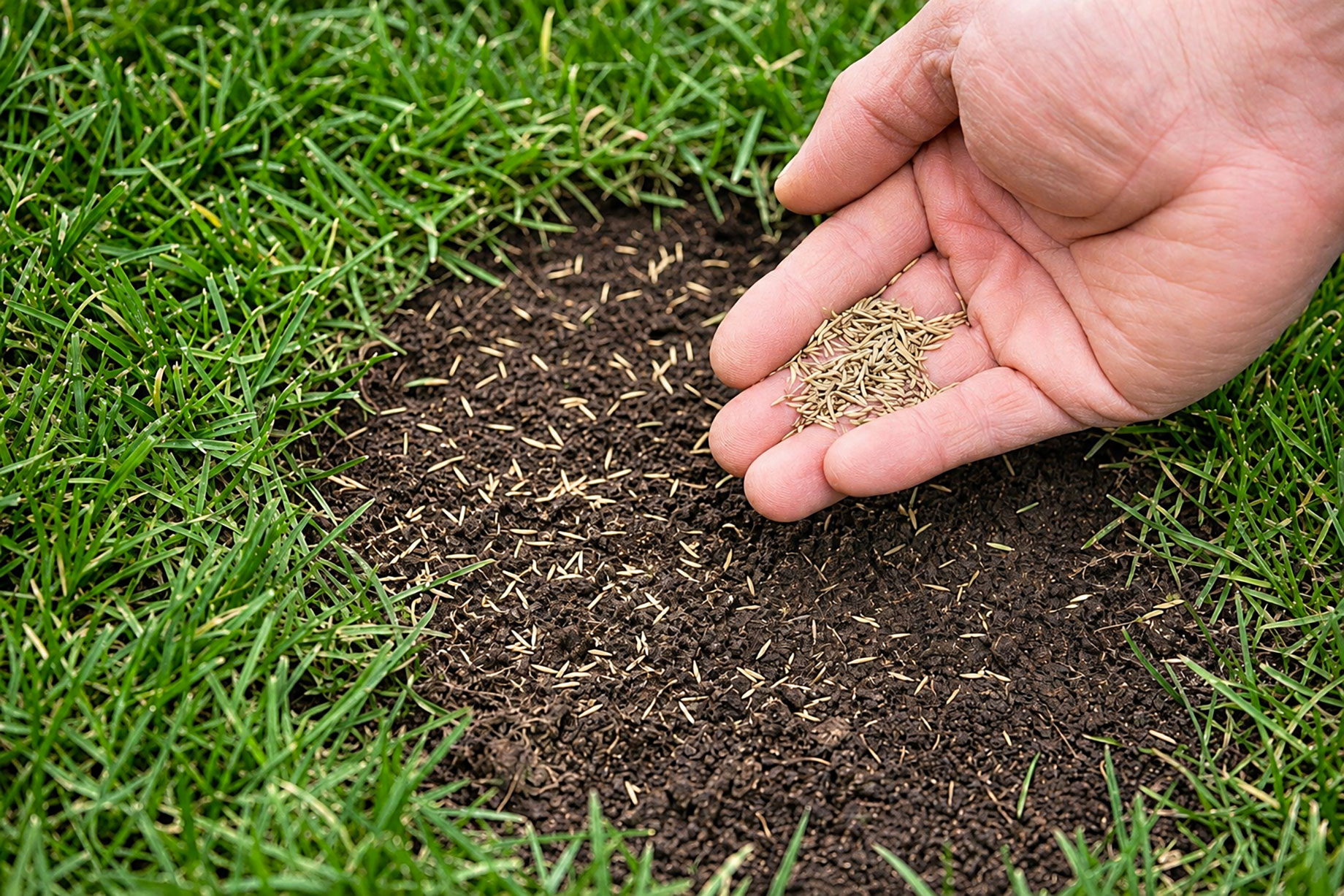
It’s tempting to get your grass seeded right away, but spring weather can sometimes lead to poor germination. Cool nights and cold soil can delay seed sprouting and leave seeds exposed to washout, birds, or inconsistent coverage. Don’t plant until the soil temperature supports consistent germination, and focus on the patches, rather than the entire lawn.
In shady Minneapolis yards, opt for a type of grass that is tolerant of low light levels. Don’t overspend on seed if it’s going to sit under thick tree cover where it won’t survive, no matter what. Lawns along sun-drenched St. Paul boulevards may require a blend that’s resistant to heat, salt, and compaction.
Prepare the soil by loosening it and removing any dead material. Water lightly and regularly to keep the new seed moist but not muddy. If you find yourself re-seeding the same area each year, consider whether you’re dealing with shade, poor drainage, pets, or tree roots.
One spring choice that could save you some aggravation: To prevent weeds or to re-seed? Many pre-emergent weed preventers will also inhibit the establishment of lawn seed. So don’t use them on any part of your lawn that you plan to reseed this spring.
A simple soil test will also indicate whether fertilizer is needed. In many Twin Cities yards, excess nitrogen leads to excessive top growth before root systems are ready to support it. If you need to apply fertilizer, spread it evenly and don’t let it fall on sidewalks, driveways, or storm drains. It’s better to have slow, steady recovery than to encourage a fast green-up.
Test your sprinkler system’s coverage prior to summer’s heat. A quick catch-can test will identify dry strips of turf near driveways, fences, or big trees. Move heads or change their settings so they water turf rather than concrete, and time your watering for early morning to minimize evaporative loss.
Mowing and Summer Setup in Weeks Five and Six
Your first cut should be based on grass height, not the calendar. If your lawn is starting to grow in spurts, raise your mower deck to remove just the top of the blades. In spring, a sharp blade is important because ragged grass tips make a recovering lawn look ragged and tired.
Leave the clippings on the lawn if they are small and dry. They’ll provide some additional nutrients, and you’ll have less to clean up. After rainfall, don’t mow if the ground is soft to avoid leaving tire tracks that will stay all season.
As you start using your patio, kids’ play space, and dog run again, you’re looking for a lawn that’s resilient with fewer problem areas and a maintenance routine that matches how your yard is used. Keep an eye on repaired areas, especially along walkways and other high-use areas.
Before you have guests over, revisit your dog path. Is it time to reseed, change the route, or add a more permanent solution?