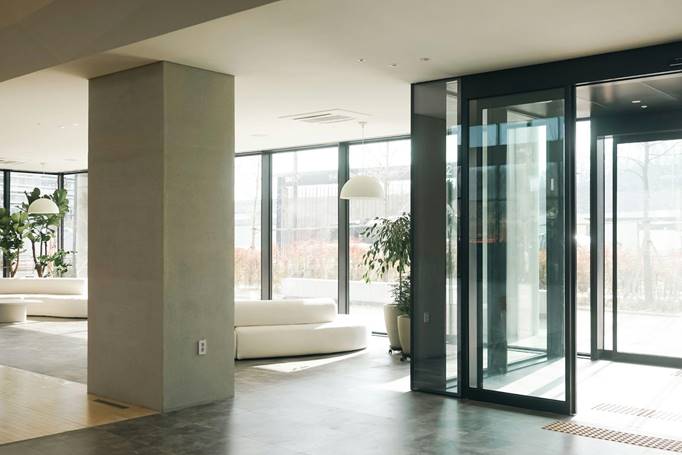
BS EN 16005 is the European safety standard covering power operated pedestrian doorsets, and any business specifying automatic sliding, swing, or revolving doors for a commercial premises needs a system that meets it, since compliance affects both legal liability and the safety of everyone using the entrance. The standard sets requirements around presence detection and anti collision safeguards that prevent a door closing on someone still passing through. A specialist such as Dasco Entrance Technology builds every automatic door system to meet this standard as a baseline rather than an optional extra.
What BS EN 16005 Actually Covers
BS EN 16005 sets out the safety requirements for power operated pedestrian doorsets used across the European market, covering automatic sliding, swing, revolving, and folding door types. The standard addresses how a door should detect people in its path, how quickly it can safely open and close, and what safeguards need to be in place to prevent injury during normal operation. Any business specifying automatic doors for a commercial premises should treat compliance with this standard as a non negotiable baseline requirement rather than a feature to compare between suppliers.
Why Presence Detection Matters for Safety
Presence detection uses sensors positioned around an automatic door to identify when someone is standing in or approaching the doorway, ensuring the door does not begin to close while a person is still moving through the opening. This matters particularly for high footfall entrances such as retail stores and hospitals, where several people may be passing through the doorway in close succession at different walking speeds. A well specified presence detection system accounts for this variability rather than assuming a single, consistent pace of movement through the entrance.
Anti Collision Features and How They Work
Anti collision features add a further layer of protection beyond basic presence detection, using sensors to identify an object or person directly in the door path and stop or reverse the closing motion before contact occurs. This is particularly important for busy commercial entrances where children, wheelchair users, or people carrying goods may move through the doorway less predictably than an able bodied adult walking at a steady pace. Testing these features during commissioning confirms the system responds correctly across a range of realistic scenarios rather than only in ideal conditions.
Compliance Alongside the Equality Act 2010
Automatic doors in commercial buildings need to satisfy the Equality Act 2010 alongside BS EN 16005, since accessibility and safety requirements overlap considerably for entrance systems used by the public. A door that meets safety standards but creates an unnecessary barrier for wheelchair users or people with mobility impairments falls short of what businesses are legally expected to provide. Specifying a system that addresses both sets of requirements together, rather than treating them as separate concerns, produces an entrance that genuinely works for every visitor to a commercial premises.
What Happens if a System Falls Short of Compliance
A non compliant automatic door system exposes a business to genuine safety risk and potential legal liability if an incident occurs, since building inspectors, insurers, and health and safety assessments will expect entrance systems to meet recognised standards. Beyond the immediate safety concern, non compliance can also complicate insurance claims or building certifications if a door system is found not to meet BS EN 16005 during an inspection or after an incident. This makes compliance a practical business consideration as much as a safety one.
Checking Compliance Before Installation Begins
Verifying compliance before installation begins means confirming the specific door model and configuration being proposed actually meets BS EN 16005, rather than assuming compliance based on the manufacturer general reputation. A reputable supplier will readily provide documentation confirming compliance for the exact system being installed, along with details of how presence detection and anti collision features have been tested. Asking for this documentation as part of the specification process, rather than after installation, avoids any uncertainty about whether the finished entrance genuinely meets the required standard.
Treating Compliance as a Baseline, Not an Extra
BS EN 16005 compliance should function as a baseline requirement for any automatic door specified on a commercial premises, not a differentiator to weigh against price or appearance. Working with a supplier that builds every system to this standard as standard practice, and can document compliance clearly, gives a business confidence that its entrance genuinely protects staff, visitors, and the organisation from avoidable safety and liability risk.