A key part of what retail display props do is define the way products, collections or seasonal campaigns are displayed inside retail environments. In addition to aesthetics, they play a crucial role in storytelling, brand reinforcement, and merchandising purposes. But to make effective display props, it’s not enough to have great ideas. The choice of materials, manufacturing techniques, surface finishes, structural design and installation all play a role in the finished product. Knowing these factors will enable retail designers, visual merchandising teams, and project planners to make informed choices that will consider aesthetics, durability, functionality, and production efficiency.
Understanding the Foundations of Retail Display Props
Retail display props are bespoke-designed items that are used to add to the visual merchandising, creating interesting environments to support products and retail concepts. These can range from sculptural installations, window display features, podiums, decorative structures, branded elements and seasonal decorations.
Display props are not the same as regular retail fixtures; they can be made for a specific campaign or store concept. All projects start with a thorough design intent and dimensions review, installation requirements and expected life cycle. The early decisions have an impact on all aspects of production, from engineering to fabrication and finishing.
A successful display prop is a blend of creative vision and technical precision. Big sculptures have to be lightweight enough to carry, and small props for decorative purposes have to be carefully made to retain any finer details. One of the key elements of professional display prop production is finding a balance between looks and strength.
Manufacturers are using new fabrication technologies in addition to the traditional craftsmanship to ensure quality and uniformity in individual projects and mass installations.
Choosing Materials That Match Display Objectives
One of the most critical choices for any custom display project is the material used, as each material provides unique structural, visual and manufacturing properties. Instead of looking at the looks, the project teams consider weight, quality of finish, complexity of production, durability, transportation, and installation conditions.
Retail display prop materials are fibre glass reinforced plastic (FRP), acrylic, metal, wood, MDF, resin and composite materials. Their uses are different depending on the project requirements.
Key Material Considerations
- Fiberglass is ideal for sculptural shapes that are too large and need strength without the weight.
- Acrylic offers maximum transparency and a modern, uncluttered look for high-end shops.
- Metal provides rigidity to frames, fixtures and architectural display elements.
- MDF and wood are smooth painted surfaces and warm finishes for platforms and presentation units.
- Composite materials are a combination of two or more materials used to attain certain visual and engineering objectives.
The choice of material also influences production timetables. Some materials need to be moulded before manufacturing can be made, and others can be directly machined or fabricated. Knowing these differences will minimize unwanted changes in development.
Another important consideration is compatibility with surface finishes. Some coatings work better on some substrates, so it’s important to plan to get the look you want.
Custom Retail Display Props Guide for Better Manufacturing Decisions
To produce a successful display, it is essential to know what design concepts are and what they are not in the manufacturing process. A custom retail display props guide will equip you with comprehensive knowledge that will help you make the leap between creative planning and production execution.
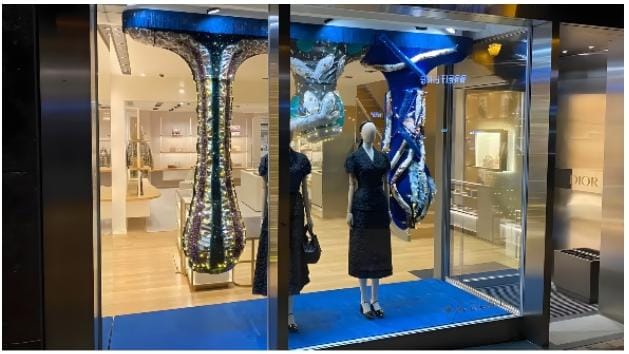
An effective guide doesn’t just talk about the look; it also discusses how the engineering choices influence stability, how manufacturing techniques influence precision, and how finishing techniques influence the presentation quality.
The manufacturing process is generally a sequential process starting with concept evaluation, technical drawings, material planning, 3D modeling, sample development, production, finishing, quality inspection and finally protective export packaging. While every workflow is unique based on the project’s complexity, a logical sequence of production helps to minimize delays and ensure consistency.
Professional visual merchandising teams also prepare Detailed Project Information before the manufacture. Images, dimensions, material preferences, finish details, installation areas, quantity and delivery schedules all help to facilitate communication and production planning.
Manufacturers that have in-house production can have different disciplines in the same facility, with engineering, fabricators, finishers and quality checking all working together on each stage of production. This coordinated approach ensures the continuity of the project from prototype to final installation.
For example, VM Display Solutions has adopted this integrated manufacturing approach to ensure that their entire manufacturing process – from concept to prototyping, to fabrication and finishing, to inspection and worldwide delivery – is consistent and that quality standards are upheld in retail display projects of all types.
Surface Finishes That Define Visual Impact
The surface finish is as important as the shape in the appearance of a retail display prop. Surface treatments affect the texture, reflectivity, durability and overall appearance to shoppers.
Modern manufacturing processes provide numerous finishing options that are appropriate for various materials and desired design goals. Choosing the right finish involves knowing where the display will be used, the look you want to achieve and the environment it will be exposed to.
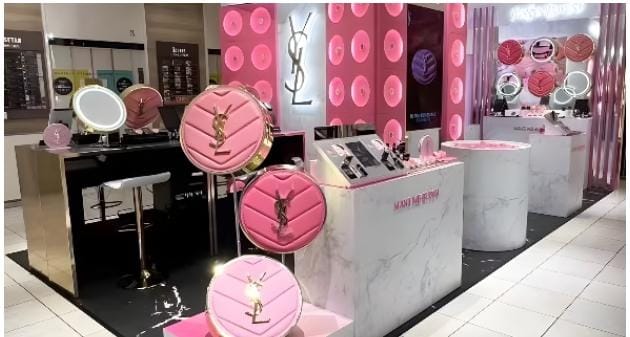
Common Surface Finishing Options
- High-gloss spray coatings for smooth premium surfaces.
- Matte finishes for understated contemporary displays.
- UV vacuum metalizing for metallic reflective effects.
- Physical Vapor Deposition (PVD) coatings for durable decorative metal finishes.
- Electroplated appearances for luxury-inspired accents.
- Gold leaf applications for handcrafted premium presentation.
- Flocking for soft textured surfaces.
- Leather wrapping for sophisticated tactile finishes.
QC is a critical component in the finishing process. Even color, adhesion of the coating, smooth surface, edge work and scratch resistance all help to give a professional look. Under the light of retailing inspection is an important step in the production line because even little differences are very noticeable in the light.
Finishing processes also have varying effects on different materials. Acrylic can sometimes need to be polished prior to coating, and fiberglass surfaces may be sanded and primed for perfect paint application.
Manufacturing Precision Behind High-Quality Display Props
The combination of skillful craftsmanship and accurate manufacturing technologies leads to outstanding retail display props. Each of the production methods has an impact on the quality, function and durability of the final display.
Laser cutting, bending, welding, grinding and protective finishing are all processes that are commonly used in metal fabrication to create structural frameworks and supporting components. At these stages, precision is crucial to guarantee that assembled props are stable during installation and use.
3-D printing is also now a key manufacturing technology. It is often employed for making prototypes, master patterns, intricate details for decoration and complex shapes which might otherwise involve a lot of manual sculpting. These prototypes can be used for mold making to produce larger quantities once approved.
When using acrylic panels, MDF components and other engineered materials, computer-controlled machining provides additional accuracy. Precision cutting ensures clean edges and uniform dimensions, reducing assembly problems.
Display props for large-scale sculptural pieces may use multiple manufacturing processes within the same project. Inside, metal structures support the structure, fiberglass shells give shape to the exterior, acrylic components add transparency, and decorative elements add to the appearance. The use of a variety of materials enables manufacturers to create innovative designs that are both functional and durable.
Also key is the monitoring of quality during the production process and not at the end of the process only. Dimensional verification, finish evaluation, assembly testing and protective packaging all contribute to ensuring display props arrive ready for installation.
Conclusion
Retail display prop sourcing is more than just picking out eye-catching designs. The performance of materials, manufacturing techniques, structural engineering, surface finishing, production planning and quality control all help to create displays that not only perform well, but also have a strong visual impact.
A holistic manufacturing process allows retail designers and visual merchandisers to convert creative ideas into long-lasting, high-quality installations for a wide variety of retail typologies. Knowing how materials, finishes and production methods interact can enable project teams to make educated choices that will enhance efficiencies, ensure design continuity, and help ensure that the project is executed from concept sketches to finished storefronts.