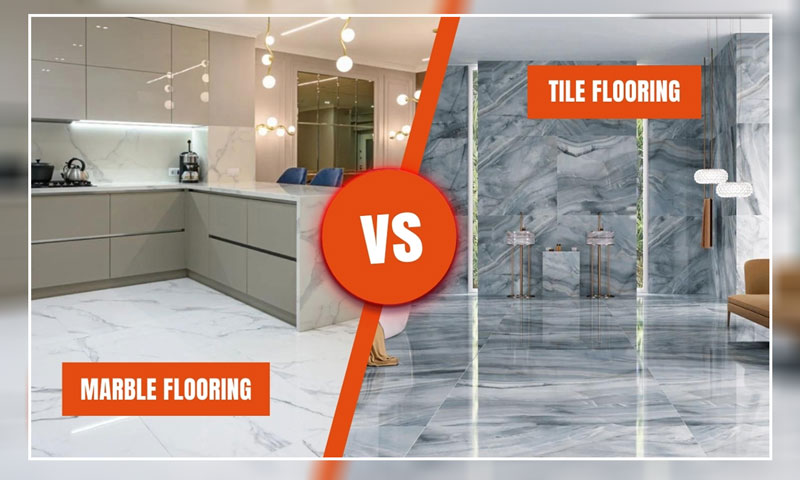
In many spaces, marble-look tiles and porcelain tiles get shortlisted for the same spaces. Both can work on floors and walls, but the final result is not the same. Here, marble tiles mean tiles with a marble-style design, not real marble slabs. People usually choose them for the soft veins, light base and polished marble-like look.
Porcelain tiles are made from dense clay and are available in plain, stone-look, wood-look and marble-look designs. That is why marble tiles vs porcelain tiles should be compared by room use, finish, cleaning needs and budget. A living room may need a rich surface. A kitchen may need easier cleaning. A bathroom may need better water handling. The better choice depends on how the space is used every day.
What Are Marble Tiles?
For interiors, marble tiles are used when you want the floor or wall to have a marble-like look without using real marble slabs. You will find them with soft grey veins, beige flow, white marble patterns, dark stone-style lines or a polished finish.
These tiles are different from natural marble tiles, which are cut from real stone. Marble-look tiles are produced in controlled designs, so you can get a more planned pattern across the room.
Where Marble Tiles Work Well
Marble-style tiles can suit spaces where you want a bright and refined surface without a very loud design. They are often used in living rooms, bedrooms, entrances, TV walls, bathroom vanity walls and kitchen backsplashes.
Use them when:
- You want a marble-style look.
- You prefer a clean floor or wall design.
- You want soft veins instead of heavy patterns.
- You need a tile surface for regular home use.
- You want the room to look light and open.
Natural marble veining has its own charm, but marble-look tiles are useful when you want a similar visual style in a tile format.
What Are Porcelain Tiles?
Porcelain tiles for interiors are made using refined clay and high-temperature firing. They are dense, hard and available in many designs. Porcelain flooring can be used in different rooms because it comes in many finishes, sizes and surface textures. You can find plain porcelain, stone-look porcelain, concrete-look porcelain and porcelain tiles that look like marble.
Where Porcelain Tiles Work Well
Porcelain tiles are useful when you want a controlled surface with practical finish choices. They work well for floors, walls, kitchens, bathrooms, passages and busy rooms.
Use them when:
- You want easier cleaning.
- You prefer a more uniform design.
- You need many size options.
- The room gets regular movement.
- You want a surface that suits both dry and wet areas.
Glazed porcelain tiles can also carry detailed designs, including marble, stone, cement and wood effects.
Marble Tiles vs Porcelain Tiles: Key Differences
Both tiles can look good indoors, but the difference comes in design range, cost, surface strength, cleaning and room suitability. Compare them based on the area where they will be used, not only by how they look in a sample.
Look and Design
Marble vs porcelain tile for interiors mainly starts with the look. Marble-style tiles focus on a marble effect, usually with white, beige, grey or stone-like veining. Porcelain tiles offer a wider design range. They can look like marble, cement, wood, stone or plain colored surfaces. This gives more freedom when the room needs a very specific style. If your room needs a polished, bright look, marble-style tiles can work well. If you want more surface choices, porcelain may give you more options.
Cost and Budget
Marble vs porcelain tile cost depends on the tile body, size, finish, brand, design and installation. Marble-look tiles may be affordable or premium depending on the product. Porcelain also comes in many price ranges. A simple porcelain tile may cost less than a large-format premium tile. A marble-look porcelain tile may cost more than a basic ceramic-style option.
Also check:
- Tile size
- Finish type
- Wastage
- Labour charges
- Cutting needs
- Grout and adhesive
- Surface preparation
Tile installation cost can rise when the layout has many cuts, corners, drains, niches or large pieces.
Durability
Marble vs porcelain tile durability depends on the actual tile material and where it is used. A floor tile should be checked for strength, thickness and floor suitability before buying. Porcelain is often used in busy areas because of its dense body. Marble-look tiles can also work well if the product is made for flooring and installed properly. For homes with chairs, furniture movement or pets, check for scratch-resistant tiles in the product details. Do not assume every glossy or polished surface will behave the same way.
Maintenance and Cleaning
The cleaning routine changes with the tile finish, grout line and room use. A glossy wall, matt floor, kitchen surface and bathroom floor will not need the same care, even if the tile design looks similar.
Marble-Look Tiles
Marble vs porcelain tile maintenance should be checked product by product. Marble-look tiles usually need regular sweeping and mopping, like most home tiles. The main thing is to avoid harsh cleaning products unless the care guide allows them. Glossy and polished finishes may show water marks or footprints faster in some rooms.
Porcelain Tiles
Porcelain is often chosen for low-maintenance flooring because many options are easy to wipe and clean. Still, grout lines need care because dirt can settle between tiles. For both tile types, tile cleaning and maintenance depends on finish, grout, room use and how often the floor gets wet or dusty.
Best Rooms for Each Tile
One tile type does not have to be used across the whole home. Marble-look tiles may suit feature areas and bright floors, while porcelain tiles can work better in rooms that need more practical surface choices.
Living Rooms
Living-room flooring can work with both marble-style and porcelain tiles. Marble-look tiles can give a bright and neat finish. Porcelain can give more control over texture and pattern. For open living rooms, large-format tiles can reduce joint lines and make the floor look cleaner. For compact rooms, medium sizes may be easier to handle.
Kitchens
Kitchen floor tiles should be easy to clean because spills, oil and food marks are common. Porcelain is often a practical choice here because it is available in many easy-clean finishes. Marble-look tiles can also work in kitchens, especially on walls or backsplashes. For floors, check the surface grip and cleaning needs before finalising.
Bathrooms
Bathroom wall tiles can be marble-look or porcelain, depending on the design you want. A marble-look wall behind a vanity can make the bathroom feel brighter. For bathroom floors, water-resistant tiles and slip suitability matter more than appearance alone. Always check product use before installing any polished or glossy floor tile in wet areas.
Feature Walls
Premium wall tiles in marble-look designs can work behind TV units, consoles, beds and bathroom vanities. Porcelain wall tiles can also create strong feature walls in stone, cement or marble effects. For walls, check tile weight, adhesive, surface level and joint planning before installation.
Finish, Texture and Size
Finish and size can change the final look more than people expect. A polished tile can brighten a room, a matt tile can soften it, and a large-format tile can reduce visible joints when installed well.
Polished and Glossy Finishes
A polished marble finish can make a room look brighter because it reflects more light. It works better in dry areas than on constantly wet floors. Glossy porcelain surfaces can also give a bright look, but they may show watermarks, dust or footprints depending on the color and use.
Matt and Textured Finishes
Matt finishes are useful when you want less reflection. Light textures can also help in spaces where grip matters. Tile finish and texture should be selected by room use. A wall can take more shine. A bathroom floor needs more practical checking.
Large and Medium Formats
Large tiles can give a cleaner look with fewer joints. Medium tiles may be easier around small rooms, corners and plumbing cuts. Interior floor tiles should be chosen after measuring the room properly. The same tile can look different in a small bedroom, open living room or narrow kitchen.
Final Thoughts
Marble or porcelain tiles should be chosen by room use, not only by how they look in a sample. Marble-look tiles are good when you want a clean, bright and marble-style finish. Porcelain tiles are good when you want more design control, more surface options and easier room-wise planning. The best tiles for home interiors are the ones that match your daily routine. A living room may need a polished look. A kitchen may need easy cleaning. A bathroom may need grip and water suitability. Good residential interior design comes from matching the tile to the space. Check size, finish, texture, maintenance and installation before you finalise the tile.