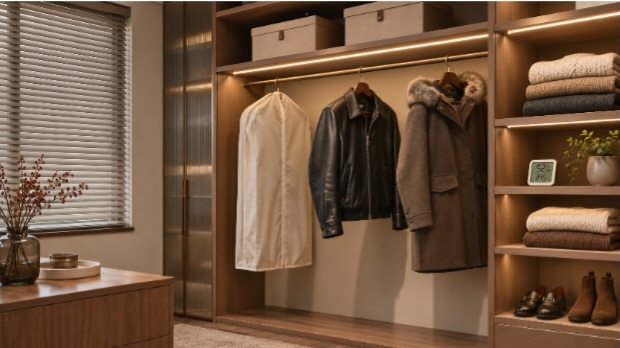
A closet can look immaculate and still damage what’s inside. A sweater develops stretched shoulders, while a rarely worn coat emerges creased or musty.
Dampness, sunlight, crowding, unsuitable hangers, and pests all pose risks. Thoughtful closet design addresses those problems before they shorten a garment’s life.
Whether you’re planning built-ins or improving an existing wardrobe, a few practical changes can help protect the clothes you already own.
Key Takeaways
A protective closet does more than keep clothes organized. Focus on these four principles when planning your space.
- Address dampness and keep the storage environment as stable as practical.
- Give garments enough room and support for their weight and shape.
- Choose smooth, clean surfaces and hangers suited to each garment.
- Store clothing clean and completely dry, then inspect it periodically.
Control Moisture, Heat, and Light
A closed closet can have different conditions from the room around it. Before buying equipment, check for the source of any persistent dampness or heat.
A small hygrometer measures humidity and can reveal recurring problems. Look for condensation, water stains, musty odors, leaks, or damp exterior walls.
- Fix moisture first: Repair leaks and address condensation before returning clothes to the space. A dehumidifier cannot solve an ongoing water leak.
- Make room for airflow: Leave clearance around vulnerable walls and avoid blocking designed ventilation. Louvered doors can help when the surrounding air is suitably dry.
- Use moisture controls carefully: A maintained dehumidifier or passive absorber can support a dry environment. Keep absorber containers upright and away from clothing.
- Limit heat: Position garments away from heating vents and other heat sources. Try to avoid severe or rapid temperature and humidity changes.
For windows, block direct sunlight with blinds or opaque coverings. UV-filtering film can reduce ultraviolet exposure, but visible light can still cause fading over time.
Choose low-heat LED fixtures with negligible UV output. Motion sensors reduce exposure by turning lights on only when needed.
Follow the fixture’s installation instructions and required clearances. Even LEDs should not be pressed against clothes or crowded shelves.
Plan Hanging Space Around Garment Shape
A crowded rail can crease fabrics and force you to pull clothes against each other. A better layout starts with what you own, not the maximum number of hangers.
Leave enough room to remove each piece without dragging it against its neighbors. About one inch between ordinary garments is a planning example, not a preservation standard.
Adjust the gap for fabric thickness and the shape of each garment. Structured shoulders and bulky outerwear need more room than lightweight shirts.
Bulky outerwear benefits from its own hanging zone. Crowded shoulders and compressed insulation make ordinary shirt spacing a poor fit.
When storing men’s winter jackets, leave space between neighboring pieces and make sure long hems hang clear of the floor.
Use double-hang sections for shorter items, such as shirts and folded trousers. Reserve a long-hang section for coats and dresses.
Fold heavy knits to reduce stretching under their own weight. Fragile, historic, heavily embellished, or bias-cut garments may need supported flat storage.
The right method depends on the fabric, construction, condition, and care instructions. A sturdy everyday jacket and a delicate vintage dress should not be treated alike.
Choose Clothing-Friendly Surfaces and Hangers
Shelves and hangers touch clothing for months or years. Smooth surfaces and distributed support help prevent snags, marks, and distortion.
Inspect shelves for splinters, exposed edges, and protruding fasteners. Cover wire shelving before placing delicate folded pieces on it.
Wood products and some finishes can release substances that harm textiles over time. For everyday closets, consider smooth, fully cured sealed surfaces or intact melamine.
Sealed cabinetry is not automatically archival-safe. For suitable garments, add clean, prewashed cotton liners or appropriate acid-free tissue between clothing and the shelf.
Structured outerwear needs support across the shoulders. A narrow hanger concentrates the garment’s weight on a small area.
A broad, smooth hanger helps distribute the weight of black leather jackets for men. Choose one that fits the shoulder width without pushing into the sleeves.
Match the hanger’s width to the garment. Its ends should support the shoulders without pushing into the sleeves.
Use suitable padded hangers for delicate items that can safely be hung. If using clips, check that they will not leave pressure marks on the fabric.
Prevent Pests Through Cleaning and Inspection
A pleasant-smelling closet is not necessarily a pest-free one. Cleanliness, inspection, and suitable storage offer a more dependable starting point.
Vacuum shelves, corners, baseboards, and gaps where lint collects. Keep dirty laundry separate, and inspect secondhand or off-season clothing before putting it away.
Seal unnecessary cracks without blocking designed ventilation. Store clean, fully dry, pest-free vulnerable textiles in suitable tightly closed containers.
Cedar and lavender are optional scents, not reliable protection. Keep scented products and oils from direct contact with fabrics.
If you find holes, larvae, or other signs of damage, isolate the affected items. Seek appropriate pest-control or textile-conservation advice before treating valuable pieces.
Build Seasonal Storage Into the Layout
A dedicated seasonal zone makes protective habits easier to maintain. Plan space for hanging covers, supported boxes, shoes, and small accessories.
- Replace temporary dry-cleaner bags with clean cotton or muslin covers for suitable hanging garments. These limit dust but do not guarantee insect exclusion.
- Use appropriate boxes for pieces needing flat support. Acid-free boxes and suitable polyethylene containers are options; avoid packing garments while damp.
- Keep storage elevated from potential floor-level moisture. Before sealing containers, check that their contents are clean, dry, and pest-free.
- Store clean, dry shoes separately from clothing. Give buckles, zippers, sequins, and jewelry their own compartments or protective wrapping to prevent snags.
Conclusion
A protective closet begins with a stable environment, limited light, and enough room for garments to keep their shape.
Smooth surfaces, appropriate hangers, and suitable seasonal storage reduce avoidable pressure and contact damage. Regular inspection helps you catch problems before they spread.
These improvements can be built into a renovation or added gradually to an existing wardrobe. Start with the conditions and garments that need attention most.
Frequently Asked Questions
Some closet decisions arise before the first shelf is installed. These questions address room selection, renovation, and garments that need extra care.
Can a bathroom-adjacent room become a clothes closet?
Yes, provided the room stays suitably dry. Check for plumbing leaks, condensation, and humidity changes before installing cabinetry or moving clothing inside.
Make sure the bathroom exhaust system works properly and vents outdoors. Monitor the proposed closet over time, especially after showers, before committing valuable garments to it.
How should I protect clothes during closet painting or renovation?
Remove clothing, shoes, and accessories before work begins. Store them elsewhere in a clean, dry area, protected from dust and accidental splashes.
Let painted surfaces fully cure according to the product instructions, and ventilate the space before returning garments. Follow any additional guidance supplied by your contractor or paint manufacturer.
Do sentimental or vintage garments need different storage?
Often, yes. Age, weak seams, delicate decoration, and previous damage can make a garment less able to support its own weight.
Avoid attempting major cleaning or repairs yourself. A textile conservator can assess the piece and recommend support and materials suited to its condition.
Sources
- Canadian Conservation Institute: Basic Care of Textiles — humidity, light, storage materials, hangers, and flat support. Canada.ca
- University of California IPM: Clothes Moths — cleaning, inspection, enclosed storage, and the limits of cedar and herbal repellents. ipm.ucanr.edu
- US Environmental Protection Agency: A Brief Guide to Mold, Moisture and Your Home — identifying moisture sources, measuring humidity, ventilation, and dehumidification. epa.gov
- National Park Service: Museum Collection Storage — cumulative visible-light and UV damage and limiting exposure. nps.gov
- Canadian Conservation Institute: Hanging Storage for Costumes — supported hanging and garments better suited to flat storage.