Most shade gardens get planted with whatever survived under a tree in someone’s backyard. The result is a loose collection of struggling hostas and not much else. A deliberately planned shade garden looks different. It has structure, seasonal interest, and plants that are sized correctly for the space.
Here’s how to build one.
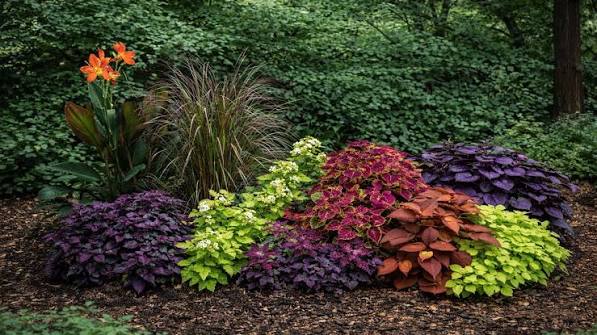
Understand your shade type first
Not all shade is the same, and the distinction matters.
Dense shade (under a large Norway maple, against a north-facing wall, beneath a deck) gets less than 2 hours of direct light daily. The plant list for dense shade is short. Hellebores, epimedium, and pachysandra are among the few that genuinely thrive there.
Part shade is 3 to 6 hours of direct light, usually filtered or dappled. This is the most workable shade category. Hostas, astilbe, ferns, bleeding heart, and woodland phlox all perform well. Most shade gardening guides are written with part shade in mind.
High shade is light filtered through tall tree canopy, with no direct sun but consistent bright indirect light. Many plants rated for part shade do well in high shade, and some sun-lovers tolerate it if they get enough reflected light.
Walk the bed at 9 a.m., noon, and 3 p.m. over a few days. Note which areas get direct sun and for how long. That data determines your plant list.
Design for structure, not just color
Color fades in September. Structure carries the garden year-round.
The plants that give a shade garden bones are the ones with strong form that persists across seasons: large-leafed hostas, upright ferns, low mounding epimedium, and ground-covering pachysandra. These hold the space even when nothing is blooming.
Layer by height. Put the tallest plants at the back of a border or in the center of an island bed. Work down to medium-height plants, then ground covers at the edge. For a typical 5-foot-deep shade border:
- Back row: ostrich fern (4 to 6 feet), large hosta varieties like ‘Sum and Substance’ (3 feet wide), astilbe ‘Visions in Red’ (30 inches)
- Middle row: medium hostas, bleeding heart, Japanese forest grass
- Front edge: epimedium, low-growing hosta varieties, creeping Jenny
The layered arrangement means the bed reads as intentional even before anything blooms.
Build the plant list around bloom sequence
A shade garden with no sequence of bloom looks the same in May as it does in August. Plan for gaps.
Spring (April to May): Bleeding heart is the first reliable shade bloomer, with arching stems of pink or white flowers from April into June. Virginia bluebells bloom in April and die back by July, leaving a gap to fill with summer plants. Hellebores start even earlier, sometimes in March, and hold their nodding flowers for 6 to 8 weeks.
Early summer (June to July): Astilbe is the workhorse here. It blooms in shades of white, pink, red, and purple, and the dried plumes hold their shape into fall. Foxglove blooms in June on tall spikes and is technically biennial, so plant new seedlings every year if you want continuous bloom. Japanese forest grass peaks in summer and its gold-striped foliage stays bright through October.
Late summer into fall (August to October): Toad lily blooms in September and October when almost nothing else is flowering in shade. The flowers are small but distinct, purple-spotted on white. Hostas don’t bloom long but their foliage carries the bed until frost.
Perennials as the core of the planting
The most reliable shade gardens are built on perennial plants. They come back every year, spread gradually to fill space, and reduce the replanting workload compared to beds anchored by annuals.
Hostas are the most forgiving: they tolerate dense shade, require almost no maintenance, and come in enough size and color variation to fill any gap in the design. For deep shade, stick to green or blue-green varieties. Gold and variegated varieties need more light to hold their color.
Astilbe is the best choice for consistent summer color in moist shade. Plant 3 varieties with staggered bloom times (early, mid, and late-season) and the bed will have color from June through August.
Bleeding heart (Dicentra spectabilis) is spectacular in spring but dies back completely by mid-summer, leaving a hole. Plan for this. Plant hostas or ferns nearby to fill the gap when bleeding heart goes dormant.
Epimedium is the most underused shade perennial. It grows in dry shade where almost nothing else survives, spreads slowly but steadily, and produces small flowers in yellow, pink, or white in April. Once established, it requires essentially no maintenance.
Add a canopy layer if the site is open
An open garden with part shade from a structure but no tree canopy can support a small understory tree that eventually creates better shade conditions and adds seasonal interest.
Eastern redbud blooms purple in April before leafing out, tolerates part shade, and tops out at 20 to 30 feet. Serviceberry is another good choice: white spring flowers, edible berries in early summer, and orange-red fall color. Both can be grown from bare-root stock ordered through a wholesale nursery, which is considerably cheaper than buying container-grown specimens from a retail garden center.
Plant trees at the bed perimeter, not the center. A tree planted in the center of a bed eventually shades out everything around it and makes the bed unworkable.
Soil prep for shade beds
Shade beds under trees are often root-dense, compacted, and dry. You’re competing with established tree roots for every bit of moisture and fertility. Amending soil in these conditions is harder than in open beds.
Dig only as deep as necessary to plant, avoiding large roots where possible. Add compost generously (3 to 4 inches worked in) and top-dress with compost annually rather than trying to deeply till in an established root zone.
For beds under shallow-rooted trees like Norway maple or beech, a raised bed built on top of the root zone with 8 to 10 inches of amended soil is often more practical than trying to plant into compacted native soil. Line the base with landscape fabric to reduce root intrusion for the first few seasons.
Mulch
Shade beds need mulch more than sunny beds. Moisture evaporates more slowly in shade, but root competition from trees can pull water from the soil faster than rainfall replenishes it.
Apply 2 to 3 inches of shredded bark or shredded leaves annually in early spring. Shredded leaves are the best mulch for shade gardens because they break down into leaf mold, which acidifies soil slightly and adds organic matter in the same way that natural forest leaf litter does.
Keep mulch a few inches away from plant crowns to prevent crown rot.
First-season expectations
Shade plants establish slowly. Year one, most perennials put energy into root development rather than visible spread. A hosta planted in May might look the same in October. That’s normal.
Water new plantings consistently through the first season (once or twice a week in the absence of rain) and keep weeds down. By year two, most shade perennials start spreading. By year three, a well-designed bed needs little work beyond spring cleanup and an annual top-dress of compost.
What are the best plants for dense shade? Epimedium, hellebores, pachysandra, and sweet woodruff are among the most reliable in dense shade (under 2 hours of direct sun). Most hostas need at least 2 to 3 hours of light to maintain foliage quality, though they survive in less.
How do I deal with dry shade under trees? Prioritize plants with genuine dry-shade tolerance: epimedium, autumn fern, liriope, and hellebores. Amend soil with compost, mulch consistently, and water through dry spells in years one and two. Once established, dry-shade plants need minimal supplemental water.
Can I grow vegetables in part shade? Leafy greens (lettuce, spinach, kale) tolerate 3 to 4 hours of sun and do well in part shade. Fruiting vegetables (tomatoes, squash, peppers) need full sun and won’t produce well with less than 6 hours. Don’t try to force them into a shade bed.
How far apart should shade perennials be spaced? Spacing depends on mature spread. Large hostas need 3 to 4 feet. Astilbe needs 18 to 24 inches. Epimedium spreads slowly and can be planted 12 inches apart. Check the plant tag and space for the mature size, not the planting-day size.